Blog

  • What is SEO Copywriting

    What is SEO Copywriting

    The key to driving interest and boosting sales is to establish connections with potential customers. While it’s easy to make these connections, it can be more challenging to figure out how to do so.

    However, copywriting is an excellent method for developing these connections since it uses words to appeal to consumer emotions and encourage action.

    There are fundamental principles to follow to ensure that you can effectively convince your audience while writing something you believe your audience will appreciate. We will explore what SEO copywriting is and what you can do to improve the conversion rate, generate more leads, and drive sales with it.
    SEO Copywriting

    What is SEO copywriting?

    Copywriting for SEO is the process of combining standard SEO practices that drive traffic (like keyword research) with compelling words that compel users to take a specific action, such as buying a product or signing up for an email list. This content appears on product pages on a website, emails, and other marketing materials.

    SEO copywriting aims not to generate organic traffic like blogging but rather to convert leads. Copywriting content for search engine optimization may contain less than half as many words as a blog post with almost a thousand words.

    It is possible to combine the two. Then, in a blog post, you will include a call-to-action composed with SEO copywriting in mind, and the words will entice readers to click on what you are providing for more information, such as downloading a free ebook.

    Google Ads Checklist 2021: The Ultimate Guide

    In the following examples, you’ll find some examples of content types that could be written with SEO  copywriting principles in mind:

    • Landing pages
    • CTA buttons
    • Brand messaging
    • Website copy
    • Advertising content
    • On-site navigation instructions
    • Product descriptions
    • Final checkout screens

    The key to understanding SEO best practices is to understand what is required of you.

    Tips for writing SEO copy

    There are a variety of factors that contribute to copywriting, which we will discuss below.

    Knowing your audience is essential.

    To write compelling copy, you must first understand your audience. Unless you know who they are and how to appeal to them, it will be impossible to convince them with your writing.

    A buyer persona research process follows when creating SEO copywriting, as it does for successful marketing campaigns and any other types of content.

    Based on market research, your existing business data, and your customer profiles, buyer personas are fictional representations of your ideal customer.

    Research keywords.

    Any SEO strategy must include keyword research.

    The purpose of keyword research is to uncover the keywords your ideal audience uses in search engines to find products and services similar to what you offer and use these keywords throughout your content to reach those users.

    Unless you conduct user research before writing copy, your content won’t resonate with your audience because it doesn’t reveal their intention to search for it even though they may use keywords.

    Think about who you are writing for.

    Creating copy with the intent of encouraging your viewers to act is the goal of copywriting. In short, it’s necessary to keep the reader in mind when writing. The buyers you are targeting seek solutions, which is why you are writing to tell them why you are the right solution for them.

    Suppose you have a marketing tool that can meet all the needs of your customers. By targeting your copy with the keyword “easy-to-use marketing tools” from your persona and keyword research, you can convince prospective customers to take the desired action (buying your product) once you have convinced them that your offering is the best solution for their situation.
    SEO Copywriting

    Choose action words that are relevant to your intent.

    Additionally, it is important to use action words that reflect your audience’s intent when you write for them. To lead them to your desired action, you need to use your copy to tell them why you offer the best solution.

    In other words, you want your copy to motivate people to buy, say something like “Buy Now” or “Sign Up Here,” or draw them into making a final decision.

    Please keep it concise and straightforward.

    You’ll have a more challenging time converting users if your copy is hard to read. You may lose them along the way if you require them to put in a lot of effort to understand what you have to offer.

    Testing continuously.

    Continuous testing enables you to iterate on what you create so that you satisfy consumer needs if something you thought would perform well didn’t align with audience intent as well as you thought.

    In addition to maximizing your effectiveness, testing is also essential. By translating your solution into copy, your audience will not need extra work.

    It is possible to create multiple versions of CTAs, each with a different call to action, and test the effectiveness of each by placing them on different web pages.

    It all comes together as follows: the SEO aspect is determined by the keywords that are already generating traffic and align with the user intent of your target audience, and the copywriting aspect is based on writing for the audience’s intent.

    This strategy lets you directly convey how you’ll solve their problems and entice them to become customers.
  • What is a sales funnel

    What is a sales funnel

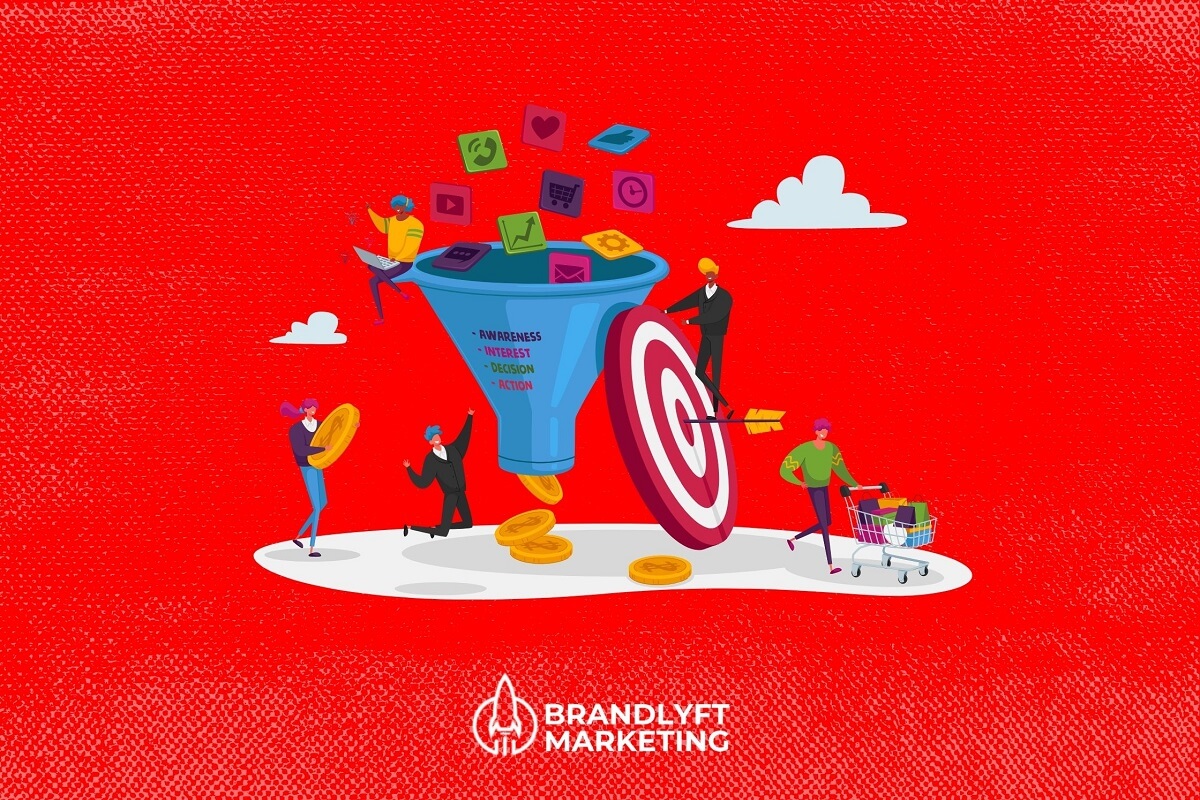
    In marketing, the sales funnel refers to the steps customers go through to make a purchase. A sales funnel typically has three steps: the top, middle, and bottom, although the order of the steps varies depending on a company’s sales model.

    The pain of missing a sale is well known to any business owner. Prospects drop out of the sales funnel after weeks of bids, presentations, chatter, and charm.

    Sometimes things happen. Having the right sales funnel management help makes it less likely to happen. The sales funnel of many small businesses is more like a sieve, with holes created by missed appointments, forgotten follow-ups, patched-together spreadsheets, and sticky notes.

    It’s possible to eliminate those holes in the sales funnel and turn near-misses into deals with marketing automation software.

    What is the purpose of the sales funnel?

    In every stage of your potential customer’s journey, you can use a sales funnel to evaluate their thoughts and actions. With insights like these, you can invest in the most effective marketing channels, generate the most relevant marketing messages during each stage, and increase your conversions.

    Stages of the Sales Funnel

    In your sales funnel, prospects move through several stages before deciding whether to buy (or not). Although every prospect’s path through your funnel will be different, they’ll evaluate it based on their interest level. Your offer will be evaluated against competition based on the problem they are trying to solve.

    The process generally involves four stages:

    Stage 1: Awareness

    Getting people to notice your product or service is the first step in the sales funnel. It’s where people first become aware of your product or service. Advertisements, social media, or word of mouth may lead them to learn about your company.

    It depends on your ability to generate sales and market to entice them down the funnel. In the lower and middle sales funnel stages, attention should be given to those prospects who have moved beyond awareness to interest.

    For example, a prospect becomes aware of your company for the first time during the awareness stage. You may have found them through an ad, a blog, a Google search, or a colleague who mentioned your product or service.

    Stage 2: Interest

    A prospect’s interest level will determine whether they are interested in your brand after learning about it. Your offer will be evaluated against competition based on the problem they are trying to solve.

    Stage 3: Decision

    With the insight you provide about your company, prospects can learn more about your offer’s packaging and pricing options. A sales page, webinar, or call helps to influence prospects during this stage.

    Stage 4: Action

    This is the point at which all of your work is put to the test: whether the prospect purchases something. The deal isn’t lost if they don’t. To stay on top of your prospects’ minds, you can create nurture campaigns.

    Sales Funnel

    Creating a sales funnel for your business

    Prospects must be able to move through your sales funnel before your sales funnel can exist. By using lead scoring, you can identify prospects’ behavior and engagement levels once you have them.

    You can create your own sales funnel by following these five steps:

    1. Build a landing page

    Most prospects will discover your company for the first time through a landing page. An ad, webinar, or ebook download landing page will be accessible if they click on it. Having a landing page that communicates your unique value proposition should be a top priority (considering that this may be the only chance you will have to wow prospects). You also need a form on the landing page to gather prospect information – to market to them in the future, you want to capture their email address.

    1. Offer something of value

    The next step is to get your prospects’ email addresses by giving them something in exchange. You can offer something of value on your landing page by offering a lead magnet, such as an ebook or whitepaper.

    1. Start nurturing

    Your prospects will then move from awareness to interest at this point. Furthermore, you can send educational content about your offering to each individual because you have all their email addresses.

    1. Upsell

    The more you offer prospects in the Decision stage, the more likely they are to purchase. Demos, extended free trials, or special discounts are possible.

    1. Keep it going

    If you do not acquire new clients, you will find out exactly why prospects do not want to buy. Regardless of your decision, stay in touch. Concentrate on educating new customers, keeping them engaged, and retaining them. Develop a follow-up series for prospects who do not make a purchase.

    Conclusion

    Create a sales funnel visualization and observe the metrics after its implementation. You will have a better understanding of where your business is succeeding and where it is falling short. The software eliminates the guesswork for your marketing department and presents clear solutions and answers.

  • GoHighLevel No Reply Lead Nurturing Smartlist Hack! – BrandLyft Marketing

    GoHighLevel No Reply Lead Nurturing Smartlist Hack! – BrandLyft Marketing

    At BrandLyft, we’re Go High Level, GoHighLevel, or GHL Experts (Their name is different everywhere!). We’ve repurposed GoHighLevel in our automation app, LeadDragon, and we have dozens of single users enjoying the savings of time and resources with such a powerful app. Below is an awesome way to use your smart list and create a custom filter for ANYONE who hasn’t replied to any of your campaigns.


    1. Go to Smart List > Go to All Tab
    2. Click More Filters.
    3. Please type ‘last’ in the text box which shows ‘Add Filter’. You will see ‘Last Activity’ filter as one of the option.

    1. Select the last activity filter. Once it is added. Click ‘More Than’ radio. Type in 90 days.
    2. Click on columns dropdown. Select Last Activity column.
    3. Press the + icon on the top of filters. In the prompt you can give a name you like to create a named list.


    This will give you all contacts that have been never contacted or the ones contacted before 90 days. Enjoy!

    BrandLyft is a certified GoHighLevel partner that help you build incredible funnels and train your team to be successful with marketing automation tools. We can also help set you up from the get-go with our GHL variation, LeadDragon, which is perfectly optimized for small business owners.

  • What is an explainer video

    What is an explainer video

    What Do You Do with an Explainer Video?

    Explainer videos are short videos that present a business’s services and/or product(s) using a creative means to make them attractive and inviting. These types of videos generally run approximately one to one and a half minutes. They consist of easy-to-understand information.

    You can create explaining videos using animated illustrations, live-action, and 3D animations. You can also use a combination by mixing at least two of these.

    The explainer video should have a creative angle to it, and it will depend on what the brand story is as well as the style used for each of the companies. Most television advertisements will usually use a direct sales pitch which is generally are too repetitious, sales and are hardly ever entertaining. These types of sales pitches have a tendency to make viewers turn away.

    About Explainer Videos

    The explainer videos are merely a short story that is converted. It is more than an easy way to make sales opportunities. Living in a space that is different, such as the internet, a place that is open and accessible 24/7, meaning you can go browsing whenever you get the urge.

    Of course, explainer videos could still pick up a little knowledge from television advertisements. Both television advertisements and explainer videos can reach their viewers and give them a positive image through storytelling in combination with the use of emotional marketing.

    There Are Different Types of Explainer Videos

    Explainer Videos That Refer to ‘Whiteboard’

    The way these videos are created the same as a person writing/drawing on a whiteboard.

    However, for it to work the best, the elements should have a creative approach when it is added to the whiteboard.

    There Are Several Different Styles

    1. Someone writes and doodles on a whiteboard filmed, as well as edited and narrated.
    2. There is the digitalized design; this is where information automatically begins to scroll onto the whiteboard.
    3. An image of a hand from stock graphics is placed at the top of the digitalized design.

    Explainer Videos That Refer to ‘Animated’

    This style of explainer video is 2D animated and consists of moving illustrations. It is also referred to as a flat animation due to there not being a sense of depth. Using this style may be more memorable, as it gives the explainer video a unique feel. This style can either be incredibly creative, or you can just make it simple.

    Then there are the 3D explainer videos. This type is generally memorable and will draw some attention. You can use the 3D animation where the setting has a 3D world, including 3D characters. You can even use it as engineering videos in areas that have the machinery and its parts which are seen in 3D mockups.

    • Explainer Videos That Refer to ‘Live-Action’

    This is a style where the footage involves real people. The real people will either be placed as a visual during narration, or they will be placed in front of the camera to talk. Occasionally, there will be some elements added on for motion graphics, like the text fading in and out of visual sight, lines, shapes, and colors, which make some moving compositions.

    • Explainer Videos That Refer to ‘Stop Motion’

    Finally, this is the explainer video on ‘stop motion.’ Plasticine characters and various other physical sculptures (which have been photographed using single shoots going ‘frame by frame’) and are used to create the ‘stop motion’ explainer videos. Which are later animated when it goes to the video editor.

  • What is a landing page

    What is a landing page

    We all know how important a website is for establishing your brand’s presence online, but what if you want your business to grow and bring in more referrals, leads, and sales? In the end, you’ll need a landing page, but most business owners aren’t familiar with how to develop one from scratch. What is the best place to begin? What do you write about? Is there a process for completing a design?

    You do not need to worry, as we have provided you with an in-depth, step-by-step guide to assist you in doing all this and more. The purpose of this article is to explain what a landing page is, why you need one, and how to create one that accomplishes your conversion goals.

     What is the purpose of a landing page?

    Typically, a landing page is a web page used to advertise or market a particular product or service. Consumers click through to this site after clicking on the URL to find out more about the products or services they are being offered.

    What’s the difference between a landing page and a web page?

    However, it’s essential to keep in mind that a landing page is still a different web page from a specific web page.

    Multiple links will be included on a web page, as will numerous goals to encourage visitors to read more articles, learn more about the author, or connect with the brand on social media.

    Unlike generic web pages, a landing page focuses on just one goal: to get the user to respond to its call to action. Visitors will click away without being distracted by main website navigation, resulting in fewer potential distractions and a more positive engagement experience.

    What types of landing pages exist

    Landing pages can be designed differently, but two main types are most commonly debated: short-form and long-form.

    #1. Short-form landing pages contain less information and therefore work well for increasing leads, particularly if you want your visitors to download your offer. There is less content on these pages, and therefore there is less chance of distraction. Furthermore, the visitor will be more likely to become captivated if the information is accessible, concise, and appealing.

    #2. Long-form landing pages, on the other hand, are commonly used to do a hard sell. You can benefit enormously from the persuasion and storytelling that a long-form page offers if your product or service carries a high price tag (such as premium online courses, exclusive training, or a high-value bundle).

    Short-form pages are designed to facilitate the visitor’s transition from the call-to-action directly to the first step of the shopping cart. Long-form pages use long copies to help the visitor make a quick and easy decision. There is a narrative structure in your proposal, so you have the opportunity to address everything from potential readers’ hesitations to how your product deals with their pain points, how it meets their needs, and more.

    You may also want to consider a static landing page versus a video landing page for your website designer.

    #3. With video landing pages, viewers can have hit-or-miss results, but it comes down to one important distinction: whether or not they can control the video. A study of B2B buyers found that 33% of them will leave a site for no other reason than to see automatic audio and video.

    Researchers found, however, that videos on landing pages that convey a certain mood or feeling (so a video depicting concert footage on a concert page, for example) can be compelling. Further, landing pages with videos and playback controls are 144% more likely to convert visitors who watched the videos than those who didn’t.

    #4. A static landing page, on the other hand, does not feature any video. The landing page idea follows that fewer distractions are better when creating a conversion: content and imagery are very important. When a page is static, its focus is on the user, as experienced through fixed content, rather than constantly updating visuals.

    Why are landing pages necessary?

    #1. Offers tailored to segmented audiences

    A separate landing page for every promotion you run is necessary if you’re targeting different segments of your customers. Depending on what kind of customer you are, you might have different offers for new customers, customers who have signed up for a free trial, or customers who are part of your high-tier plan.

    It is easier to adjust a campaign’s call-to-action, copy, and design to meet its intended audience when it has its specific page for each promotion.

    #2. A variety of products

    You might want to create multiple landing pages when selling multiple items or even if you’ve got a single item with multiple attributes. You can then create different landing pages for each context and target audience, effectively increasing conversions.

    #3. Multiple sources of traffic

    A marketer or advertising agency can create separate landing pages for every traffic source that they use, whether it’s email marketing, various social networking platforms, or other channels. What is the reason? In general, you will want to promote different messaging, imagery, and calls-to-action for each channel based on the audience they represent.

    Building conversion-optimized landing pages

    Landing pages are designed to convert prospects into customers. An effective landing page converts well.

    For a landing page to be successful, you must have the correct elements in place, regardless of how much traffic you get or how good your offer is.

    Are you interested in learning more? We’d love to hear from you.

  • What is consumer behavior

    What is consumer behavior

    In consumer behavior, the aim is to find out what influences the buying decisions of consumers based on their emotional, mental, and behavioral responses.

    In simple terms, consumer behavior refers to people’s decisions and actions to meet their wants and needs through purchasing goods and services.

    Adapted from the American Marketing Association, consumer behavior occurs dynamically, fosters interaction, and involves transactions.

    • Dynamic: Consumer groups, targeted consumers, and society has dynamic thought processes, emotions, and behaviors.
    • Involves Interaction: During this process, thoughts, emotions, and actions of the individual have interacted with the external environment.
    • Involves Exchanges: An exchange of goods or services between two or more parties. People give up money and other valuable items in exchange for the goods, services, and products they want or need.

    Understanding the difference between ‘customers’ and ‘consumers.’

    • When we say ‘consumer,’ who are we talking about?
    • Also, What is the difference between this term and ‘customer’?

    The terms are synonymous, but there are some significant differences between them.

    Customers are individuals or organizations who purchase products, goods, or services from a seller.

    By contrast, a consumer is a person who uses this merchandise, product, or service.

    Even though the customer purchases, they are not always the purchaser since they may have been intended as a gift or resold.

    The parent who buys their child lunch is a good example. Their child is the one who gets to eat the goods, not them. They purchase the goods, but their child is the one who gets to eat them.

    Also, it is essential to mention that the customer may sometimes also be the consumer. End-users of the purchased items are entitled to this. The clothing, food, or book is worn, eaten, or read by the individual.

    Consumer behavior is beneficial to marketing

    Why is a study of consumer behavior valuable to marketers? Check out the details of each of these goals below.

    #1. Determine which products are necessary and which ones are obsolete

    The last thing any business wants to do is invest a lot of money producing something that won’t sell. By knowing consumer behavior, you can determine whether your product can meet a specific need, provides something better than its competitors, or fills an entirely new – but essential – market niche.

    #2. In a competitive market, to figure out the price at which a product or service will be offered

    Businesses would experience constant headaches if they did not analyze consumer behavior. Ultimately, you don’t want to be too cheap when pricing your product to make a minimal profit. Still, you also don’t want to be too expensive when pricing your product, causing consumers to look at your competitors’ more affordable products instead.

    #3. Determine which distribution channel is best for your product

    Essentially, distribution channels refer to the places and means through which individuals and companies will access products and services. It is essential to take multiple factors into account when planning your distribution strategy, such as the quantity needed, the convenience of online or offline channels, what competitors do already, and more.

    #4. In the interest of marketing

    Consumer behavior should provide valuable insights into which channels will produce the best results since different types of consumers respond differently to each marketing method. What are the consumer’s preferences? Does the target audience prefer reading a magazine or browsing Instagram? An expensive marketing campaign can ruin a business’s marketing efforts, so no one wants to waste resources.

    #5. The purpose of boosting revenue

    Knowing how consumers behave allows you to identify valuable insights that drive valuable outcomes. Studying consumer behaviors and their decisions can help you understand how, when, where, why, and for whom people buy certain products. To boost sales and revenue, we need to ensure we implement the correct methods to make our products, goods, and services in demand.

    #6. To personalize content

    The importance of content personalization might be surprising for you if you thought it wasn’t a priority. Research has found that 41% of customers switched companies because of poor personalization in 2019. Technological advances, as well as the desire for highly personalized, unique content, are growing. When you collect consumer behavior data, you can tailor your content successfully to the needs and wants of each consumer.

    #7. The value of customers

    Identifying the ideal customer characteristics is feasible when you can correctly predict the customer’s overall value. Using this method, you can identify specific customer personas, and you can target them to engage brand-loyal customers before they discover your competitors.

    #8. Optimization of content

    As we have discussed, it is possible to customize the content, but how can it also be optimized to succeed? In addition to providing you with data to optimize your marketing campaigns, your consumer behavior analysis should also help you narrow down your focus on the most valuable customers, engage them via their preferred channels, or deliver content at the best time.

    #9. Maintaining a customer base

    What if you knew the difference between increasing customer retention by 5% and increasing profits by 25%? Retaining existing customers is also 6-to-7 times cheaper than acquiring new ones. In other words, loyalty to a business is essential, but maintaining them is even more critical. Identifying ‘good customers’ that are willing to be rewarded can be accomplished by understanding consumer behavior.


  • Does digital marketing work for small businesses

    Does digital marketing work for small businesses

    Can Small Businesses Benefit from Digital Marketing?

    Let us cut to the chase, “The answer to this question is yes.” It offers more of a chance to compete. With digital marketing, the status of your business can be leveled up to start on the same level as your competitors, regardless of how large they may be. If you are using the right digital strategies, it is possible to create a massive following for your social media; you could even rank the highest on Google and/or have oodles of customers to sell your products to via email.

    Wait, there is more! Here are a few more advantages that digital marketing has to offer you, which are not only for small businesses. These offers can benefit any business with an online presence.

    Related:

    Digital Marketing Helps PinPoint and Engage with the Audience You Choose

    Investing in traditional marketing, such as magazine articles and/or television ads, will let your audience be targeted to an extent; however, this is something you can surmise somewhat already. Those of you who are interested in knowing more than that should try digital marketing as it will give you the ability to pinpoint the audience you are looking for and help you to optimize your business’s budget.

    Whether the audiences you are seeking to find are unemployed parents or they are CEOs, it does not make any difference. Having digital marketing gives you the capability of identifying and engaging the buyers’ personas that you feel are right by using a variety of marketing tactics online, whether big or small and even if they seem to have no interests at all.

    With Digital Marketing, You Can Reach Your Audience

    Few people read magazines, newspapers, or even turn on the radio. In the United States during the year of 2018, the circulation of newspapers was at its lowest since back in 1940, and the audiences of local news have been at their lowest for over 10 years now. What has the audience of the local news been doing instead? Glad you ask; they have been browsing online!

    Furthermore, nearly 70% of all internet users are on Facebook daily, while 90% of American adults are on the internet daily as well, and 75% can be found on YouTube daily. So, you want to know how those percentages are affecting businesses, huh? Those who are using the right strategies with their digital marketing can reach out and connect to their audience wherever they may be.

    Digital Marketing Makes Monitoring and Tracking Easier

    It is not that simple to get the tracking out of traditional ad campaigns. Although you may have an idea of the number of times your ad(s) showed up, the number of people who responded to your newspaper and/or television ad(s) would be impossible to know.

    The fact is, launching a digital marketing campaign will allow you to virtually track all the details you want to. With only a couple of clicks, you will be able to visually see the number of people who have clicked your ad, including whether they purchased anything. Digital marketing even makes it possible to target those same people using another one of your ads.

    Digital Marketing Lets You Scale & Adapt the Efforts You Put into It

    With digital marketing, you can scale the digital strategy you feel works best for you, and just think, you will no longer be stuck watching television ads or no longer having to send mailings several months ahead of schedule. This will give you a chance to put more out on digital, and you could adapt more to the needs you have as they come up.

    So, how do you go about finding what works best for you? There are analytics tools available for measuring your results. Just think, you will have complete control over your digital efforts, and now you also will have the time you wanted to try some newer ideas. If you find any ideas that you can not get out of your head, you can scale them.

    If it turns out they were not what you had hoped, you are in control, which means you can stop them prior to going broke.

  • Why branding is so much more than just a logo

    Why branding is so much more than just a logo

    Branding is so much more than just a logo. We understand that most people see a logo as the element which makes a brand recognizable but a logo is only the cherry on top.

    Coca-Cola is more than a soda. Starbucks is more than a coffee. Apple is more than a smartphone. These brands offer more than a recognizable logo, they offer an experience that makes their logo memorable.

    From the language, they use in their commercials to the colors and typography they run in their Ads. Companies who create strong brands are in it for the long run and these types of businesses thrive once their mission and BRAND become recognizable to the public. It takes that initial push until it can just snowball down the Hill. It may take many hills before making it to the level of giant companies that’s why it’s important to maintain momentum.

    What Is A Brand?

    Let’s first ask ourselves, what is a brand, and what are the elements they consist of?

    A brand is a feature or set of features that distinguish one organization from another. At least that’s the proper definition of a brand but as I stated earlier, a brand is an experience and that experience is what distinguishes one company and its logo from any other company and its logo.

    A brand gives your business identity, makes it memorable, builds trust, encourages others to buy from you, supports your marketing campaigns, and brings your employees pride.

    Brand Elements & Branding

    Branding is the process of researching, developing, and applying brand elements to your company so that consumers can begin to associate your brand with your products or services.

    A brand is compromised of a name, tagline, logo, brand voice, mission, color palette, typography, and much more. We will go deeper into how to combine these elements and create a brand that goes to work for you.

    Creating A Brand

    1. Finding Your Customer Persona

    The first step in creating a brand is to first determine your target audience. Take a good look at your product or service and see the type of people whether they be in your personal business or in your industry, and make them into a demographic.

    1. What kind of people are they?
    2. What are their favorite activities?
    3. What is the age range of your customers?
    4. What gender is most likely to buy from you?
    5. Where do they live?
    6. What other brands are they wearing?

    All of these are important questions on figuring out who your target audience is, once you’ve figured out who you are selling too then it will be easy for you to target directly to them.

    2. Establishing Your Mission statement

    The second most important element in starting a brand is your mission.  So ask yourself why you created the company in the first place, some other reason besides just getting money.

    Before you can build a brand that your audience recognizes, values, and trusts, you need to be able to express your own passion and purpose that the business provides. Then, every element of your brand (logo, photos, tagline) will reflect the mission. Your brand needs a personality in order to thrive.

    Your mission is the constitution which encompasses why your organization exists and why people should care about your brand.

    3. Create Your Brand Guidelines

    Your brand guidelines include color palette, fonts, phrases, and visual assets.

    It takes a Graphic Designer or someone who has a good eye for design to pick out brand colors and fonts. The general rule for color theory and how to go about picking a color for yourself is:

    1. First, find out what color represents your brand personality the best. Each color has a unique personality.
    2. Once you picked out a color that goes with your brand personality you must pick a complementary color
    3. Once you have your main color and its complementary find the analogous color schemes of each and you have your full-color pallet

    Typography is more simple, you simply pick two fonts that work well together and stick with those two fonts for your brand.

    You’re going to want to build up a photo library of all photos related to your brand. These photos will help you understand your brand visually and will make it easier for others to understand it as well.


    Put Your Brand To Work

    Now that you have a better understanding of your brand and its elements it’s time to put your brand to work. Make sure that you are omnipresent and display your brand anywhere and any chance you get to. These are channels where you can apply your brand across your business and into the real world.

    1. Website

    A website is your shop online where thousands of people walk into it every day. Wouldn’t you want your personality and mission to be reflected on your online shop?

    Spread your brand across your website, don’t use anything else other than your brand guidelines. Your website is a major part of your company identity, if it doesn’t reflect your brand then it will only confuse your customers.

    2. Social Media

    If your website is your store online then think about social media as the hallways and walkways in the mall where everybody gathers around for social conversations.

    Everything that you are putting out there needs to have your brand on it. Regular posts, carousel, slideshows, videos, stories, infographics, everything has to be presented so that it is easier for customers to recognize your business.

    3. Marketing

    Marketing is Primarily used to:

    1. Get Attention
    2. Keep Attention
    3. Multiply Attention
    4. Convert Attention

    It’s critical that you run campaigns that establish brand awareness and introduce yourself to brand new audiences. To take it up another level, You want to convert your customers so that they become your brand ambassadors and keep buying from you. Brand ambassadors also tell others about your brand by commenting and sharing your brand. With your brand guidelines all in order, you already know how your ads should appear and what type of caption to write.

    Here is an example of a brand guide that we made for one of our clients Discoverhorizons.

  • The Sales Cycle – The Backbone of a Successful Sales Effort

    The Sales Cycle – The Backbone of a Successful Sales Effort

    How to build a successful sales process: the sales cycle

    Improving sales efforts rarely results in success. A tiny percentage of companies employ a lot of random tactics and see if they stick. A business that consistently succeeds in sales offers some level of guidance to its salespeople.

    To know what to do next, salespeople often need a step-by-step plan to guide them. A sales cycle is often referred to as that infrastructure.

    This article will provide you with an overview of a sales cycle’s various stages, along with tips on how to put one into motion.

    Related:

    What is a sales cycle?

    The Sales Cycle refers to the steps salespeople take to close a new customer. There is a common misconception that sales cycles are akin to sales methodologies – frameworks for implementing sales cycles. The sales cycle generally contains stages such as prospecting, connecting, researching, presenting, and closing.

    An established sales cycle is in the best interest of your company. Organizing your sales pipeline, prioritizing leads, and ultimately evaluating the results of your sales efforts becomes more manageable with this tool.

    When your sales cycle is clearly defined, your reps will have a roadmap and common reference points, ensuring they can work together and communicate effectively. Teams that work well together are more successful.

    If they are required to pick up where another left off, your representatives must be flexible and know how to do so. If there is no sales cycle to guide their efforts, there is no “where they left off.”

    Using a sales cycle allows reps to prioritize leads and understand how far prospects are along their buyer’s journey. In this way, they can figure out how to approach the leads they are nurturing at the right time.

    Additionally, it is possible to evaluate sales efforts via a sales cycle objectively. Is your sales team doing well? How did they succeed? Was there a mistake or a right decision? Have they strayed from the cycle? If they did, what would happen?

    It is essential to have a perspective for evaluating how your business and your reps are doing – a sales cycle provides that perspective.

    Understanding a sales cycle requires understanding its stages. Each one is listed below.

    What is a sales cycle

    Stages in a sales cycle

      1. Prospect
      2. Connect
      3. Research
      4. Present
      5. Handle objections
      6. Close
      7. Follow up and generate referrals


    1. Prospect

    As part of this stage, any SQLs will be identified in your pipeline who may be interested in hearing more about your product/service and buyer persona.

    1. Connect

    Identifying prospects is the first step in contacting them. You can reach out via email and phone, or you can ask acquaintances to introduce you. You can also reach out to your prospects using social media like LinkedIn and Twitter.

    Ask if they’d like to learn more about what you have to offer.

    1. Research

    You should set up a discovery meeting if your prospect wishes to learn more. The more you learn about their business, their needs, and how you can fulfill those needs, the more prepared you will be.

    You may discover that you are not the right fit during discovery calls. Other users will provide you with the insight to convince them to adopt your product or service.

    1. Present

    This is the moment when the presentation will begin. In most cases, your sales team tailors a pitch template to meet the business needs of each prospect.

    The presentations will be held in front of a team of decision-makers, and key stakeholders will ask questions. Are you looking to improve your pitch?

    1. Handle objections

    There’s a good chance your sales cycle will encounter some snags along the way. At this point, expect your prospects to push back. Your product or service will probably raise some questions and concerns.

    Your presentation must be followed by a response to objections from your prospects. Your pitch might involve asking about price, budget, competitors, comprehension of the product, and any other issues that may be asked about. It’s important to listen attentively and to ask questions to understand their objections better.

    1. Close

    Following the presentation, you will likely need to take some action. Legal and IT might need to be consulted for logistical details. Following these steps, ask the prospect whether he is ready to buy. This is the sales jargon for asking if someone is ready to buy.

    Prepare the contract and give it to them for final review and signature if they say “yes.” It might be necessary to discuss other objectives or just walk away at that time if they say, “No.”.

    1. Follow up and generate referrals

    Landing a deal isn’t the end of the sales cycle. Your goal after a sale is to excite any of your customers, keeping them and then leveraging them to refer you to others. By providing exemplary customer service and following up on your customers, you should do everything in your power to satisfy them.

    Ensure your customers are well taken care of. Your chances of up-selling and cross-selling them will increase if you keep them close. Referrals and new business are also excellent sources of happy customers so that you can keep your cycle spinning, foster more relationships, and increase revenue.

    Stages in a sales cycle

    Sales Cycle Management

    The sales cycle management process helps salespeople, managers, and leaders follow the sales process from beginning to end. These metrics are used to identify the most successful or least successful steps in the process.

    Sales cycle management gives sales leaders and salespeople a way to evaluate where they must improve or adjust during the sales cycle. Tools like CRMs aid the management of the sales cycle.


  • 5 WAYS SEO CAN HELP BUSINESSES GROW

    5 WAYS SEO CAN HELP BUSINESSES GROW

    5 Ways SEO Can Benefit the Growth of Your Business

    Search engines are one of the more significant channels online. It has been reported that 68% out of the total online experiences start by using search engines, according to BrightEdge.

    According to this, your business will not have as much attention as you want it to if it does not show up on page one of the search results. Now, this is where the benefit of using SEO comes into play. The definition of SEO or Search Engine Optimization is a process to maximize the number of visitors to visit a specific website.

    This is done by making sure the website makes it high on the list of results on a search engine page (preferably, the first page of the search engine). Whereas “The key to receiving additional traffic depends on how well the content is integrated into the search engine optimization as well as the marketing for social media.”

    SEO is to optimize a website based on a checklist containing a list of various factors which are considered by search engines anytime web pages are being ranked. For instance, should you want your website to show up on the search results on the first page, then you must optimize your website using all the factors.

    Related:

    21 Myths On SEO
    What Is SEO Copywriting
    SEO VS PPC
    Does digital marketing work for small businesses

    You Can Benefit Five Ways Using SEO

    Search Engine Optimization needs to be thought of as a significant part of the marketing strategy in all businesses, regardless of the size of the business. But prior to learning how to optimize a website, it is crucial that you first learn the five benefits you get from using SEO.

    Helps You achieve Your Target Audience

    Content optimization is one of SEO’s most popular strategies. When you do this, you will be able to be ranked due to using popular keywords, meaning search queries relating to your website. For instance, should you want to be ranked for using the term “keywords, what are they,” you would only have to optimize your blog to use that keyword.

    How do you choose the right keyword? By performing keyword research. This entails the use of a platform so you can see if those keywords are popular ones if they can convert, and where you stand with your competition. If you can optimize your content to go with the right keywords, your business will be capable of reaching the consumers who have an interest in your services and/or products, and your business will be successful.

    You want to choose keywords that are going to reach customers at whatever stage they are in their journey of purchasing. Remember, it must include being considerate, having awareness, and be able to make the right (best) choices.

    You Can Receive Long-Term Results

    Although effective, traditional marketing poses a problem as it will be short-lived. You will end up putting more and more money into it if you want to be rewarded. Keep in mind that landing a spot-on television and/or running some print ads will gradually become more expensive, for this will be effective for a short period of time.

    Would not want you to misunderstand, but SEO is not going to be free! However, it does have long-term results to offer you. Things will improve for you so long as you stay updated by continuing to tweak and monitor your website’s presence. In the long run, SEO ROI is better than paid digital campaigns.

    In the meantime, it would be important for you to note that SEO is going to take whatever time it needs to show the results. It is suggested for you to choose the option of combining a mixture of several types of marketing efforts.

    For just a minute here, let us pretend that you oversee a vehicle dealership. So, throughout the launching phase, you could invest some into traditional marketing just to give your product/services a boost of awareness. While your business continues to grow, you want to focus on using SEO to optimize your vehicle dealerships website, using the right keywords. You should be able to handle both, running digital ads and working with SEO both.

    Helps to Reach Your Customers on Mobile

    Based on information from Statista, mobile phones provide about 52% of site traffic in the world. So, making sure that your site is mobile-friendly is something that needs to be done. Based on the time that it takes to market, it can be easy to forget to make sure that your site is mobile-friendly. However, if you have an SEO strategy, then make sure that you include mobile SEO.

    Your website needs to be optimized for mobile because Google will look at mobile pages first when it comes to ranking your site. That means that however well your site performs on a mobile device will play a big part in your rank on Google.

    Helps in Building Trust

    There are tons of options that a customer can pick from in basically every niche and industry. If you want to grow your business, you need to set yourself apart by appearing trustworthy and credible.

    Modern customers are well informed, and they know your intentions behind any promotional content because there is a lot of it on the internet. Customers tend to rely more on the first few search engine results than something that they see on an ad on Instagram.

    Another big factor for ranking is backlinks. That means that websites can link back to your platform. The more backlinks that your site has, the higher your rank is going to be because backlinks act as a type of confidence vote. When Google looks at it, the more quality backlinks that you have, the more credible your site will be.

    Google, as well as other search engines, use ranking algorithms to put value to sites that can offer meaningful experiences to customers. If you want to satisfy your customers through a search engine, that means that you are going to have to have perfected the user experience. Good user experiences mean that your business will get more conversions, traffic, and happy customers.

    Keep in mind that SEO is more than just rankings. It is about showing search engines that your site has value, and you are constantly improving user experience. Good Seo will always lead to conversions.

    SEO
    Helps You Keep up with Your Competitors

    Whenever you want to rank high on search engine result pages, then you are going to need to rank above your competitors. These competitors are most likely already using an SEO strategy as part of a marketing plan. SEO business strategies are there to help you reach past your competitors. When you have the right type of planning, you can boost your site above what the others have displayed for the same keywords.

    Consistently updated SEO content can help to remind your customers of your business. Competitors who have stopped worrying about their SEO will not keep those high rankings for a long time.

    The best way to do this is to post regular content based on your keywords. That is going to help you to rank for a variety of keywords that your competitors have been ranking for. The more often that you tend to post, and the whiter hat SEO strategies that you use, the better that your rank will be.

    Just keep in mind that many people do not click on the second page of search results. That means that it is especially important for your business to rank as high as possible on the results page. If you do not have a high ranking, then you are letting your competitors get all the clicks and sales. Once you have a chance to rank above your competitors, then you will have to plan for a long-term SEO strategy that is going to keep you on the front page of SERPs.

    Your Business Needs SEO

    SEO is the one thing that can help your business to grow in more ways than you are able to think of. You want to ensure that you are creating a solid strategy that can help to add all parts of SEO. If you have a small business and do not have thousands of dollars for you to spend on the cost of SEO as it will help your business in the long run.