Category: Marketing

  • Marketing Automation for Occupational Health Clinics: Multi-Location GoHighLevel Guide

    Marketing Automation for Occupational Health Clinics: Multi-Location GoHighLevel Guide

    Marketing automation for occupational health clinics gets messy fast when every location handles employer inquiries, appointment reminders, intake, follow-up, and reporting a little differently. One clinic uses a shared inbox. Another relies on front desk sticky notes. Another has a manager who knows how to move every employer account forward, but the process lives mostly in that person’s head.

    That may work for one clinic with a small team. It breaks down once the business has several locations, employer accounts, recurring screenings, walk-ins, after-hours calls, drug testing requests, DOT physicals, workers’ comp referrals, and HR teams asking for updates.

    Marketing automation for occupational health clinics should not feel like a pile of random texts and workflows. It should create one clean operating path from inquiry to booked appointment, from visit to follow-up, and from location-level activity to owner-level visibility.

    That is where GoHighLevel can fit well. Used the right way, it can support lead capture, appointment flow, location routing, reminders, missed-call follow-up, pipeline tracking, employer reactivation, review requests, and reporting. Used halfway, it becomes another place where data gets parked but nobody fully trusts it.

    This guide breaks down how marketing automation for occupational health clinics can work across multiple locations without turning the clinic into a software project.

    Why Marketing Automation for Occupational Health Clinics Needs a Different Setup

    Occupational health clinics do not operate like a basic local service business.

    The buyer is often an employer, HR director, safety manager, staffing coordinator, risk manager, transportation company, or franchise operator. The person receiving the service may be an employee, applicant, driver, injured worker, or returning team member. The clinic has to manage both sides of that relationship without confusing the process.

    That is why marketing automation for occupational health clinics needs more than a generic CRM pipeline. The system has to sort employer inquiries, employee appointment flow, service type, location, urgency, and follow-up status.

    For example, a clinic may need separate paths for:

    Pre-employment physicals, DOT physicals, drug testing, respirator fit testing, hearing testing, vaccines, titers, workers’ comp visits, employer account inquiries, on-site service requests, and recurring compliance-related programs.

    Some of those requests are patient-facing. Some are employer-facing. Some need a same-day callback. Some need account setup. Some need documentation before the employee arrives.

    A generic “new lead” workflow is too blunt for that.

    Marketing automation for occupational health clinics should help the team know what came in, who owns it, where it belongs, and what needs to happen next.

    Where Multi-Location Clinic Systems Usually Break

    Most multi-location clinic problems do not start as major failures. They start as small workarounds.

    Quick Gut Check

    If Each Location Handles Leads Differently, Your CRM Is Already Telling You Something

    Before adding more workflows, it may be smarter to see where the handoff is breaking first. A Franchise GHL Location Usage Audit gives you a clear read on which locations are following the system, which ones are working around it, and where leads are getting stuck.

    Find the Location Gaps

    A front desk person calls an employer back manually. A location manager keeps a spreadsheet of key accounts. Appointment reminders are inconsistent. A form sends to one inbox, but the person responsible for that service works at another location. A clinic marks an inquiry complete even though the employer never received the next step.

    Over time, the system becomes harder to trust.

    Marketing automation for occupational health clinics should reduce those quiet leaks. The goal is not to automate every judgment call. The goal is to remove avoidable delay, missed handoff, and unclear ownership.

    Common issues include employer inquiries going to the wrong location, service forms that do not identify the right appointment type, missed calls with no fast text-back, no-shows with no reschedule path, pipeline stages that do not match the clinic’s real process, and reporting that shows activity without showing which locations are actually moving.

    GoHighLevel can support these pieces, but only if the setup reflects the real clinic workflow. A copied snapshot or basic template will not understand your service lines, clinic locations, employer account process, or staff responsibilities.

    Start With the Real Intake Paths

    The first step in marketing automation for occupational health clinics is mapping every front door.

    That means more than the contact page. A multi-location occupational health clinic may receive inquiries through website forms, landing pages, paid ads, phone calls, referral partners, HR emails, chat widgets, Google Business Profile clicks, repeat employer contacts, and manual staff entry.

    Each source needs a clear path.

    A “schedule a physical” form should not move the same way as a “set up an employer account” request. A DOT physical inquiry should not get the same follow-up as a workplace injury visit. An on-site testing request should not land in the same bucket as a single applicant appointment.

    BrandLyft’s own GoHighLevel audit content makes this same point in a broader GHL context: lead capture is only useful when each entry point is connected, tagged correctly, attributed correctly, and routed into the right path. That is why this article fits naturally beside a real GoHighLevel audit conversation.

    For occupational health clinics, those tags and routing rules may include clinic location, service category, employer account status, appointment urgency, source, campaign, assigned staff member, and next required action.

    Marketing automation for occupational health clinics works better when intake is boring, clear, and repeatable.

    Build Service-Based Routing Inside GoHighLevel

    Once intake is mapped, routing becomes the next big piece.

    For multi-location clinics, routing should usually answer four questions:

    Which location should handle this? Which service line does this involve? Is this a new employer, existing employer, applicant, employee, or referral? What should happen first?

    That logic can drive pipeline placement, user assignment, internal alerts, appointment links, and follow-up timing.

    A new employer inquiry may need a fast sales or account setup path. An existing employer sending an employee for testing may need a simpler scheduling path. A missed call after hours may need an instant text-back that asks what service the caller needs, then routes the response to the right team.

    This is where a GoHighLevel build needs clinic-specific thinking. Marketing automation for occupational health clinics should not dump every inquiry into one general pipeline. It should create simple lanes that the team can understand and actually use.

    A clean setup might include separate pipeline stages for new employer inquiry, account setup needed, appointment requested, appointment booked, visit completed, follow-up pending, employer reactivation, and closed.

    The names matter less than the behavior. If staff cannot tell what stage means, the stage will not last.

    Use Appointment Reminders Without Creating Compliance Drag

    Appointment reminders are one of the easiest wins, but clinics need to use them carefully.

    HHS says covered health care providers may communicate electronically with patients when reasonable safeguards are applied, and it gives appointment reminders as an example of communications a provider may accommodate by email when reasonable. That does not mean every clinic should blast detailed health information through SMS or email. It means reminders should be simple, limited, and built with privacy in mind.

    For marketing automation for occupational health clinics, the safest operational pattern is usually short reminders that confirm the appointment time, location, and basic prep instructions without exposing unnecessary details.

    A reminder can say the appointment is coming up and include what to bring. It does not need to include sensitive clinical details. The clinic’s own compliance lead should decide what language is approved.

    GoHighLevel can support reminders, confirmations, no-show follow-up, and reschedule prompts, but the content should be reviewed before it goes live.

    Marketing automation for occupational health clinics should reduce no-shows and confusion without creating a new privacy problem.

    Clean Up Employer Follow-Up

    Employer follow-up is where many clinics leave money sitting.

    An employer asks about setting up a new account. Someone responds once. The employer gets busy. No one follows up. Three months later, the clinic is still hoping that account comes back around.

    Marketing automation for occupational health clinics can keep those employer conversations alive without forcing the staff to remember every manual follow-up.

    A good employer follow-up path can include an instant confirmation, a task for the assigned team member, a short follow-up sequence, reminders to check back, and a pipeline stage that shows account status.

    The message should sound human, not like a drip campaign. Employers are not looking for ten marketing emails. They need a clear next step, clean scheduling, simple service information, and someone who responds when the need is active.

    This is where BrandLyft’s Revenue System Build angle fits. The point is not “more automation.” The point is a system where every lead gets captured, routed, followed up with, and tracked through a pipeline the team can run day to day.

    For occupational health, that means employer accounts should not disappear into a shared inbox.

    Give Each Location Room Without Losing Central Visibility

    A multi-location clinic has a real tension. Each location has local staffing, hours, capacity, and service mix. Ownership still needs one clear view of performance.

    Marketing automation for occupational health clinics should standardize the parts that need consistency while leaving room for location-level reality.

    That may mean shared pipeline logic across all clinics, but separate calendars by location. Shared employer intake forms, but location-specific routing. Shared reporting rules, but local staff assignments. Shared reminder language, but different availability and service options.

    BrandLyft’s Who We Serve page says the agency builds systems for service businesses that rely on calls, leads, and booked appointments, including multi-location businesses where routing complexity and reporting consistency matter. That maps cleanly to occupational health clinics with several offices.

    The wrong setup makes every location feel trapped inside a corporate CRM. The right setup gives each team a clear operating lane while ownership can still see where inquiries, bookings, and bottlenecks are happening.

    Marketing automation for occupational health clinics should make the business easier to read, not harder to manage.

    Connect Forms, Calendars, Calls, and Reporting

    A lot of GoHighLevel accounts fail because the pieces exist but do not talk cleanly.

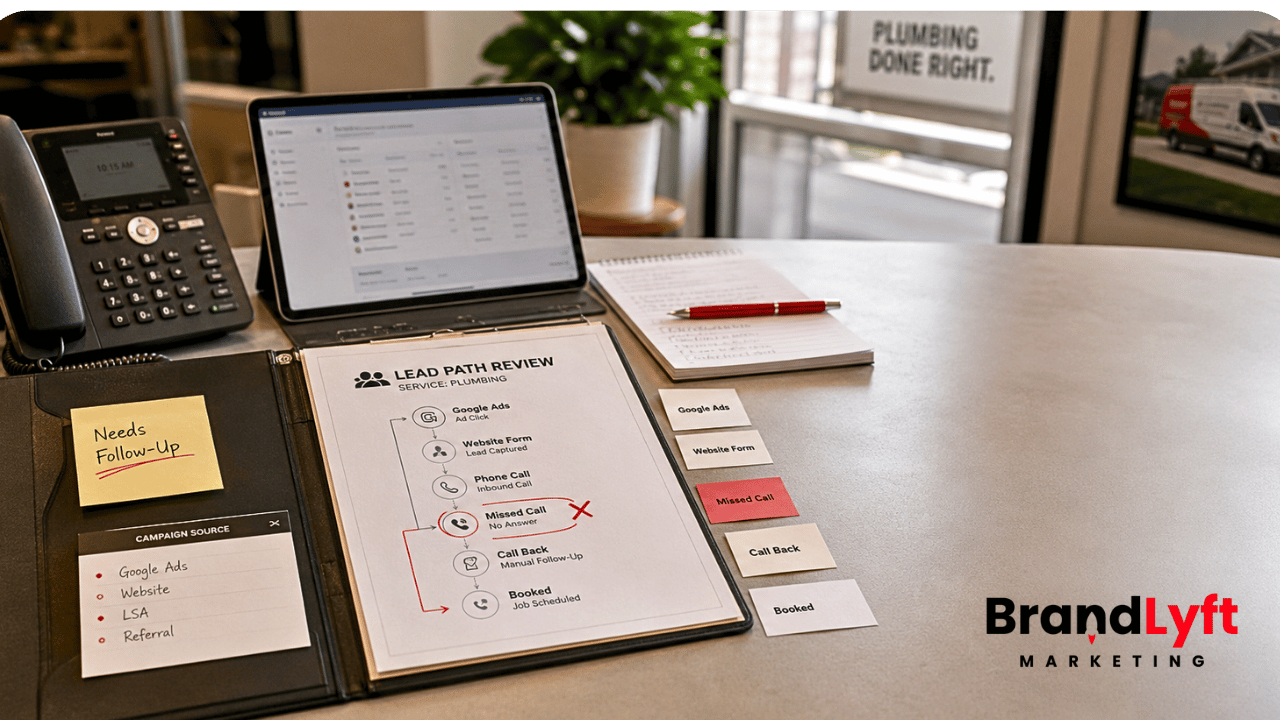
    The form captures the inquiry. The calendar books the appointment. The phone number receives calls. The pipeline tracks movement. The reporting dashboard shows outcomes. But if those pieces are not connected, the team still has to stitch the story together manually.

    That defeats the purpose.

    Marketing automation for occupational health clinics should connect the core workflow:

    A lead comes in. The service type is captured. The location is assigned. The right team is notified. The appointment path starts. The pipeline updates. The employer or patient receives the right next step. The report shows what happened.

    This is where a GoHighLevel partner can be useful. The job is not just turning on features. The job is wiring forms, calendars, workflows, pipeline stages, reminders, alerts, and reporting around how the clinic actually operates.

    Before You Build More Automation

    See What Your GoHighLevel Account Is Actually Doing Across Locations

    Most messy GHL accounts do not need more features first. They need a cleaner read on forms, calendars, workflows, routing, pipelines, reminders, and reporting. That is what the audit is built to uncover.

    If the clinic uses other systems for EHR, billing, lab results, occupational medicine records, or employer portals, GoHighLevel should not be treated as the clinical source of truth. It can still handle marketing, intake, follow-up, and routing if the boundaries are clear.

    Use Automation for Speed-to-Lead, Not Clinical Judgment

    Occupational health clinics still need trained staff making the right decisions.

    Marketing automation for occupational health clinics should not replace clinical review, compliance judgment, or staff responsibility. It should speed up the parts that do not need a person thinking from scratch every time.

    That includes instant missed-call text-back, appointment confirmations, reminders, internal notifications, task creation, employer follow-up, reactivation, review requests, and pipeline movement.

    It should not include unreviewed medical advice, sensitive diagnosis details, or anything that should live inside a clinical workflow.

    This boundary matters. OSHA’s medical screening and surveillance guide points employers back to specific standards and notes that its guide is a general overview, not a standard or regulation. Occupational health work can involve real compliance requirements, so automation should support the process without pretending to replace professional review.

    The strongest marketing automation for occupational health clinics respects the line between operational follow-up and clinical decision-making.

    Create Reporting That Owners Can Actually Use

    Reporting is where multi-location clinic leaders often find the real problem.

    They may know total lead volume. They may know appointment counts. But they may not know which location is slow to respond, which source brings employer accounts, which services create repeat demand, where no-shows are highest, or which follow-up path is failing.

    Marketing automation for occupational health clinics should make those questions easier to answer.

    Useful reporting may include inquiry source by location, booked appointments by service line, speed-to-lead, missed-call volume, no-show trends, employer account status, pipeline aging, follow-up completion, and location-level conversion.

    This does not need to become a heavy data project. The first version can be simple. The key is that the data has to be clean enough to trust.

    BrandLyft’s CRM and app development work is a natural fit when clinics need integrations, custom workflow logic, dashboards, and cleaner data flow across systems.

    For a clinic group, better reporting is not just a management perk. It shows where staff need support, where demand is coming from, and where the process is quietly leaking.

    Add Employer Reactivation and Retention Paths

    Occupational health clinics often have past employer relationships that went quiet.

    Some sent candidates for drug testing last year. Some booked physicals during a hiring push. Some asked about on-site services but never moved forward. Some were active accounts until a coordinator changed jobs.

    Marketing automation for occupational health clinics can help identify and re-engage those accounts.

    A reactivation path does not need to be aggressive. It can be a simple check-in tied to hiring season, annual testing needs, flu shot timing, respirator fit testing cycles, DOT renewal reminders, or updated employer service options.

    The key is relevance. If every employer receives the same broad message, it will feel like generic marketing. If the message reflects the employer’s prior service interest, it feels more useful.

    BrandLyft already has a Speed to Lead service path for faster response, and the same logic can support cleaner employer reactivation for occupational health clinics.

    Marketing automation for occupational health clinics should support new inquiries, but it should also protect the value of accounts the clinic already earned.

    Add AI Carefully Where It Helps

    AI can help occupational health clinics, but only in narrow, practical ways.

    AI chat can help collect basic inquiry details, point visitors toward the right service path, and reduce abandoned website visits. AI voice or conversational tools can help after-hours callers get a fast response and route basic requests.

    But AI should not create confusion around medical guidance, patient privacy, or service promises.

    Marketing automation for occupational health clinics can use AI well when the job is intake support, routing, FAQs, and next-step collection. It becomes risky when the tool starts acting like a clinician, benefits administrator, or compliance officer.

    A safer setup is to use AI to gather structured information, then hand the lead to the right team. For example, an AI chat widget can ask if the visitor is an employer, applicant, or current account, then route the conversation based on location and service need.

    That fits BrandLyft’s broader AI Live Chat and AI conversation direction without turning the clinic website into an uncontrolled advice tool.

    What a Clean GoHighLevel Build Could Include

    A strong GoHighLevel setup for occupational health clinics should feel practical.

    It may include location-based calendars, employer inquiry forms, service-specific forms, missed-call text-back, appointment reminders, no-show follow-up, employer account pipelines, lead source tracking, internal notifications, staff tasks, winback lists, review requests, and reporting dashboards.

    Marketing automation for occupational health clinics becomes stronger when those pieces are simple enough for staff to trust.

    That means clean naming conventions, clear ownership, limited duplicate workflows, documented routing rules, and testing before launch. It also means checking the system after real leads start moving through it.

    The goal is not to make GoHighLevel impressive. The goal is to make the clinic’s lead flow, appointment flow, and employer follow-up easier to run.

    A multi-location occupational health clinic does not need a beautiful CRM that nobody uses. It needs a working system that supports real clinic behavior.

    When to Audit Before Rebuilding

    If a clinic already uses GoHighLevel, do not start by adding more workflows.

    Start by checking what is already there.

    The Next Workflow Can Wait Until You Know What Is Broken

    If your clinic group already has GoHighLevel, the smartest move is not guessing which automation to add next. Start with the usage audit, then fix the account around the way each location really works.

    Show Me What To Fix First

    Marketing automation for occupational health clinics can get messy when multiple people have edited the account over time. Before rebuilding, review the forms, calendars, users, custom fields, tags, workflows, pipelines, triggers, integrations, phone numbers, reporting, and automations that already exist.

    Look for duplicate workflows, outdated reminders, broken routing, confusing tags, unused pipeline stages, missing attribution, and team workarounds.

    That is why the right CTA for this article is a Franchise GHL Location Usage Audit. It gives a clinic group a way to see how each location is using the system, where staff trust it, where they avoid it, and where the setup no longer matches the real workflow.

    Marketing automation for occupational health clinics should begin with truth. If the current account is already unstable, adding more automation only makes the mess harder to diagnose.

    Final Takeaway

    Marketing automation for occupational health clinics is not about replacing clinic staff with software. It is about reducing the manual drag around employer inquiries, appointment scheduling, follow-up, location routing, and reporting.

    For multi-location occupational health clinics, the real win is consistency. Every location should know what to do when an inquiry comes in. Every employer should get a clear next step. Every appointment should have a reminder path. Every missed call should get a response. Every owner should be able to see what is working without chasing spreadsheets.

    GoHighLevel can support that kind of system, but only when it is built around the way the clinic actually operates.

    If your occupational health clinic group already uses GoHighLevel, start with a Franchise GHL Location Usage Audit before adding another workflow. Find the gaps first. Then build the automation around the real clinic process.

    Request a Franchise GHL Location Usage Audit

    If your clinic group has multiple locations using GoHighLevel, BrandLyft can help you find where the account is clean, where it is patched together, and where location usage is creating hidden lead leaks.

    Start with a Franchise GHL Location Usage Audit so your team can see what needs cleanup before more automation gets added.

  • How Our HighLevel Growth Plan Benefits Your Roofing Business

    How Our HighLevel Growth Plan Benefits Your Roofing Business

    HighLevel is indeed a powerful platform, but if it’s not used strategically, it can feel more like a burden than a benefit. With BrandLyft’s HighLevel Growth Plan, we take the complexity out of the equation, allowing you to focus on what you do best: running a successful roofing business. Here’s how:

    1. Workflow Automation Buildouts: Say Goodbye to Lost Leads

    Imagine this: A potential client visits your website, fills out a form requesting a roofing estimate, and… nothing happens. Without the right workflows in place, this high-intent lead can easily slip through the cracks. With BrandLyft’s HighLevel Growth Plan, that won’t happen.

    Here’s What We Do:

    • Lead Capture Automation: When someone fills out your website form or engages with an ad, our custom-built workflows immediately trigger follow-up actions.
    • Automated Follow-Up Sequences: Every lead is nurtured with timely, relevant messages—whether through SMS, email, or even voicemails—keeping your business top of mind and encouraging conversions.
    • Lead Assignment and Task Automation: Automations ensure that your team is alerted to new leads instantly, assigning tasks based on lead location, urgency, or other factors unique to roofing projects.

    With HighLevel’s automation, expertly configured by BrandLyft, you can eliminate lost leads and watch your conversion rate soar.

    2. Custom Integrations: Make HighLevel Work Seamlessly with Your Existing Tools

    Maybe you already use a project management software or specific roofing CRM to handle on-the-job details. HighLevel can integrate with these tools, creating a single ecosystem that enhances your efficiency.

    Our Integration Process Includes:

    • Job Management Integration: We set up integrations with job management tools (Like JobNimbus) so that data flows seamlessly between systems. From the initial lead capture to the project’s final stages, everything is connected.
    • Custom API Integrations: If you need something specific, our team can create custom integrations to align with your unique needs.

    These integrations streamline your operations, reducing time-consuming manual tasks and giving you full visibility into your business at a glance.

    3. Training and Onboarding: Empower Your Team with HighLevel

    One of the biggest challenges roofing companies face with HighLevel is simply getting their team up to speed. HighLevel can feel intimidating, especially for non-tech-savvy staff members. With BrandLyft’s training, we make sure everyone on your team knows exactly how to use it to achieve the best results.

    Our Training Covers:

    • Sales and Customer Service Training: We show your sales and support team how to use HighLevel’s CRM and automation tools to respond quickly and efficiently to leads and clients.
    • Ongoing Support: Beyond initial training, we provide resources, live support, and guidance whenever you need it.
    • HighLevel Certification: As a certified HighLevel partner, we’re experts in the platform, and we keep your team informed on the latest updates, so you’re always ahead of the curve.

    With BrandLyft, you get more than just tools—you get the knowledge and confidence to make HighLevel an indispensable part of your business.

    4. Slack-Based Support: Your Lifeline for Real-Time Help

    HighLevel is powerful, but let’s face it—things can get complicated fast. That’s why we provide Slack-based support to all our clients. Think of it as having a direct line to HighLevel experts who understand your business and are ready to help.

    How Slack Support Works:

    • Instant Access to Experts: Get answers quickly without having to go through long email chains or support tickets.
    • Real-Time Troubleshooting: When issues arise, we’re on it, ensuring minimal downtime for your business.
    • Collaborative Planning: We work with you to develop new strategies, make adjustments, and ensure that your Growth Plan remains aligned with your evolving needs.

    Having a dedicated support channel gives you peace of mind, knowing that help is just a message away, anytime you need it.

    Real-Life Success Stories from Roofing Companies We’ve Helped

    Case Study 1: Multi-Location Roofing Business
    A multi-location roofing company was struggling to manage leads effectively across different regions. Their system was chaotic, with no centralized place for tracking, follow-ups, or reporting. With our HighLevel Growth Plan, we integrated their lead management process into one streamlined system and customized workflows for each location. Now, their team can focus on sales instead of admin work, with a clear picture of their pipeline across every location.

    Case Study 2: Solo Roofing Contractor
    A single-location roofing contractor wanted to make a bigger impact in their local market. We built an automated lead capture and follow-up system that allowed them to engage every lead within minutes, all while keeping overhead low. As a result, their business grew by 50% in just six months.

    Case Study 3: High-Ticket Roof Repairs and Installations
    For a roofing business that specializes in high-ticket services, we developed a nurturing sequence that educated leads about the benefits of premium roofing solutions. Through educational drip campaigns, custom landing pages, and retargeting ads, we helped increase their high-ticket conversion rate by 30%.

    Why BrandLyft? Your Partner in HighLevel-Powered Growth

    BrandLyft isn’t just another agency—we’re your growth partner, specializing in HighLevel to support roofing businesses just like yours. As a certified HighLevel partner, we steward hundreds of subaccounts, and our expertise extends to consulting with franchises and multi-location businesses, as well as roofing companies aiming to unlock HighLevel’s full potential.

    Why Choose BrandLyft?

    • Experienced in Roofing Industry Needs
    • Certified HighLevel Partner
    • Custom Automation and Integration Services
    • Ongoing Slack-Based Support
    • Proven Results Across Roofing Companies of All Sizes

    With our HighLevel Growth Plan, you’re not just getting access to powerful tools—you’re getting a team that knows how to use them to maximize your success.

    Ready to Transform Your Roofing Business? Let’s Talk!

    If you’re tired of dealing with inadequate support, complex workflows, and missed opportunities, it’s time to take the next step. BrandLyft’s HighLevel Growth Plan is here to simplify your processes, boost your lead generation, and put you on a path to sustainable growth.

    Book a discovery call with us today, and let’s discuss how we can help you harness HighLevel to its fullest potential. With BrandLyft by your side, you’ll be equipped to overcome any marketing challenge and reach new heights in your roofing business.

  • Marketing Automations Every Service-Based Business Needs

    Marketing Automations Every Service-Based Business Needs

    In the fast-paced world of service-based businesses, staying ahead of the competition means not only offering superior services but also ensuring your marketing strategies are efficient and effective. This is where marketing automation comes into play, streamlining processes and maximizing results. 

    However, diving into automation can be overwhelming without a trusted guide. Enter BrandLyft Marketing, a HighLevel Partner Agency committed to transforming your digital marketing efforts. With our expertise, we promise not just an improvement but a revolution in attracting and retaining customers, delivering 200-400% more customers each month through proven digital marketing strategies and automation systems. If you’re tired of the confusion and stress that often comes with digital marketing, it’s time to explore the automations that every service-based business—maybe even yours—desperately needs.

    Appt Reminders & Missed Call Text Back

    No shows and missed calls can significantly impact your service business’s bottom line. Implementing automated appointment reminders and missed call text-back services ensures that your appointments stick and any potential client reaching out through a call is immediately acknowledged, even when you’re unable to answer.

    New Lead Notifications & Reactivation Campaigns

    When new leads come in, time is of the essence. Automated notifications can prompt your team to act swiftly, making the difference between securing a new client or losing them to a competitor. Similarly, reactivation campaigns can breathe new life into dormant leads, transforming them from cold to sales-ready.

    Client Experience Tasks & Stale Lead Notifications

    Automating client experience tasks, such as onboarding emails or satisfaction surveys, helps in cultivating a relationship with your clients. For leads that haven’t engaged in a while, stale lead notifications can prompt your sales team to re-engage, ensuring that no potential client slips through the cracks.

    Proposal Reminders & Contract Reminders

    Streamlining the proposal and contract process not only saves time but also increases the closing rate. Automated reminders can keep these critical tasks on your client’s radar, reducing turnaround times and improving conversion rates.

    Conversational AI Booking Assistant & Automated Review Campaigns

    Leverage AI to manage bookings, ensuring that potential clients can schedule your services 24/7 without human intervention. Post-service, automated campaigns can encourage satisfied clients to leave reviews, boosting your business’s online reputation and attracting more customers.

    Long-Term Nurture Sequences & Database Reactivation

    Nurturing leads over time with automated emails keeps your brand top of mind, slowly moving leads down the sales funnel. Additionally, regular database cleaning and reactivation campaigns can unearth opportunities from your existing contacts.

    Course Gamification & Certification

    If your service includes educational components, adding gamification and offering certifications through automated systems can enhance client engagement and perceived value, encouraging loyalty and referrals.

    Cross-Selling, Renewal Follow-Ups & Social Media Planning

    Automated systems can identify opportunities for cross-selling, manage renewal follow-ups efficiently, and even help in planning and executing your social media strategy, ensuring consistent online presence and engagement.

    Sales Pipeline Management & Referral Program

    Automating sales pipeline management helps in visualizing and streamlining the sales process, while an affiliate system or referral program automation encourages your satisfied clients to become brand ambassadors, directly contributing to your business growth.

    Partner With A Proven HighLevel Agency

    Adding more depth to the insights on marketing automations, let’s take a moment to appreciate the levity that occasionally surfaces in the digital marketing realm. Picture this: an AI, trained to engage with clients, subtly incorporating dad jokes into conversation starters, boosting engagement through sheer novelty and humor. It’s not just about streamlining processes; it’s about creating memorable experiences for your customers. Who said automation has to be mundane?

    In addition to the innovative features already listed, it’s vital to highlight the importance of analytics and reporting in automation. With BrandLyft Marketing, your business will not just have access to top-tier automation tools but also to comprehensive analytics that detail every facet of your digital marketing campaign’s performance. Imagine knowing exactly how each campaign contributes to your ROI, adjusting strategies in real time to optimize performance. Our promise at BrandLyft Marketing, a HighLevel Partner Agency, goes beyond simplifying marketing; it’s about offering clarity and control over your digital future.

    Metrics play a crucial role in illustrating the success of incorporating automation into your marketing strategy. On average, our clients witness a 300% increase in lead engagement and a 50% reduction in time spent on repetitive tasks. This not only maximizes team productivity but also significantly boosts the bottom line.

    “To automate is to liberate,” says BrandLyft, CEO of BrandLyft Marketing. “Our clients find themselves spending less time on mundane tasks and more on what truly matters—growing their businesses and enhancing customer relationships.”

    In conclusion, embracing marketing automation with BrandLyft Marketing, a distinguished HighLevel Partner Agency, means not only ensuring your business remains competitive but setting a new standard for what it means to be at the forefront of digital innovation. Our suite of automation solutions is designed not just for efficiency but for propelling your service-based business toward a future where every interaction is an opportunity for growth.

    In the complicated world of service-based business management, marketing automation is not just a convenience—it’s a necessity. BrandLyft Marketing understands the nuances of digital marketing and the transformative power of automation. Our role as a trusted HighLevel Partner Agency equips us with the tools and knowledge to tailor these automation solutions specifically to your business needs, propelling you towards unprecedented growth.

    Ready to unleash the full potential of your service-based business? It’s time to move beyond the chaos of traditional marketing methods. Embrace efficiency, effectiveness, and exponential growth with BrandLyft Marketing. Contact us today, and let’s ignite your business growth together. Explore our services further, and let’s chart the course to exponential growth. After all, in the world of service-based business, the right automation partner doesn’t just support your work; it enhances every aspect of your customer interaction and paves the way for unforeseen success. Visit our website to learn more, and together, let’s make marketing automation your business’s new best friend! Book your free discovery call today.

  • BrandLyft Marketing – Why We’re The Premier Agency For Your HighLevel Projects

    BrandLyft Marketing – Why We’re The Premier Agency For Your HighLevel Projects

    In the dynamic landscape of modern business, navigating the realms of marketing automation with finesse is not just a choice; it’s a necessity. At BrandLyft Marketing, we stand as your premier agency, ready to steer your HighLevel projects towards unparalleled success. Whether you’re an ambitious marketing agency, a budding small business, or a forward-thinking franchise, our expertise is tailored to elevate your ventures within the HighLevel ecosystem.

    For small businesses, we have meticulously crafted our own white-labeled version of HighLevel – an iteration refined for simplicity, optimized user experiences, unwavering support, and seamlessly integrated plug-and-play strategies. Our track record, marked by hundreds of satisfied clients, attests to our ability to drive lead generation, foster engagement, nurture prospects, and secure conversions, all through the strategic implementation of HighLevel.

    Picture this: a seamless series of interactions that seamlessly guide your leads from discovery to conversion. Whether you’re a marketing agency aiming to dazzle clients or a small business striving for efficient customer engagement, our team specializes in the art of designing workflows that do more than automate – they elevate.

    Our collaborative approach is at the heart of our workflow design process. We’re not just consultants; we’re partners invested in your success. Through in-depth consultations, we immerse ourselves in your brand, your voice, and your goals. By synergizing your insights with our marketing prowess, we co-create workflows that are tailored to your specific needs.

    Are you envisioning personalized email sequences that captivate your audience at every touchpoint? Perhaps you desire a lead nurturing journey that feels like a genuine conversation. Whatever your vision, we transform it into a reality using HighLevel’s versatile toolkit. From lead scoring and segmentation to dynamic content delivery, we harness the power of marketing automation to orchestrate experiences that resonate.

    Our journey within the HighLevel ecosystem dates back to 2019, giving us an insightful edge that few possess. Throughout these years, we’ve fostered strong relationships with key figures such as Shaun Clark, Robin Paulson, and Chase, as well as several other HighLevel executives. These connections provide us with invaluable insights into the transformative shifts reshaping the landscape of online marketing automation.

    Whether you require assistance with onboarding, seamless setup, complex migration, strategic guidance, or comprehensive end-to-end implementation, our adept team is equipped to tackle every facet of your marketing automation needs. With BrandLyft Marketing by your side, harness the power of HighLevel with confidence and stride ahead in the journey of digital business transformation.

    Worried about transitioning from your current marketing automation platforms like HubSpot, ActiveCampaign, or Keap (formerly known as Infusionsoft)? Rest assured, our team possesses extensive experience in seamless migration. We comprehend the intricacies of these platforms and have successfully orchestrated smooth transitions for numerous clients. With meticulous planning and strategic execution, we ensure your data, campaigns, and strategies smoothly transition to HighLevel, preserving your hard-earned progress while opening doors to new possibilities.

    Your journey towards streamlined and effective marketing automation begins with a simple step – scheduling a discovery call with BrandLyft Marketing. Together, we can uncover the potential that HighLevel holds for your business and chart a course towards unparalleled growth and efficiency.

  • Elevating Client Engagement: How BrandLyft Marketing Maximizes Opportunities with LeadDragon’s “Missed Call Text Back

    Elevating Client Engagement: How BrandLyft Marketing Maximizes Opportunities with LeadDragon’s “Missed Call Text Back

    In modern marketing, responsiveness and immediate client engagement are the cornerstones of success. As a visionary marketing agency, BrandLyft Marketing understands that answering phone calls is not just a routine task—it’s a strategic move that can make or break a client’s perception of your brand. In this article, we explore the pivotal role of answering calls, shed light on the risks of disregarding missed opportunities, and unveil a transformative solution, LeadDragon’s “Missed Call Text Back” feature, which is set to redefine client interactions and drive exceptional growth for all our valued clients.

    The Power of Immediate Connections

    In a fast-paced digital era, the significance of swift, personalized communication cannot be overstated. BrandLyft Marketing recognizes that every unanswered phone call represents a potential missed opportunity. When clients and prospects reach out, they seek assurance, information, or solutions. By picking up the phone, we boldly state that their needs matter and are committed to delivering results.

    Missed Calls: A Costly Gamble

    Consider this scenario: a potential client discovers your brand, intrigued by the promise of your marketing prowess. They decide to give you a call, seeking insights about your services. The call rings, but there’s no answer. Frustration mounts and doubts creep in. In a split second, that potential client decides to explore other options—a competitor’s number is dialed, and a connection is established. The implications of a missed call can be catastrophic, causing clients to question our dedication and reliability.

    Unleashing LeadDragon’s “Missed Call Text Back”

    Enter LeadDragon’s revolutionary solution, the “Missed Call Text Back” feature—an instrumental tool that BrandLyft Marketing is proud to implement for all our clients. With this innovation, we transform missed calls from pitfalls into opportunities. Each unanswered call triggers an immediate and personalized text message, reassuring clients that their inquiries are valued and that we’re proactively working to cater to their needs.

    Elevating Engagement with AI-Powered Efficiency

    But the capabilities of LeadDragon don’t stop there. BrandLyft Marketing takes a giant leap forward by leveraging an AI-powered bot meticulously trained on our agency’s ethos and services. This digital assistant is a virtual extension of our team, addressing inquiries, scheduling calls, and providing real-time solutions while embodying our brand’s voice and commitment. Imagine having a tireless, 24/7 customer service and sales agent at your disposal—a feature that sets BrandLyft Marketing leagues ahead in client engagement.

    The BrandLyft Advantage: Driving Growth through Connection

    With LeadDragon’s “Missed Call Text Back” feature and our agency’s expert application, BrandLyft Marketing ensures that every interaction, no matter how brief, becomes a stepping stone toward stronger client relationships and elevated brand loyalty. Our commitment to answering calls encapsulates our dedication to success, innovation, and excellence.

    Embrace the Future of Engagement

    In the realm of marketing, first impressions are everything. BrandLyft Marketing is revolutionizing how we engage with clients, harnessing the power of LeadDragon’s technology to transform missed calls into meaningful connections. As we implement the “Missed Call Text Back” feature for all our clients, we’re setting a new standard for responsiveness and client satisfaction, reaffirming our position as a trailblazing marketing agency that values every moment of client interaction.

    Join us in embracing the future of engagement. Connect with BrandLyft Marketing, and together, let’s elevate your brand’s journey to unparalleled heights.

  • How AI Transforms the Marketing Funnel: Leading Human Buyers

    How AI Transforms the Marketing Funnel: Leading Human Buyers

    [vc_row][vc_column][vc_column_text woodmart_inline=”no” text_larger=”no”]Artificial intelligence (AI) is revolutionizing various industries in today’s digital landscape, and marketing is no exception. AI has the potential to transform the traditional marketing funnel by leading human buyers through each stage with enhanced personalization, proactive assistance, and streamlined processes. Let’s explore in greater detail how AI is reshaping the marketing funnel and empowering consumers to make informed decisions.

    Stage: Awareness

    DetailTodayNear-TermMid-Term
    AI EducationAI assists in responding to human prompts and queries.AI proactively educates users based on their needs.AI anticipates users’ information needs before they ask.

    Today, AI already plays a crucial role in the awareness stage by assisting users in understanding their needs and pain points. Users can prompt AI with specific queries, and AI responds by providing relevant information and recommendations. However, the future holds even more exciting possibilities. In the near term, AI will become increasingly proactive in educating users. Instead of waiting for prompts, AI will proactively anticipate users’ information needs and provide valuable insights and suggestions. For instance, imagine an AI assistant that suggests a personalized diet plan based on your health data, offering information and guidance even before you ask for it. Looking further into the mid-term, AI will continue to evolve and refine its ability to anticipate users’ needs, providing tailored content and recommendations that align with their preferences and behaviors.

    Stage: Engagement

    DetailTodayNear-TermMid-Term
    User-Initiated DialogUsers prompt AI for detailed information about solutions.AI initiates dialogue with users, offering solutions proactively.AI proactively engages users, even before they seek help.
    Personal AssistanceAI assists in tasks like arranging travel itineraries upon request.AI autonomously takes on tasks like travel planning and coordination.AI assists users with personalized recommendations and actions.

    In the engagement stage, AI transforms how users interact with brands and solutions. Currently, users typically prompt AI for detailed information or assistance when they have specific questions or requirements. AI responds by providing relevant answers or solutions. However, the future of AI in engagement is more proactive and user-centric. In the near term, AI will take the initiative to engage users, initiating dialogue based on their preferences and potential needs. 

    This means that AI will respond to user queries and offer solutions before users even realize they need assistance. For example, imagine an AI assistant that proactively arranges a travel itinerary for your upcoming holiday, considering your preferences and providing recommendations even before you thought to seek help. Looking ahead to the mid-term, AI will evolve into personalized assistants that proactively engage users, offering tailored recommendations and actions to enhance their engagement and overall experience.

    Stage: Consideration

    DetailTodayNear-TermMid-Term
    Product ComparisonsHumans compare products and read reviews.Humans delegate product comparisons to AI.AI shops and auto-compares products on users’ behalf independently.
    AI as a Shopping AgentHumans rely on AI’s suggestions and recommendations.AI provides comprehensive suggestions and comparisons for purchasing.AI autonomously handles purchases, streamlining the entire process.
    Personalized RecommendationsAI offers recommendations based on user preferences and behavior.AI leverages vast datasets to deliver highly personalized product options.AI becomes a trusted shopping agent, making informed decisions on behalf of users.


    The consideration stage is crucial for users as they evaluate different products or services and make informed decisions. Traditionally, humans compare products, read reviews, and rely on their research to make choices. However, with the advancements in AI, this stage is set to undergo a significant transformation. 

    In the near term, users will delegate the task of product comparisons to AI agents. Instead of manually sifting through multiple options, AI will leverage its ability to process vast amounts of data and provide users with comprehensive product comparisons based on their preferences and requirements. This will enable users to make more informed decisions efficiently. Looking into the mid-term, AI will take this transformation further by independently shopping and auto-comparing products on users’ behalf. AI agents will provide recommendations and autonomously handle purchases, streamlining the entire process and ensuring a seamless user experience.

    Stage: Purchase

    DetailTodayNear-TermMid-Term
    AI-enabled E-commerceUsers manually select and purchase products through websites.AI apps progressively handle purchases on users’ behalf.AI autonomously manages purchases, ensuring a seamless experience.


    In the purchase stage, AI will progressively take on a more active role, making the buying process smoother and more efficient for users. Today, e-commerce transactions primarily occur through websites and online retailers, with users manually selecting and purchasing products. However, AI apps will gradually become the preferred purchase platform in the near term. 

    Users will rely on AI agents to handle investments on their behalf, allowing for a more streamlined and personalized shopping experience. For example, imagine receiving a message from your AI assistant saying, “I’ve placed an order for your favorite brand of coffee.” The AI assistant will proactively track users’ preferences, manage inventory, and ensure a hassle-free transaction process. Looking ahead to the mid-term, AI will further evolve as a trusted shopping agent, making informed decisions on behalf of users, managing loyalty programs, and optimizing the overall purchase experience.

    AI is revolutionizing the marketing funnel by leading human buyers through each stage with enhanced personalization, proactive assistance, and streamlined processes. From creating awareness and engaging users to aid in consideration and streamlining purchases, AI transforms how consumers interact with brands and make purchasing decisions. As AI evolves, marketers and businesses must embrace this transformative technology to stay ahead in the competitive landscape and deliver exceptional customer experiences.

    At BrandLyft Marketing, we pride ourselves on being at the forefront of the ever-evolving marketing landscape, particularly when it comes to harnessing the power of AI. With our unwavering commitment to innovation and staying ahead of the curve, we have positioned ourselves as pioneers in leveraging AI to transform the marketing funnel and engage human buyers in groundbreaking ways. Our team of experts is constantly exploring cutting-edge AI technologies and staying abreast of industry trends to ensure that our clients benefit from the most advanced strategies and tactics. By embracing AI and its transformative potential, we empower businesses to connect with their target audience on a deeper level, deliver personalized experiences at scale, and achieve unprecedented levels of success. At BrandLyft Marketing, we are dedicated to revolutionizing the marketing landscape through AI, empowering our clients to lead the way in engaging human buyers and driving remarkable business growth.[/vc_column_text][/vc_column][/vc_row][vc_row][vc_column][html_block id=”6068″][/vc_column][/vc_row]

  • How Small Business Owners Can Leverage ChatGPT & OpenAI Technology

    How Small Business Owners Can Leverage ChatGPT & OpenAI Technology

    ChatGPT and OpenAI’s technology are having a profound impact on small businesses. At BrandLyft we’ve been using these tools for a while. The craze is finally out and these technologies are available to most tech friendly people out there, including many small business owners. These cutting-edge AI technologies are making it easier and more affordable for small business owners to automate and streamline many of their operations. Here are a few examples of how small business owners can leverage tools powered by ChatGPT and OpenAI’s technology:

    • Customer Service: Small business owners can use ChatGPT-powered chatbots to provide 24/7 customer service to their clients. These chatbots can answer frequently asked questions, help customers place orders, and provide support.
    • Marketing: Small business owners can use OpenAI’s technology to analyze vast amounts of data to gain insights into their customers’ needs and preferences. This information can then be used to develop targeted marketing campaigns that are more likely to resonate with their target audience.
    • Marketing Automation: OpenAI API-powered tools can analyze customer data to develop targeted marketing campaigns that are more likely to resonate with specific customer segments.
    • Lead Generation: OpenAI’s technology can be used to automate lead generation processes, making it easier for small business owners to identify and reach out to potential customers.
    • Sales Automation: ChatGPT-powered AI tools can be used to automate repetitive sales tasks, freeing up small business owners to focus on more high-value activities.

    In certain small business sectors, there are a number of content generation tools like white label chat gpt-3 that can help them with any inspiration and writers block. We always recommend using such services as a complementary tool and not as a replacement for human creativity. Some examples include:

    • Marketing and Advertising: Small businesses in the marketing and advertising sector can use OpenAI’s API-powered content generators to create new and unique content for their marketing campaigns, including product descriptions, blog posts, and social media updates.
    • E-commerce: Small businesses in the e-commerce sector can use OpenAI’s API-powered content generators to create product descriptions, product reviews, and other forms of content that can help increase their visibility and drive sales.
    • Media and Publishing: Small businesses in the media and publishing sector can use OpenAI’s API-powered content generators to generate news articles, blog posts, and other forms of content that can be used to drive traffic and engagement.
    • Healthcare: Small businesses in the healthcare sector can use OpenAI’s API-powered content generators to create educational content for patients, such as guides and informational articles.
    • Education: Small businesses in the education sector can use OpenAI’s API-powered content generators to create educational resources, such as study guides, quizzes, and other forms of content.

    By using OpenAI’s API-powered content generators, small businesses in these and other sectors can save time, reduce costs, and improve the quality of their content. This can help them increase their visibility, build their brand, and drive growth in their businesses.

    ChatGPT and OpenAI’s technology also offer small business owners a wealth of opportunities to streamline and automate their operations, reduce costs, and increase profits. With these tools, small business owners can compete with larger organizations and drive growth in their businesses. Specifically in the area of marketing automation, we’re going to see an entire industry change. Here are some specific examples of how OpenAI can help with marketing automation:

    • Customer Segmentation: OpenAI can analyze customer data to identify key segments of your target audience. This information can then be used to create targeted marketing campaigns that are more likely to resonate with specific customer segments.
    • Predictive Analytics: OpenAI can use predictive analytics to determine the most effective marketing channels and tactics for reaching your target audience. This can help you allocate your marketing resources more effectively and get better results from your marketing efforts.
    • Personalization: OpenAI can analyze customer data to create personalized marketing messages that are tailored to each customer’s needs and preferences. This can help you build stronger relationships with your customers and increase the effectiveness of your marketing campaigns.
    • Content Generation: OpenAI can generate new marketing content, such as product descriptions, blog posts, and social media updates, freeing up your marketing team to focus on other tasks.
    • Lead Scoring: OpenAI can analyze customer data to score leads based on their likelihood to convert, helping you prioritize your sales efforts and close more deals.

    In addition there are many non marketing and business operational functions this technology will profoundly impact small business owners. For example, A service-based small business like a plumber or home services contractor can leverage OpenAI API-powered tools in several ways, including:

    • Scheduling and Dispatching: OpenAI API-powered tools can automate scheduling and dispatching tasks, allowing service providers to quickly and efficiently allocate resources to meet customer needs.
    • Predictive Maintenance: OpenAI API-powered tools can analyze data from sensors, smart devices, and other sources to predict when equipment or systems are likely to fail, allowing service providers to proactively address issues before they cause downtime or other problems.
    • Chatbots for Customer Service: OpenAI API-powered chatbots can provide 24/7 customer support, answering questions, providing information, and helping customers schedule appointments.
    • Knowledge Management: OpenAI API-powered tools can be used to manage and organize information about products, services, and procedures, making it easier for service providers to access the information they need to do their jobs.

    By leveraging these OpenAI API-powered tools, service-based small businesses can improve their efficiency, reduce costs, and provide better service to their customers. This can help them compete more effectively in their market and drive growth in their businesses.

    At BrandLyft, we have been using GPT-3 artificial intelligence for over a year, much before the craze. We use human creativity and ingenuity combined with these powerful tools to deliver results for our clients. The impact of OpenAI on small businesses is complex and depends on several factors. In some cases, OpenAI and similar technologies can make some small businesses more efficient and competitive, allowing them to grow and thrive. However, in other cases, small businesses that do not adopt these technologies or are unable to effectively leverage them may find themselves at a disadvantage and potentially go out of business.

    Ultimately, the impact of OpenAI on small businesses will depend on a number of factors, including the business’s ability to adopt and implement the technology, the competitive landscape, and the specific needs of the business. Small businesses that are able to effectively adopt these technologies can use them to improve their competitiveness, drive growth, and secure their future success.


  • Using TikTok Ads For Your Business – Is It Worth It?

    Using TikTok Ads For Your Business – Is It Worth It?

    Using TikTok Ads For Your Business – Is It Worth It?

    If you’re looking for the short answer: YES.

    TikTok is a popular social media platform that has gained a lot of attention in recent years. Yes, it is definitely worthwhile to invest in TikTok Advertising for your business. We think it’s a channel that will become increasingly more important over the years for advertisers and businesses. Right now, TikTok reminds us of the early years of Facebook Advertising. The golden days of cheap impressions, clicks, and conversions. Should you replace your Facebook or Instagram ads with it? Of course not, but adding the TikTok channel to your arsenal of advertising placements can only help your efforts of staying top of mind and adding new customer acquisition channels for your business. TikTok is expected to be the dominant social media channel for years to come.

    If you’re unfamiliar with TikTok, then here’s a quick overview on what’s possible with the platform. TikTok is a social media platform that allows users to create and share short videos. It has become extremely popular, especially among younger users, and has attracted a significant number of advertisers. If you are considering using TikTok advertising for your business, here are a few things you should know:

    • TikTok offers several types of ads, including in-feed ads, brand takeovers, and branded hashtags. You can choose the type of ad that best fits your business goals and target audience.
    • TikTok has a self-serve ad platform called the TikTok Ads Manager, which allows you to create, manage, and track your ads. It offers a variety of targeting options, such as location, age, and interests, to help you reach the right audience.
    • TikTok ads can be effective at driving brand awareness, engagement, and sales. However, it is important to create ads that are relevant, engaging, and creative to stand out on the platform.
    • TikTok has a unique creative culture, with users creating and sharing short, catchy videos set to music. To create successful TikTok ads, it is important to understand this culture and create content that fits within it.
    • TikTok is still a relatively new platform, and it is constantly evolving. It is important to stay up-to-date on the latest features and best practices to ensure that your TikTok advertising efforts are effective.

    Okay, you’re convinced and you want to run ads on TikTok, but where do you even start? You’ll need a gameplan. We recommend strategizing and brainstorming a campaign and collaborating with an agency or influencer that knows the ins and outs of the platform and what’s “trending”, Millennial or Gen Z speak for what’s popular!

    Let’s see for example you’re a fitness business. Here’s some examples of how you can leverage TikTok as an advertising platform along with some influencer marketing, organic marketing, and gamification tactics.

    TikTok is a popular social media platform that has gained a lot of attention in recent years. It is a great platform for businesses to advertise their products and services, especially in the fitness industry. Here are some tips for using TikTok advertising for your gym:

    • Create engaging content: TikTok is all about short, catchy videos that are easy to watch and share. Make sure your content is visually appealing, entertaining, and informative. Use music, special effects, and hashtags to make your videos stand out.
    • Use relevant hashtags: Hashtags are essential for getting your videos noticed on TikTok. Use relevant hashtags like #fitness, #workout, #gymlife, and #healthy to attract your target audience.
    • Collaborate with influencers: TikTok is full of influencers who have a large following and are passionate about fitness. Consider collaborating with these influencers to create content that promotes your gym and its services.
    • Run a contest or challenge: TikTok is perfect for running fun and engaging contests or challenges. For example, you could run a #30daychallenge where users have to follow a workout plan and share their progress on TikTok.
    • Use TikTok ads: TikTok offers various ad formats, including sponsored hashtags, in-feed video ads, and branded effects. Use these ad formats to target your desired audience and get your gym noticed on the platform.

    By following this gameplan, you can effectively use TikTok advertising to promote your gym and attract new customers. Sounds good? You can start by creating a TikTok ad account for your business (or you can just hire us!).

    Overall, TikTok advertising can be a powerful way to reach a large, engaged audience and drive results for your business. It is important to carefully plan and execute your TikTok advertising strategy to make the most of this opportunity.


  • Why Organic Reach on Social Media Sucks for Small Businesses

    Why Organic Reach on Social Media Sucks for Small Businesses

    It’s 2023, and if you’re still paying agencies and freelancers to create content and post for your business, then you need a wake up call. Organic reach on posts by business pages across Facebook, Instagram, Twitter, and other platforms are at an all time low. The reasoning is obvious, it’s a pay to play world! Social media platforms like Facebook and Instagram prioritize content from friends and family over content from businesses. This means that even if a business has a large number of followers, its posts may not be seen by all of them because the algorithm is more likely to show posts from people that the user has a closer relationship with.

    In other words, organic is DEAD.

    So our advice, before we go more in depth on other reasons is this: Ditch paying for social media management and double down on paid advertising. Or at least dedicate a certain budget to your “best” performing social media posts.

    There are millions of businesses on Facebook, all competing for attention from users. This means that it is harder for businesses to stand out and be seen.

    Here’s some of the other reasons why your posts may only be reaching as little as 8% of your audience on your social channels…

    Competition for attention: As more businesses and individuals use social media, the competition for attention on these platforms increases. This can make it harder for your content to be seen by your followers. Facebook’s algorithm prioritizes content from friends and family over content from businesses. This means that business posts are less likely to be shown in users’ feeds. So it’s not just your business vs others, but your business vs friends and family!

    Changes in algorithms: Social media platforms frequently update their algorithms, which can affect the visibility of content in users’ feeds. These updates are often designed to show users more content that is relevant and engaging to them, which means that content from businesses may not always be prioritized.  If users are not interacting with a business’s posts (by liking, commenting, or sharing), Facebook’s algorithm will assume that the content is not relevant and will show it to fewer people.

    Paid promotion: In some cases, businesses may choose to pay for their content to be promoted on social media. This can decrease the organic reach of their content, as it is being shown to fewer people who are not following the business.

    Quality of content: The quality of the content you post on social media can also impact your organic reach. If your content is not engaging or relevant to your audience, it may be less likely to be seen by them. It’s extremely important to understand that organic reach on social media can be challenging, and it may be necessary to use paid advertising or other tactics to reach a larger audience.

    Overall, it’s important for businesses to consider these factors and to find ways to create high-quality, engaging content that resonates with their audience in order to increase their organic reach on social media. If you’re still relying on old outdated social media marketing strategies, it may be time for you to add advertising to your marketing budget mix. Reach out to us for a free discovery call and audit.


  • Tiktok vs. Facebook Ads for Small Businesses

    Tiktok vs. Facebook Ads for Small Businesses

    TikTok and Facebook are two of the most popular social media platforms today, and they have both proven to be effective in reaching and engaging with audiences. At BrandLyft Marketing, we manage hundreds of thousands of dollars of ad spend each year on each platform. We often get asked by digital marketing directors and business owners, if advertising on both platforms can compliment their existing digital strategy. Each has their own unique features and capabilities that make them suitable for different types of businesses and marketing campaigns. In this article, we will compare TikTok and Facebook ads for small businesses to help you determine which platform is best for your marketing efforts.

    Let’s start by taking a look at the demographics of these platforms. The popularity of TikTok, a relatively new social media network, has surged among younger users, notably members of Generation Z. Indeed, TikTok was the most downloaded app worldwide in 2020, per data from Sensor Tower. The age range of Facebook users, however, is substantially larger, ranging from teenagers to seniors. Furthermore, a wider range of individuals, businesses, and organizations make use of it.

    TikTok Demographics

    The majority of TikTok users are teenagers and young adults, with a large portion being Gen Z (born 1997-2012). According to a survey conducted by Cowen and Company in 2020, 47% of TikTok users are between the ages of 16 and 24, and 71% are under the age of 34. There is also a significant presence of older users on the platform, with 29% being between the ages of 35 and 44 and 10% being over the age of 45. In terms of gender, TikTok users are fairly evenly split, with 52% being female and 48% being male. The platform also has a diverse user base, with users from various racial and ethnic backgrounds.

    Facebook Demographics

    Facebook and Instagram both have a wide range of demographics.

    On Facebook, the largest age group is 25-34 years old, followed by 18-24 years old. The gender distribution is roughly equal, with slightly more male users. Facebook users tend to be more educated and have higher income levels compared to the general population.

    On Instagram, the largest age group is 18-24 years old, followed by 25-34 years old. The gender distribution is slightly skewed towards female users. Instagram users tend to be more educated and have higher income levels compared to the general population.

    Overall, both Facebook & Instagram attract a diverse group of users from various age, gender, education, and income levels. Facebook’s advertising platform offers this advantage over TikTok, combining both user bases into one advertising campaign. You’ll have the ability to run ads on either platform or both at the same time. This type of flexibility is unique vs TikTok’s single platform.

    Advertising Details

    When it comes to advertising, TikTok and Facebook offer different opportunities for businesses. TikTok allows businesses to create short, creative videos that are designed to go viral. These videos can range from funny, informative, or educational, and they are meant to be shared and re-shared by users. TikTok ads can be targeted to specific audiences based on their location, interests, and behaviors.

    On the other hand, Facebook provides a variety of ad forms, such as video, picture, and carousel advertisements. Age, gender, location, interests, and behaviors are just a few of the variables that can be used to personalize these ads to particular audiences. Retargeting, one of the targeting options available on Facebook, allows businesses to display ads to users who have already visited their website or interacted with their brand online.

    TikTok’s creative potential is one of its main benefits. Users are urged by the platform to create and distribute brief, catchy videos that are intended to go viral. This makes it the perfect medium for businesses seeking to stand out from the crowd with engaging, memorable content. TikTok also offers a variety of artistic elements and tools, like filters, music, and effects, that can assist businesses in producing unique and appealing content to all audiences alike.

    Facebook, on the other hand, is more suited for businesses that want to reach a wider audience with more traditional ads. The platform offers a range of ad formats and targeting options that allow businesses to reach specific audiences with specific messages. Facebook also has a large and active user base, which means that businesses can reach a large number of people with their ads.

    Another important factor to consider when comparing TikTok and Facebook ads is the cost. TikTok has a reputation for being a relatively affordable platform for businesses, especially when compared to other social media platforms such as Instagram and Facebook. According to data from AdEspresso, the average cost-per-click (CPC) for TikTok ads is around $0.10, while the average CPC for Facebook ads is around $1.72. This means that businesses can reach a large number of people on TikTok for a fraction of the cost of Facebook.

    However, it’s important to note that the cost of TikTok and Facebook ads can vary widely depending on the specific campaign and targeting options. For example, if you are targeting a highly specific and niche audience, the cost of your TikTok or Facebook ad may be higher. It’s also important to consider the lifetime value (LTV) of your customers when evaluating the cost of these platforms. If your business is able to generate a high LTV from your customers, then the higher cost of Facebook ads may be worth it in the long run.

    Pros & Cons of advertising on TikTok

    Pros:

    • Reach a large audience: Facebook has over 2.7 billion monthly active users, making it an ideal platform for advertisers to reach a wide audience.
    • Targeted advertising: Facebook allows advertisers to target specific demographics, interests, and behaviors, which can increase the effectiveness of their ads.
    • Low cost: Facebook advertising is relatively inexpensive compared to other forms of advertising, making it accessible to businesses of all sizes.
    • Easy to track and measure: Facebook provides detailed analytics and metrics on the performance of ads, allowing advertisers to easily track their return on investment and make adjustments as needed.
    • Integrated with other marketing efforts: Facebook allows advertisers to connect their ads to other marketing efforts, such as email campaigns or website retargeting, which can further increase their reach and impact.

    Cons:

    • Competition for attention: With so many ads and content on Facebook, it can be difficult for an advertiser’s message to stand out and be noticed.
    • Changes in algorithms: Facebook frequently updates its algorithms, which can impact the visibility and effectiveness of ads.
    • Ad fatigue: If an ad is shown too frequently, it may become annoying or irrelevant to the target audience, leading to decreased effectiveness.
    • Privacy concerns: Some users may be hesitant to engage with ads or provide personal information due to concerns about privacy and data collection.
    • Limited control over placements: Facebook determines where ads are shown, which may not always be in the most desirable locations for an advertiser.

    Pros & Cons of advertising on TikTok

    Pros:

    • Wide reach: TikTok has over 2 billion downloads worldwide and a highly engaged user base, making it an excellent platform for reaching a large and diverse audience.
    • Targeting options: TikTok allows advertisers to target users based on their interests, locations, and language preferences, enabling businesses to reach their ideal customers more effectively.
    • Engaging content: TikTok is known for its creative and entertaining content, making it a great platform for businesses to showcase their products or services in an engaging and visually appealing way.
    • Cost-effective: TikTok advertising is generally more affordable compared to other social media platforms, making it an attractive option for small businesses or startups with limited advertising budgets.

    Cons:

    • Limited ad formats: TikTok currently only offers in-feed ads, which can limit the ways businesses can showcase their products or services.
    • Short ad duration: TikTok ads are limited to 15 seconds, which may not be enough time for businesses to fully communicate their message or value proposition.
    • Unpredictable algorithm: TikTok’s algorithm is still relatively new and can be unpredictable, making it challenging for businesses to consistently reach their target audience.
    • Brand safety concerns: TikTok has faced criticism and controversy over its handling of user data and potential ties to the Chinese government, which may make some businesses hesitant to advertise on the platform.

    In general, Facebook is a stronger option for small businesses that are looking to target a more diverse, broad audience and want to use more traditional marketing tactics like sponsored posts and display advertising. TikTok is a good option for small businesses looking to target younger audiences or looking to create viral content.

    Here are some things to consider when deciding between TikTok and Facebook Ads for your small business and overall digital strategy:

    • Target audience: TikTok is popular with younger users, so if your target audience is under the age of 35, TikTok may be a good option. Facebook, on the other hand, has a more diverse user base and is used by people of all ages.
    • Type of content: TikTok is all about short, catchy videos, so if you have the resources to create engaging video content, it could be a good platform for your business. Facebook is more flexible and allows for a wider range of content types, including text, images, and video.
    • Advertising options: TikTok offers a limited set of advertising options, such as sponsored hashtag challenges and branded effects. Facebook has a wider range of options, including sponsored posts, display ads, and carousel ads.
    • Cost: Both TikTok and Facebook Ads can be effective for small businesses on a budget. However, Facebook Ads tends to be more expensive, as it has a larger, more diverse user base and a wider range of advertising options.

    Ultimately, the best platform for your business will depend on your specific goals, target audience, and budget. It may be helpful to try both platforms and see which one works best for your business. Book a free discovery call today to review your marketing goals and see if we’re a good fit for handling your marketing projects!