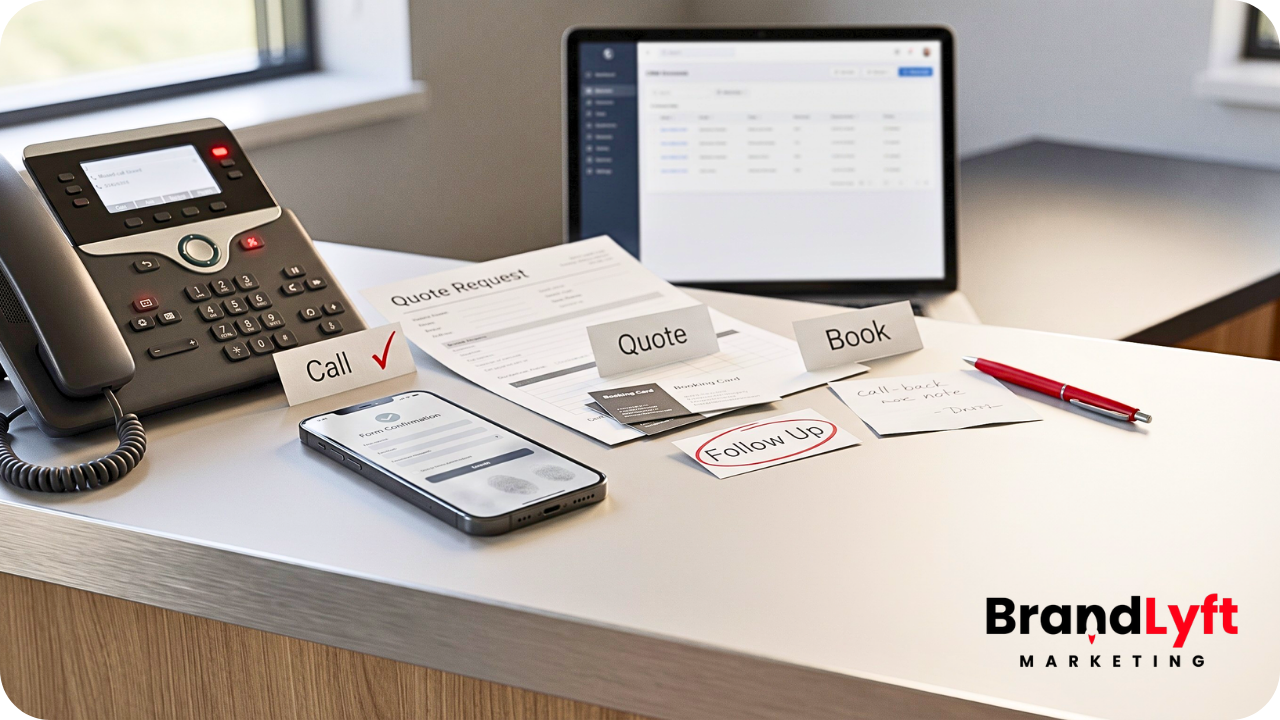
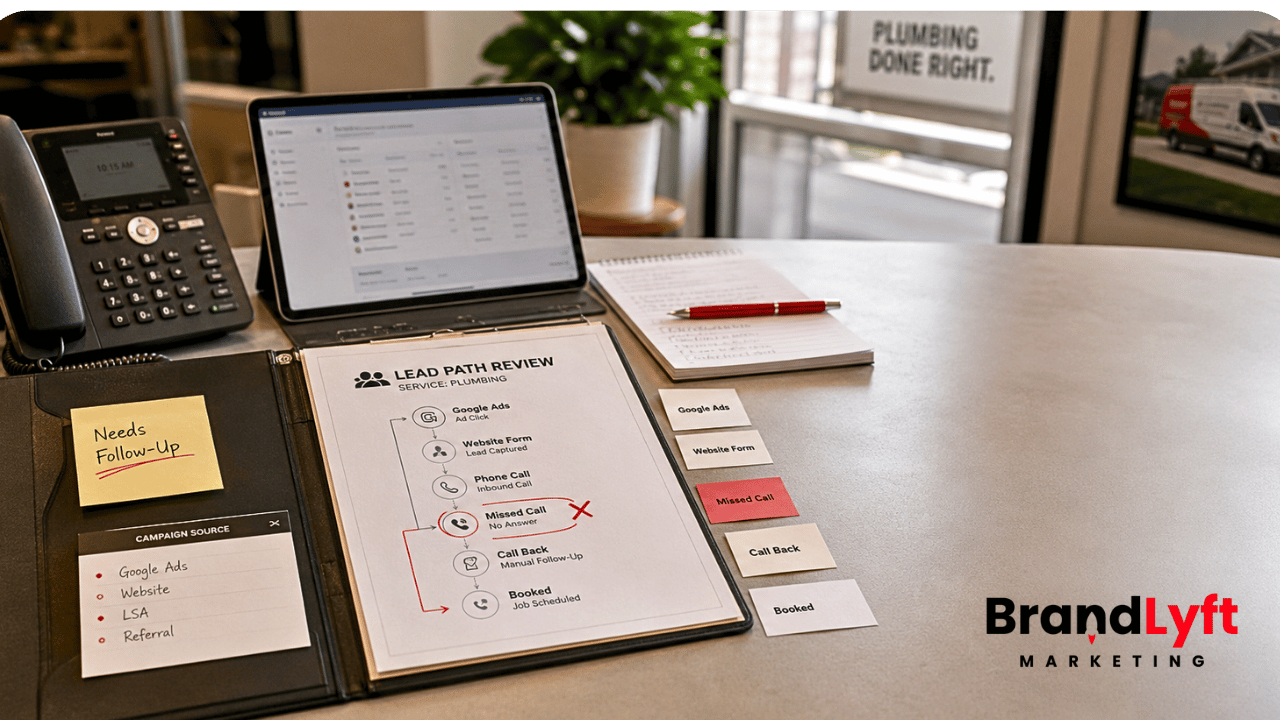
PPC services Cartersville businesses can trust should not start with “spend more.” If missed calls, slow replies, weak landing pages, bad tracking, and loose follow-up are already costing jobs, more ad budget may only send more leads into the same leak.
Local service businesses miss this part all the time.
Google Ads can create calls.
Meta ads can create form fills.
A landing page can create quote requests.
Still, none of that matters when the phone gets missed, the form sits too long, the lead source looks unclear, or the business cannot tell which clicks became booked jobs.
For Cartersville-area contractors, home service companies, med spas, repair shops, tree services, plumbers, roofers, HVAC companies, pest control companies, and local operators, PPC should not act like a traffic faucet.
PPC should feed a lead system that can catch what the ads create.
Why PPC Services Cartersville Businesses Need Should Start With the Lead Path
PPC services Cartersville businesses need should start by checking what happens after a paid click.
Ads are not always the problem.
Paid campaigns can work.
The issue is that paid ads expose weak systems faster than organic traffic does. Every missed call, ignored form, slow reply, weak booking path, or untracked lead becomes more expensive when the business pays for each click.
A customer clicks an ad for roof repair and calls.
No one answers.
A homeowner searches for HVAC repair and fills out a quote form.
The form goes to a shared inbox.
A pest control lead clicks a landing page and asks about recurring service.
The CRM only shows “new lead.”
A med spa lead books a consultation through a paid campaign.
The booking happens, but the source never makes it into the pipeline.
Small details decide whether paid ads create booked work or just paid activity.
BrandLyft’s Paid Ads Management should sit close to tracking, landing pages, CRM, and follow-up because clicks alone do not pay the bills. The lead path after the click matters just as much as the campaign itself.
Ads Alone Do Not Fix Weak Follow-Up
Many local businesses ask for PPC because they want more leads fast.
That makes sense when the schedule is light, phones are quiet, or crews have open time.
But PPC does not fix the business process behind the lead.
When the team replies slowly now, more ad spend will not make the team faster.
When calls already get missed, more ad spend will create more missed calls.
When the website form feels weak, more traffic will create more vague form fills.
When the CRM feels unclear, more leads will make the pipeline harder to trust.
When tracking is broken, more budget will make reporting even harder to read.
A Cartersville digital marketing plan should not treat PPC as a standalone channel. PPC has to connect to the website, phone path, CRM, booking flow, source tracking, and follow-up.
That is why BrandLyft’s Revenue System Build fits this kind of work. A paid campaign should feed a working revenue path, not drop leads into a system the team has to chase manually.
Where PPC Campaigns Usually Leak Leads
PPC leaks rarely look dramatic.
They usually show up in normal places.
The ad gets clicked.
A landing page loads.
The visitor calls, fills out a form, starts a chat, or tries to book.
Then the handoff breaks.
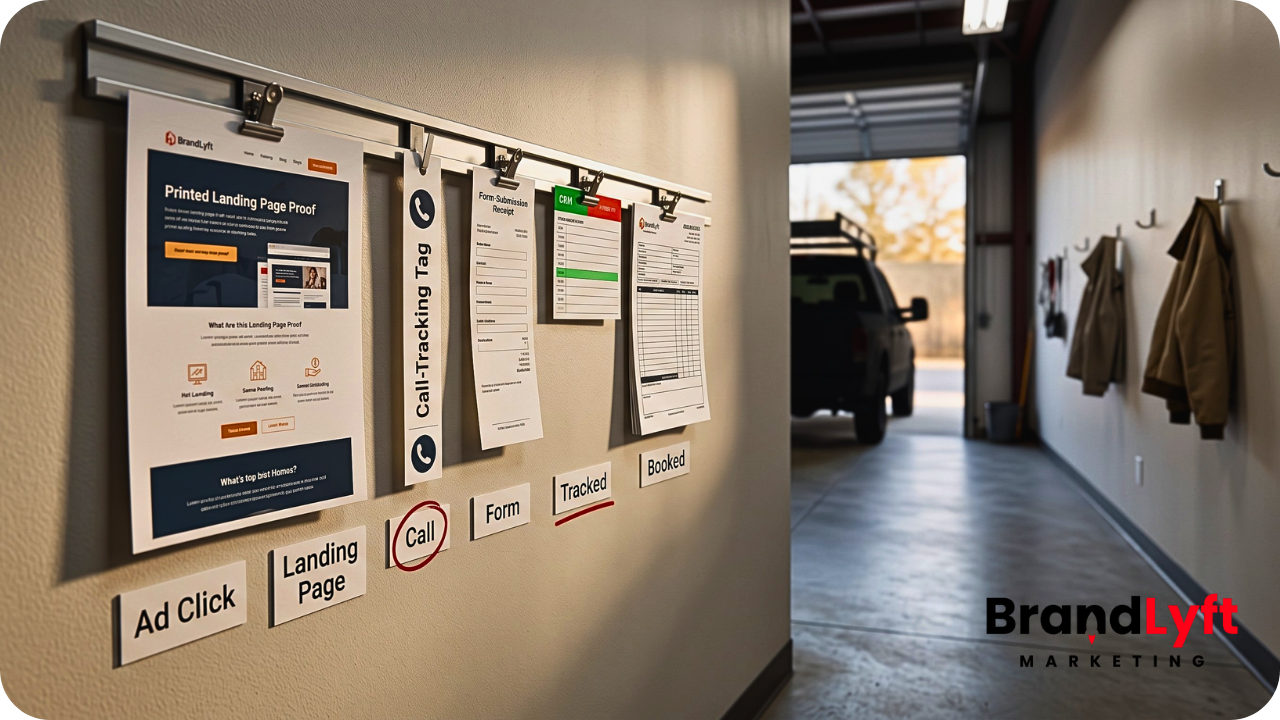
Missed Calls From Paid Ads
Phone calls are still one of the biggest conversion paths for local service businesses.
That is especially true for urgent work. A leaking roof, broken AC unit, septic issue, pest problem, tree damage, or plumbing emergency often starts with a call.
If the call comes from a paid ad and nobody answers, the business may pay for the click and still lose the job.
Google Ads supports phone call conversion tracking for calls from ads, call assets, location assets, and website phone calls. That helps businesses see when ads create calls. But tracking the call does not recover the lead by itself.
The business still needs a missed-call text-back, a call-back task, a clear owner, and a follow-up path.
BrandLyft’s Speed to Lead work fits this part of PPC because fast response only matters when the next step is clear.
Slow Replies After Form Fills
A paid search lead has intent.
They searched, clicked, read enough to act, and submitted a form.
If the response comes hours later, the business may already be late.
Fast form follow-up does not need a complicated setup. The system should confirm the request, alert the right person, create a task, mark the source, and move the lead into the right pipeline stage.
If the form only sends an email, the business has to depend on someone checking the inbox at the right time.
That is not a lead system.
Weak Landing Pages
A paid ad should not send traffic to a page that makes the customer work too hard.
The landing page should make the offer clear. It should show the service area, the service type, the next step, trust signals, phone number, form, and what happens after the customer reaches out.
For a Cartersville service business, the page does not need to be fancy.
It needs to answer the practical question quickly: “Can this company help me, and what do I do next?”
BrandLyft’s Web Design work matters here because paid traffic should not land on pages that look unclear, slow, generic, or disconnected from the follow-up path.
Bad Source Tracking
PPC reporting can look cleaner than it really is.
The ad platform may show clicks and conversions. Google Analytics may show sessions. The CRM may show leads. The sales team may talk about booked jobs.
Those numbers do not always agree.
Google Analytics uses campaign links with UTM parameters, including source, medium, and campaign values. Google Ads also supports website conversion measurement for actions users take after clicking an ad.
That tracking only helps when it connects to the CRM and the sales outcome.
If the CRM only shows “website lead,” the business may not know whether the booked job came from Google Ads, Meta, organic search, Maps, referral, or repeat customer activity.
That makes PPC budget decisions weaker.
Leads That Never Become Booked Jobs
Not every PPC lead is ready to buy on the first touch.
Some need a quote.
Others need a call-back.
A few need scheduling.
Some ask one question and go quiet.
Plenty compare three companies before choosing one.
The follow-up path should account for that.
A paid lead should not disappear after one call attempt or one email. The business needs a second touch, a third touch when appropriate, and a clear stop point when the lead is truly not a fit.
BrandLyft’s GoHighLevel Partner work fits businesses that already have GHL but need cleaner routing, follow-up, pipeline stages, and tracking before they put more money into ads.
Paid Lead Leak Check
Before More Cartersville PPC Spend Goes Live, Check These Gaps
If the ads are sending leads into missed calls, slow replies, weak landing pages, unclear tracking, or loose follow-up, the next budget increase may only make the leak more expensive.
Need the first-response path checked too? Review Speed to Lead or book the discovery call.
What to Fix Before Hiring for PPC Services Cartersville
Before hiring for PPC services Cartersville businesses should review the pieces that decide whether a paid lead becomes a booked job.
Start with the phone path.
Call the number from a mobile phone. Call it after hours. Let it ring. Check the missed-call path. See who gets alerted. Look for the lead inside the CRM. Reply to the text-back and check who owns the answer.
Then review the landing page.
Does the page match the ad? Does it explain the service clearly? Does it show the local area? Does it make the next step obvious? Does the page load cleanly on mobile? Does the phone number work? Does the form ask for the right details?
After that, review the form path.
Submit the form like a real customer. Watch how fast the team gets notified. Check the source. Confirm the lead gets assigned. Look for a task. See whether the pipeline stage changes.
Then review tracking.
Look at the ad platform, Google Analytics, call tracking, CRM, and booked jobs. If every system tells a different story, do not scale the budget yet.
Last, review follow-up.
What happens after the first call attempt? What happens after the quote goes out? What happens when the lead does not answer? What happens when the lead books but cancels?
PPC should not feed a dead-end path.
It should feed a working sales process.
What a Strong PPC Landing Page Should Do
A strong PPC landing page does not need to be overloaded.
It needs to reduce doubt and make action easy.
For local service businesses, the landing page should usually cover:
- The exact service being advertised
- The area served, including Cartersville when relevant
- The main reason to choose the business
- Clear phone and form options
- Trust signals such as reviews, photos, proof, or service details
- A simple explanation of what happens after the request
The last point matters more than many businesses think.
People hesitate when they do not know what happens after they submit.
Will someone call?
Will they get a quote?
Will they book an estimate?
Will the team ask for photos?
Will the lead move to a calendar?
A landing page should set that expectation clearly.
BrandLyft’s Home Services Marketing page speaks directly to businesses where leads, calls, fast response, and booked jobs matter. That is the right world for this PPC article.
Tracking Should Show More Than Cost Per Lead
Cost per lead is useful, but it is not enough.
A low cost per lead can still waste money if the leads do not book.
A higher cost per lead can still make sense if the leads turn into better jobs.
The business needs to know more than how many leads came in.
It needs to know which campaigns created the right leads, which keywords created calls, which landing pages created form fills, which sources created booked work, and which follow-up paths lost people.
Google Ads conversion tracking can measure meaningful actions such as sales or leads. Google Ads also supports call conversion tracking for calls from ads and call assets. Google Analytics campaign URL tools can identify source, medium, and campaign data when links use proper tags.
Even then, reporting will not tell the whole story by itself.
The CRM and team process still need to connect the lead to the final outcome.
What to Ask Before You Spend More on Ads
Before adding budget, ask practical questions.
Can we answer or recover paid calls fast?
Can we tell which ads created booked jobs?
Can we see which form fills came from which campaign?
Can the sales team trust the pipeline?
Does the landing page match the ad?
Does follow-up change when the lead replies, books, cancels, or goes quiet?
Do we know how many paid leads were lost because nobody responded fast enough?
Do we know which jobs came from PPC and which came from other channels?
If the answer is no, the business may not need more ad spend first.
It may need a lead-leak teardown.
When PPC Services Cartersville Businesses Are Actually Ready For
PPC services Cartersville businesses hire should come after the basics are clear.
The business does not need a perfect system before running ads.
But it should have enough of a system that paid leads are not wasted.
That means:
- The landing page matches the offer.
- The phone path has been tested.
- The team recovers missed calls fast.
- Forms create real tasks.
- Sources are tracked clearly.
- The CRM shows the real sales stage.
- Follow-up continues after the first touch.
- The business can compare leads to booked jobs.
Once that path is ready, PPC becomes easier to judge.
If the ads are weak, the numbers will show it.
If the landing page is weak, the behavior will show it.
If follow-up is weak, the drop-off will show it.
Without that path, every problem gets blamed on the ads.
How BrandLyft Fits PPC Services Cartersville Businesses Need
BrandLyft is a fit when a Cartersville-area business wants paid ads, but also needs the system behind those ads to work.
That may include landing pages, Google Ads, Meta ads, call tracking, missed-call recovery, CRM routing, follow-up automation, reporting, and sales pipeline cleanup.
For home service businesses, BrandLyft already speaks to the work that matters: more leads, faster response, reviews, reactivation, and jobs that do not slip through a weak system.
For businesses already using GoHighLevel, BrandLyft can also review the account, clean up routing, improve lead handling, and connect paid traffic to a follow-up path that the team can actually use.
BrandLyft’s stalled GoHighLevel account article is a useful next read if the business already has GHL but the account feels active without creating clear sales movement.
The stronger PPC conversation is not “How much should we spend?”
It is “Can the business catch the leads this spend creates?”
Before More PPC Spend, Find the Leak
Paid ads can help local businesses grow.
They can also make weak systems more expensive.
If a Cartersville business misses calls, replies slowly, sends traffic to weak landing pages, loses source data, or fails to follow up after the first touch, more PPC spend may not be the right first move.
The first move is to find the leak.
Then fix the path.
After that, decide how much paid traffic the business is ready to handle.