Tag: CRM Automation

  • The Workflow Should Stop Before the Conversation Becomes Advice

    The Workflow Should Stop Before the Conversation Becomes Advice

    A prospective client fills out a form asking about a financial product, consultation, policy, loan, or credit service. The account records the inquiry, a workflow starts, and a message goes out before anyone has decided what the system may say, who may handle the request, or where automation should stop.

    That is the real risk in using GoHighLevel for financial services. The platform can capture contacts, route opportunities, send approved messages, and book consultations. It should not be given an undefined role that drifts from marketing follow-up into advice, servicing, complaint handling, or another area the firm expects a qualified person to review.

    The first build decision is not which workflow to activate. It is where the workflow’s authority ends.

    This article covers the pre-consultation layer: inquiry capture, communication permission, routing, booking, human-review gates, and reporting. It does not provide legal or compliance advice, and it does not assume that advisers, insurers, mortgage businesses, and credit-service companies follow one shared rulebook.

    Give GoHighLevel for Financial Services One Defined Job

    GoHighLevel can be useful at the front of a financial-services inquiry path. It can record how a prospect arrived, collect basic contact details, create an opportunity, notify the right team, send approved acknowledgments, offer a consultation, and show which inquiries still need action.

    That is a narrower job than running the whole client relationship.

    Before the build begins, decide which activities remain outside GHL or require another approved system. Depending on the firm, those may include personalized advice, suitability decisions, underwriting, account servicing, complaint resolution, document exchange, transaction instructions, or formal books and records.

    BrandLyft’s GoHighLevel Partner work should begin with that boundary. The platform setup follows the approved business process — it does not decide the process for the firm.

    Classify the Inquiry Before Any Follow-Up Starts

    A form submission does not automatically belong in a sales pipeline.

    The person may be a new prospect, an existing client, someone raising a complaint, or a visitor asking a question that requires licensed or authorized judgment. A generic workflow can treat all four as leads and send the same follow-up sequence.

    That creates the wrong kind of speed.

    Use an early classification step such as:

    • New prospect inquiry
    • Existing-client service request
    • Complaint or dissatisfaction
    • Advice-seeking or sensitive question
    • Wrong department or unsupported request

    Only the true prospect path should enter ordinary lead nurture. Existing clients need the correct service channel. Complaint language should trigger the firm’s approved escalation. Sensitive questions should stop automated content until the right person reviews the conversation.

    The classification does not need to diagnose the issue. It needs to prevent the wrong automation from continuing.

    Separate Preference, Permission, DND, and Firm Policy

    These four states are related, but they are not interchangeable.

    Communication preference records how the contact would like to hear from the firm. Someone may prefer SMS, phone, or email.

    Permission or consent basis records why the business believes a particular communication may occur. The useful record may include the source, date, form, disclosure version, business entity, and channel involved.

    Do Not Disturb status controls whether HighLevel may send through a channel. HighLevel supports channel-specific and broader DND settings, along with workflow actions and triggers tied to those changes.

    Firm policy decides what the business allows. A contact may prefer SMS and have no SMS DND flag, while the firm’s approved process still requires human review before that message type goes out.

    Do not treat “DND off” as proof that outreach is approved. DND is an execution control inside the platform. It does not, by itself, explain where permission came from, what the contact saw, which business obtained it, or what the firm’s current rules allow.

    The HighLevel DND guide explains how communication can be blocked by channel. Firms should map that platform state to their own current legal, supervisory, and business requirements.

    Official guidance also changes. The FCC publishes TCPA consent and revocation material, while the FTC publishes Telemarketing Sales Rule guidance. Applicability depends on the business, message, channel, relationship, and surrounding facts. The workflow should follow the firm’s approved interpretation rather than a generic template.

    Put Contact Facts and Opportunity Facts in the Right Place

    Good field design matters because one person can have several inquiries over time. A GoHighLevel for financial services build should separate lasting contact facts from the details of one prospect opportunity.

    Contact-level fields usually describe the person or the ongoing communication relationship. Opportunity-level fields describe one specific prospect path.

    Contact-level information may include:

    • Preferred communication channel
    • Channel-specific DND status
    • Permission source and date
    • Existing-client indicator
    • Preferred language
    • Primary relationship owner when appropriate

    Opportunity-level information may include:

    • Product or service interest
    • Inquiry source
    • Consultation type
    • Assigned prospect owner
    • Human review required
    • Review status
    • Consultation date
    • Next approved action
    • Reason the opportunity closed

    HighLevel provides separate custom fields for contact data and custom fields for opportunity data. Use that distinction deliberately.

    Avoid storing the same decision in a tag, pipeline stage, contact field, and opportunity field unless each item has a clear job. Several versions of “review complete” will eventually disagree.

    A current field value may also fail to show the historical state under which an earlier message went out. When the firm needs a true record of changes, approvals, or retained communications, confirm where that history must live.
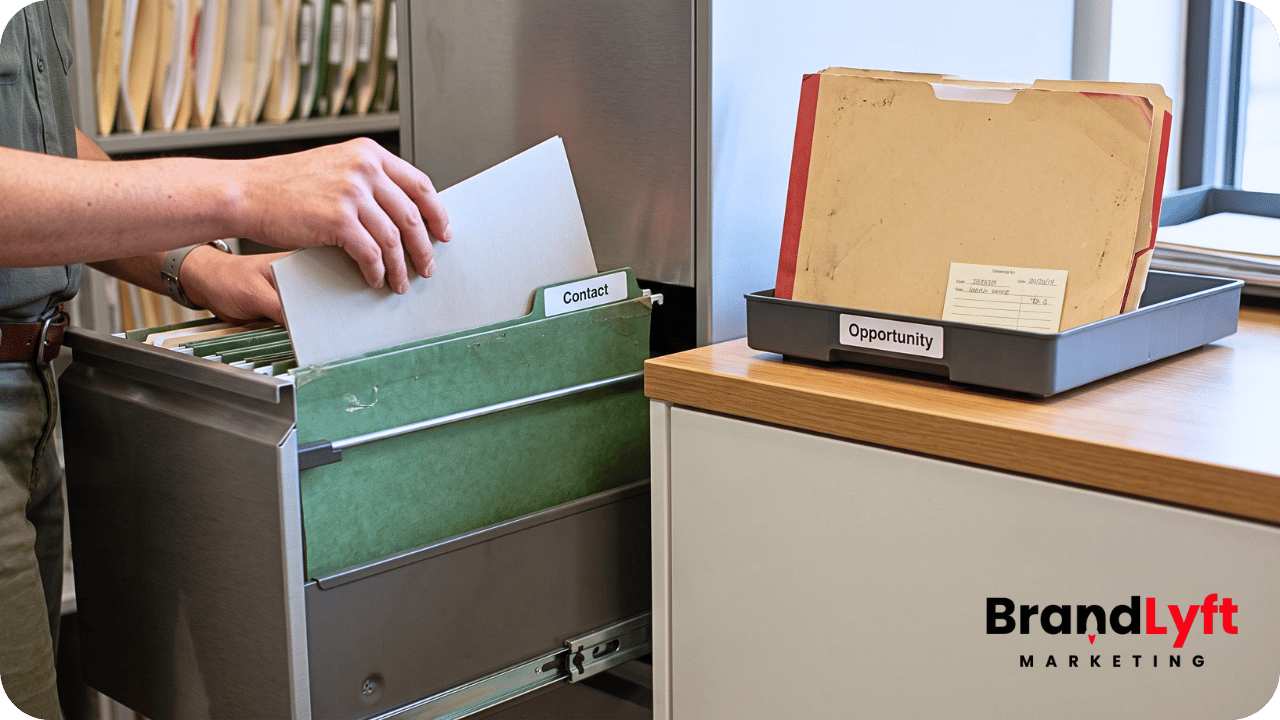
    GoHighLevel for financial services contact fields and opportunity fields separated before automation

    Build a Human Gate Before the Conversation Becomes Advice

    Automated follow-up should handle only the messages the firm has approved for automation.

    A prospect can receive a neutral confirmation, consultation options, a reminder, or a request for missing intake information. The workflow should stop when the conversation shifts into personalized advice, a sensitive financial question, a complaint, or another topic that needs authorized judgment.

    The human gate should define:

    • Which words, answers, forms, or staff actions trigger review
    • Which role may accept the inquiry
    • What information the reviewer receives
    • Which automations pause
    • What happens when nobody accepts the task
    • Where the final response and required record belong

    HighLevel’s Conversation AI Human Handover action can pause a bot, assign a conversation, create a task, notify staff, and tag the contact. Those actions support routing. They do not prove that an authorized reviewer accepted the inquiry, approved the response, sent it, or retained the required record.

    Track those events separately:

    • Automation stopped
    • Reviewer notified
    • Inquiry assigned
    • Authorized reviewer accepted
    • Response approved
    • Response sent
    • Required record retained

    For FINRA member firms, communications, supervision, and recordkeeping can involve rules such as FINRA Rule 2210 and FINRA Rule 3110. Those rules do not apply to every business named “financial services,” and GHL assignment should not be mistaken for supervisory approval.

    Before the First Follow-Up Goes Live

    Check Where the Workflow Needs a Human Gate

    Already using GoHighLevel? Use the Rescue Decision Guide to review capture, ownership, routing, workflows, calendars, and reporting before more automation enters the account. This is a system check, not a compliance review.

    Use the Rescue Guide

    Still deciding whether GHL fits the process? Review GoHighLevel Partner support.

    Route by Business Line, Relationship, and Staff Authority

    Routing by geography or round robin is not enough for this article’s audience.

    The same inquiry source may contain insurance prospects, mortgage inquiries, credit-service leads, or advisory questions. Existing relationships, staff licenses, business lines, product ownership, office hours, and review authority may all affect the destination.

    A useful routing rule asks:

    • Is this a prospect or an existing client?
    • Which business line owns the inquiry?
    • Does the question require human review before any answer?
    • Which employee may handle that topic?
    • Who receives the fallback when the first person is unavailable?
    • Which system should hold the next action?

    BrandLyft’s Speed to Lead work can support rapid acknowledgment and routing. In financial services, speed should sit behind correct classification. Sending the wrong automated response faster is not an improvement.

    Keep Complaints and Existing Clients Out of Prospect Nurture

    A financial-services pipeline becomes unreliable when every form submission creates the same opportunity.

    An existing client asking about an account should not receive a new-prospect sequence. Complaint language should not trigger consultation reminders. A person who requests no further contact should not re-enter nurture because another form or integration fires.

    Build separate entry and exit rules for:

    • Existing-client requests
    • Complaint or dissatisfaction signals
    • Channel opt-outs
    • Advice-seeking questions
    • Duplicate inquiries
    • Contacts already under active review

    Some firms may need a separate complaint record or approved service platform rather than a sales opportunity. The workflow should route the matter to that process without trying to resolve it automatically.

    Reviewing the broader GoHighLevel setup mistakes can help when existing automations already create activity without clear ownership or boundaries.

    Report on Control, Ownership, and Booked Consultations

    Response time and booked consultations matter, but they do not tell the whole story.

    A GoHighLevel for financial services dashboard should also expose the places where automation paused, permission was unclear, or human review never finished.

    Useful reporting may include:

    • Inquiries by source and business line
    • Prospects with a recorded permission source
    • Channel-specific DND changes
    • Messages suppressed by workflow rules
    • Inquiries waiting for human review
    • Review accepted but not completed
    • Complaints removed from the prospect pipeline
    • Existing clients removed from lead nurture
    • Unowned opportunities
    • Stale leads with no approved next action
    • Consultations booked by source
    • Duplicate opportunities
    • Workflow failures and manual overrides

    The dashboard should help the team distinguish a healthy stop from a broken one. Automation pausing for authorized review may be correct. A task sitting unaccepted for two days is a different problem.

    Test Revocation, Misclassification, and Failed Review

    A successful form submission and consultation booking prove only the happy path.

    Pre-launch testing should use cases that challenge the boundaries:

    • A new prospect with a clear permission source
    • A prospect with no recorded permission source
    • SMS opted out while email remains available
    • Global DND enabled
    • A contact revokes permission after entering a workflow
    • An existing client submits a lead form
    • Complaint language appears in chat or email
    • A prospect requests personalized advice
    • The inquiry reaches someone without the approved authority
    • A reviewer receives the task but never accepts it
    • The bot resumes while human review remains open
    • A duplicate contact or second opportunity already exists
    • The lead source is missing
    • An integration fails before the record reaches the firm’s primary system

    For every case, inspect the contact, opportunity, permission state, DND status, owner, review status, workflow history, outgoing messages, and final record. A system that passes only the expected path is not ready for real traffic.

    Know When GHL Needs an Integration or Custom Layer

    Standard configuration may be enough for a simple prospect form, approved reminders, one consultation calendar, and straightforward ownership.

    The build becomes more demanding when the firm needs several business lines, separate servicing systems, approval records, document storage, complex retention rules, role-based access, duplicate prevention, or reporting across outside platforms.

    At that point, a GoHighLevel for financial services account may remain the front-end marketing and appointment layer while another approved system holds the official client, complaint, transaction, or communication record.

    BrandLyft’s Revenue System Build can connect inquiry capture, routing, booking, follow-up, and reporting around the firm’s approved process. Custom development or API work may be needed when the boundary crosses several systems.

    The right answer is not always to build more inside GHL. It is to give each system a clear job and test the handoff between them.

    Automation Should Know Where Its Authority Ends

    GoHighLevel for financial services can make pre-consultation follow-up faster and easier to see. That value depends on a narrow operating role.

    The account should classify the inquiry, record communication state, route it to the correct business line, offer approved next steps, and stop when authorized human judgment is required.

    The strongest workflow is not the one that sends the most messages. It is the one that knows when not to send the next one.

    When GHL Needs to Fit an Approved Communication Process

    Map the Pre-Consultation Path With BrandLyft

    Bring the current inquiry sources, routing rules, review steps, booking path, and reporting needs. BrandLyft can help translate the approved process into a working GHL build.

    Book the GHL Fit Review

    Need the wider capture, routing, and reporting layer connected? Review Revenue System Build.

  • Marketing Automation Atlanta – What Service Businesses Need Before They Spend More on Ads

    Marketing Automation Atlanta – What Service Businesses Need Before They Spend More on Ads

    Marketing automation Atlanta service businesses can trust should do more than send texts after someone fills out a form. If you are paying for ads in Atlanta but losing leads through slow follow-up, missed calls, weak routing, poor source tracking, or a CRM your team does not trust, the ad budget is not the first thing to fix.

    The follow-up system is.

    A plumbing company can pay for clicks and still miss the phone call.

    A roofing company can get form fills and still route them to the wrong person.

    A med spa, fitness studio, tree service, pest control company, or home service business can have a CRM full of contacts and still lose the lead because nobody knows who owns the next step.

    That is the part most “more ads” conversations skip.

    If the path after the lead is weak, more traffic only makes the leak bigger.

    Why Marketing Automation Atlanta Service Businesses Need Comes Before More Ads

    Atlanta-area service businesses compete in a busy market. People search, call, compare, ask for estimates, book appointments, and move on fast when they do not hear back.

    That does not mean every business needs more ad spend first.

    Some businesses need a tighter lead response system.

    If your ads already create calls, form fills, chat requests, booking attempts, or quote requests, the next question is simple: what happens after the lead arrives?

    Does someone respond fast?

    Does the lead go to the right person?

    Does the missed call get a useful text-back?

    Does the CRM show the source clearly?

    Does the pipeline show what happened next?

    Does the team follow a real process, or does everyone work from memory?

    That is where marketing automation for service businesses earns its place. It should connect the ad, the lead source, the call, the form, the CRM, the staff member, the follow-up path, and the sales pipeline.

    BrandLyft’s Speed to Lead work fits this problem because response time is not just about sending a fast text. It is about making sure the first response creates a real handoff, a real task, and a real next step.

    The Real Lead Leak Is Usually After the Click

    Many Atlanta service businesses look at ad performance first.

    That makes sense. Ad cost is visible. Leads are visible. Calls are visible. Form fills are visible.

    But the real leak often happens after the click.

    A homeowner clicks a roofing ad and fills out a form. The form enters the CRM, but the lead source is vague. A staff member calls once and forgets the second touch. The opportunity sits in the wrong pipeline stage. Nobody checks it until the homeowner already booked another contractor.

    A pest control lead calls from a Google Business Profile listing. The call comes in during a job, lunch rush, or after hours. HighLevel can send a missed-call text-back, but if nobody owns the reply, the business still loses the job.

    A med spa or fitness studio gets a booking request. The automation sends a message, but the calendar, pipeline, and staff follow-up do not agree. The lead looks captured, but the visit never gets booked.

    None of these are ad problems by themselves.

    They are lead handling problems.

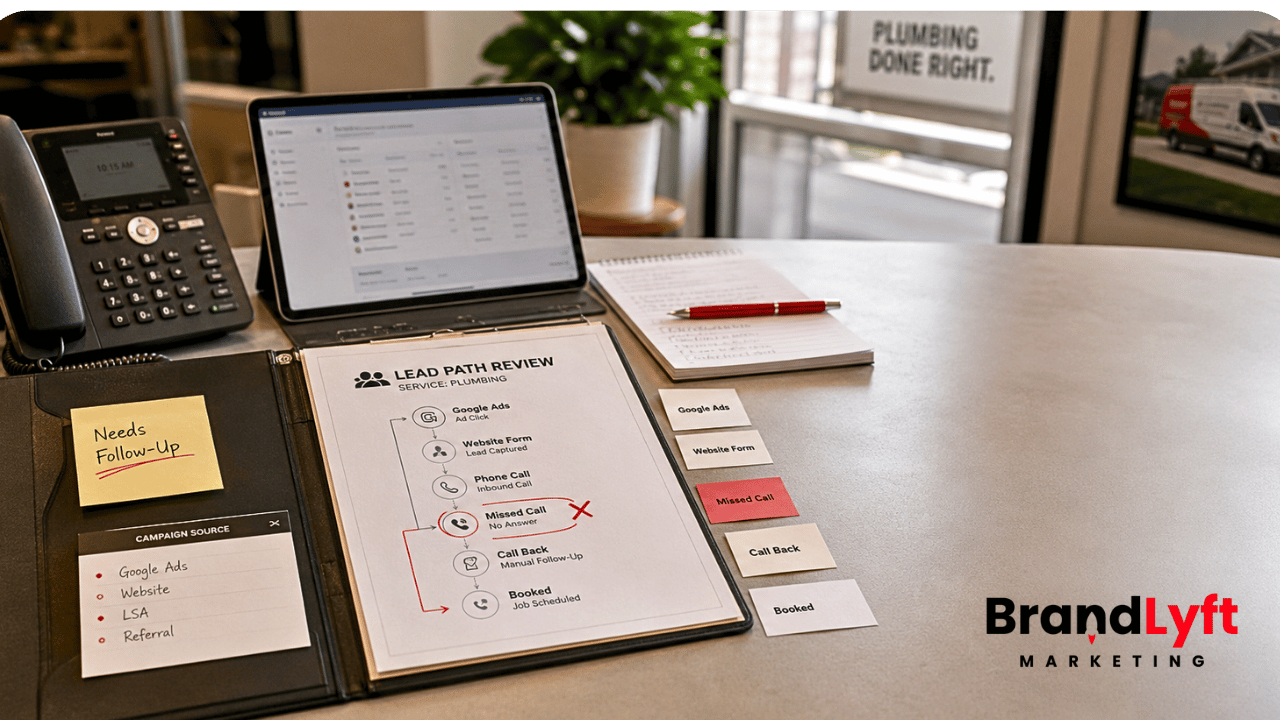
    marketing automation atlanta service business lead leak review showing missed calls CRM routing source tracking and speed to lead gaps

    A smart Atlanta digital marketing agency should catch that before telling you to spend more.

    What Marketing Automation Atlanta Businesses Should Check First

    Marketing automation Atlanta service businesses need should start with a lead path review.

    Not a dashboard review.

    Not a campaign review.

    A lead path review.

    That means tracing a real lead from the first touch to the booked job, estimate, appointment, consultation, or sale.

    The review should answer six questions.

    1. Where Did the Lead Come From?

    Lead source tracking is easy to talk about and easy to break.

    A service business may receive leads from Google Ads, Local Services Ads, Meta ads, organic search, Google Business Profile, referral partners, landing pages, website forms, chat, phone calls, SMS, old campaigns, and manual entries.

    If those sources all enter the CRM with weak labels, reporting becomes hard to trust.

    You may know that leads came in.

    You may not know which source produced booked jobs.

    That matters because an Atlanta service business can waste money by cutting the wrong channel or scaling the wrong one.

    HighLevel’s external tracking documentation shows how form submissions and UTM parameters can be captured when tracking is set up correctly. That kind of source clarity matters before the business spends more on ads.

    2. Who Owns the First Response?

    Fast follow-up only works when ownership is clear.

    A new lead may need to go to a dispatcher, front desk team, sales rep, estimator, clinic coordinator, franchise location, or owner. If everyone sees the lead but nobody owns it, the system creates noise instead of action.

    A good marketing automation setup should assign the lead, notify the right person, create the right task, and show what should happen next.

    That is not just a workflow setting.

    It is an operating rule.

    BrandLyft’s Revenue System Build is built around that bigger path: capture, response, follow-up, attribution, and the sales process behind the CRM.

    3. What Happens After a Missed Call?

    Missed calls are one of the easiest places for service businesses to lose money.

    A lead who calls usually has intent. They may need a quote, appointment, repair, inspection, consultation, or same-day answer. If nobody answers, they may call the next company on the list.

    HighLevel’s missed-call text-back feature can automatically send a text after an inbound call is missed. That helps keep the conversation alive, but the text is only the first step.

    The business still needs to know who checks the reply, who calls back, what happens after no reply, and where that lead should sit in the pipeline.

    A missed-call text-back without ownership is not speed-to-lead automation.

    It is a polite receipt.

    4. Does the CRM Route Leads by Service, Location, or Source?

    Simple routing may work for a small business with one owner handling every lead.

    It breaks when the business has multiple services, field teams, office staff, sales reps, service areas, locations, or ad campaigns.

    A home service lead for an emergency repair may need a different path than a maintenance plan inquiry. A med spa consultation may need a different path than a membership question. A pest control lead from a residential campaign may need a different path than a commercial account lead.

    If the CRM treats every lead the same, the team has to interpret context manually.

    That slows the response and weakens reporting.

    5. Does the Pipeline Match the Sales Process?

    A pipeline should show where the lead stands in the real sales process.

    HighLevel pipelines and opportunities can track leads as they move through stages, but the stages need to match the way the business sells.

    For many service businesses, “New,” “Contacted,” and “Won” are not enough.

    You may need stages like new lead, first response sent, estimate scheduled, estimate completed, quote sent, waiting on customer, job booked, job completed, lost, and reactivation candidate.

    The exact names depend on the business.

    The point is that the pipeline should tell the team what needs action.

    6. Is Follow-Up Based on Behavior?

    Follow-up should change based on what the lead does.

    A lead who replies should not keep receiving the same cold automation. A lead who books should move into a booking or confirmation path. A lead who misses an appointment should enter a recovery path. A lead who asks for price may need a different message than someone who asks about availability.

    HighLevel workflow triggers can start actions from contact, appointment, opportunity, communication, and ad events. The setup still has to decide which event matters and what should happen next.

    If every lead gets the same follow-up, the automation may look active while the sales process stays weak.

    Lead-Leak Check

    Before More Atlanta Ad Spend Goes Live, Check These Five Gaps

    Missed calls have no clear owner.
    Lead sources are hard to trust.
    The CRM routes every lead the same way.
    The pipeline does not show the real sales stage.
    Follow-up does not change when the lead replies.

    Start the Teardown

    Need the response path reviewed with someone? Review Speed to Lead or book the discovery call.

    Why Speed to Lead Automation Matters More Than More Traffic

    Speed to lead automation matters because the first business to respond often shapes the conversation.

    That does not mean the answer is to blast every lead with instant texts forever.

    The better answer is to build a clear first-response path.

    For an Atlanta-area service business, that may include:

    • Instant confirmation after a form fill
    • Missed-call text-back after an unanswered call
    • Internal notification to the right team member
    • Task creation for the first human follow-up
    • Pipeline movement based on response or booking status
    • Source tracking so the business knows which ads create real opportunities

    The first response should not feel like a robot taking attendance.

    It should help the lead keep moving.

    That is the part many businesses miss. They set up an auto-text and call it speed to lead. But if the text does not connect to ownership, pipeline movement, and a second touch, the lead can still go cold.

    Speed without a system becomes another notification.

    Speed with a system becomes a sales advantage.

    What a Good Atlanta Digital Marketing Agency Should Check Before Scaling Ads

    A good Atlanta digital marketing agency should not judge the account only by ad clicks, cost per lead, or campaign spend.

    Those numbers matter, but they do not tell the whole story.

    A low cost per lead can still be expensive if the lead is not called back.

    A high call volume can still be weak if missed calls do not get recovered.

    A strong form-fill rate can still fail if the CRM does not route leads by service, source, or urgency.

    Before more budget goes into paid search, Local Services Ads, Meta, SEO, or retargeting, the agency should check the system behind the lead.

    The Website and Landing Pages

    Forms should capture the right information without adding friction.

    Phone numbers should be tracked correctly.

    Calls should route to the right team.

    Landing pages should clearly identify the offer, service, area, source, and follow-up path.

    BrandLyft’s Web Design work matters here because a service-business website is not just a brochure. It has to feed clean leads into the next step.

    The CRM and Lead Routing

    The CRM should show where the lead came from, what the lead wants, who owns the response, and what should happen next.

    If the CRM only stores names and phone numbers, the team still has to interpret everything manually.

    That is where mistakes start.

    BrandLyft’s GoHighLevel Partner service fits when the business already uses GHL but the routing, workflows, or pipeline no longer match the way the business sells.

    The Missed-Call Path

    Missed-call handling should be treated like a sales path, not a feature toggle.

    If a call is missed, the system should send the right text, alert the right person, create a task if needed, and move the lead into a place where the team can see it.

    HighLevel can also support call tracking and missed-call text-back through Google Business Profile setups, depending on configuration.

    That matters for Atlanta service businesses because many high-intent calls come from local search behavior, not just paid landing pages.

    The Pipeline and Opportunity Stages

    The pipeline should tell the truth.

    If leads sit in “New” for days, the pipeline is not helping.

    If won jobs never get marked, reporting is weak.

    If estimates, appointments, calls, and quotes all live in the same stage, the manager has to guess what happened.

    BrandLyft’s article on GoHighLevel audit checks is useful here because a stalled account usually leaks leads through routing, workflow, pipeline, and reporting problems before anyone notices the pattern.

    The Reporting

    Reporting should not stop at lead count.

    A service business needs to know which source produced the lead, which source produced the booked appointment, which source produced the estimate, and which source produced the job.

    Otherwise, the team may scale the campaign that creates activity instead of the campaign that creates revenue.

    That is where BrandLyft’s Paid Ads Management should connect with automation, attribution, and follow-up. Ads should not sit apart from the system that handles the lead.

    Marketing Automation for Service Businesses Should Match the Sales Process

    Marketing automation for service businesses should start with how the business sells.

    A tree service does not handle leads the same way as a med spa.

    A pest control company does not qualify leads the same way as a fitness studio.

    An HVAC company does not treat emergency repair calls the same way as replacement estimate requests.

    A specialty contractor does not follow up with a commercial lead the same way it follows up with a homeowner.

    The automation has to match those differences.

    That means the setup should account for service type, urgency, lead source, staff availability, service area, quote process, booking process, and sales cycle.

    If the business has multiple locations or service areas, routing matters even more.

    BrandLyft’s Home Services Marketing page is relevant for businesses where calls, appointments, and speed to lead decide whether the lead becomes a booked job.

    Where Atlanta Service Businesses Lose Leads Inside GHL

    Many service businesses already have GoHighLevel or another CRM in place.

    The problem is not always missing software.

    The problem is often drift.

    Someone built a workflow months ago. Someone else edited the form. A campaign changed. A staff member left. A new service line was added. The pipeline stages no longer match how the team sells. A phone number forwards to the wrong place. Old tags still fire automations nobody remembers.

    The account still works in pieces.

    But the full lead path is no longer clean.

    That is why a lead-leak teardown should look at the whole path, not just the ads.

    Common GHL Lead Leaks

    The most common leaks show up in ordinary places.

    A form submits, but the source is missing.

    A missed call gets a text, but the reply is not assigned.

    A lead is assigned, but no task is created.

    A task is created, but the pipeline does not move.

    A pipeline moves, but the reporting does not show the source.

    An old workflow still fires after a newer workflow took its place.

    A staff member gets notified, but the manager cannot see what happened later.

    That is how businesses end up saying, “We are getting leads, but we are not sure what is happening to them.”

    BrandLyft’s article on a stalled GoHighLevel account leaking leads covers that exact issue from the account-health side.

    What to Fix Before You Increase Ad Spend

    Before the next budget increase, fix the lead path.

    Start with missed calls.

    Check the phone numbers, forwarding rules, call tracking, missed-call text-back, reply ownership, and fallback path.

    Then check form fills.

    Submit each important form like a real lead. Watch where it goes, how fast the notification appears, who owns it, what task gets created, what source appears, and what pipeline stage receives it.

    Then check CRM routing.

    Make sure leads route by service, source, location, urgency, or assigned team when those differences matter.

    Then check the pipeline.

    Each stage should show a real sales step. If nobody knows when to move the lead, the stage is too vague.

    Then check reporting.

    The business should be able to see which channels create leads, which channels create appointments, and which channels create booked work.

    If those items are unclear, the ads may not be the problem.

    The system behind the ads is.

    How BrandLyft Fits for Marketing Automation Atlanta Service Businesses

    BrandLyft is a fit when an Atlanta-area service business already has marketing activity but needs the system behind that activity to work better.

    That may mean better missed-call handling, cleaner source tracking, faster lead response, stronger CRM routing, better pipeline stages, or follow-up paths your team can actually use.

    For some businesses, the work starts with a lead-leak teardown.

    For others, the more useful path is a Speed to Lead review or full discovery call.

    The right next step depends on how much of the system is already live and how much of it your team trusts.

    BrandLyft’s Proof page shows the kind of service-business and GoHighLevel work the company is already positioned around: speed to lead, follow-up, attribution, reputation, appointment flow, and operational CRM support.

    This is the part that matters most: BrandLyft should not be positioned as just another Atlanta digital marketing agency selling more traffic.

    The stronger lane is sharper than that.

    BrandLyft helps service businesses fix the revenue system behind the marketing.

    Before You Spend More, Find the Lead Leak

    If your Atlanta service business is already paying for ads, do not assume the next move is more budget.

    Check what happens after the click, call, form fill, chat, booking request, or missed call.

    If the first response is slow, source tracking is weak, missed calls are not owned, routing is unclear, or the pipeline does not match the sales process, more ad spend may only create more lost opportunities.

    That is the reason marketing automation Atlanta businesses need should start with the lead path.

    Not the dashboard.

    Not the ad account.

    The actual path a lead takes from interest to booked work.

    Atlanta Lead Response Checkpoint

    If Leads Are Coming In But Jobs Are Still Slipping, Check the System First

    A service business can have good ads and still lose leads through missed calls, slow replies, weak routing, unclear source tracking, and pipeline gaps. Find the leak before more budget goes live.

    Find the Lead Leak

    Need the response path rebuilt? Review Speed to Lead or book the discovery call.

    More leads only help when the business is ready to handle them.

    Fix that path first.

  • GoHighLevel Integrations for Franchise Brands With Multiple Locations

    GoHighLevel Integrations for Franchise Brands With Multiple Locations

    GoHighLevel Integrations for Franchise Brands With Multiple Locations

    GoHighLevel integrations for franchise brands matter most when GHL is already part of the system, but the rest of the business still runs somewhere else.

    The franchise may use GoHighLevel for lead capture, follow-up, texts, forms, campaigns, pipelines, or reporting. At the same time, booking, dispatch, job management, memberships, front desk activity, advertising data, customer records, or local reporting may live in another platform.

    That is where the integration problem starts.

    GHL can look active while the franchise still has disconnected systems behind it. Leads enter one place. Appointments get booked somewhere else. Job details live in another system. Local teams update records manually. Corporate tries to compare location performance from reports that do not agree.

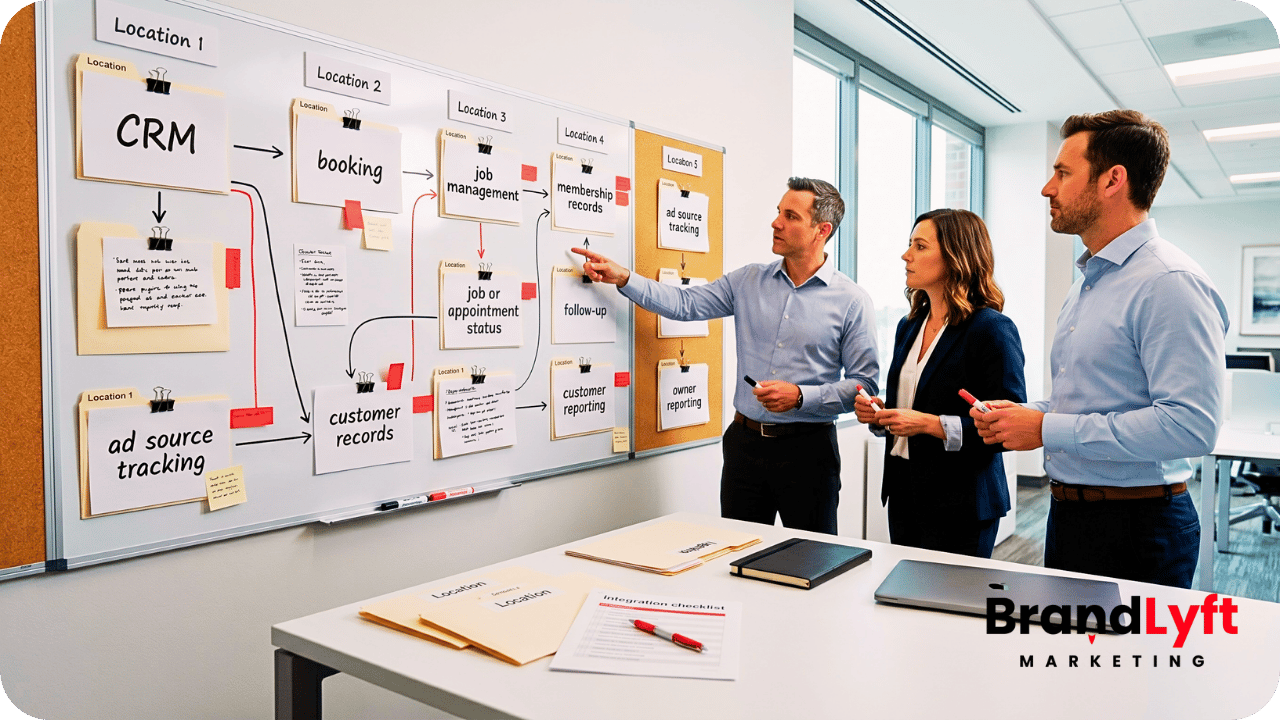
    GoHighLevel integrations for franchise brands showing connected CRM booking reporting and location systems

    The point is not that every franchise needs a complicated integration project.

    The point is simpler: if GoHighLevel does not connect cleanly to the systems that already run the franchise, the setup may never give owners the full picture.

    Good integrations help the franchise see what happened from first lead to booked appointment, service request, customer record, follow-up, and location-level reporting.

    Weak integrations create the opposite problem. They add another active tool without connecting the real operating flow.

    Before You Connect More Tools, Map the Real Handoff

    The GoHighLevel Implementation Playbook helps franchise teams review the systems, workflows, handoffs, and reporting paths that need to be clear before integrations spread across more locations.

    Use the Integration Playbook
    Map the Franchise Gaps

    Why GoHighLevel Integrations for Franchise Brands Get Messy

    GoHighLevel integrations for franchise brands get messy when the team starts connecting tools before naming the operating rules.

    That is common in multi-location systems.

    A franchise may add GHL after the business already uses ServiceTitan, JobNimbus, Mindbody, Boulevard, Nextdoor, a call platform, a booking tool, a payment system, a reporting dashboard, or a custom database.

    Each tool may have a real job.

    Service businesses may depend on a field service or job system. Wellness franchises may depend on a booking and membership platform. Home service brands may need estimate, dispatch, and job status data. Local marketing teams may need ad source data from platforms like Nextdoor or other location-based channels.

    GHL can support the revenue path, but it does not automatically become the source of truth for every part of the franchise.

    That is why integration planning matters.

    The team has to decide what GHL should own, what another platform should own, what data needs to move between them, and what should happen when the data does not match.

    BrandLyft’s GoHighLevel for Franchises work is built around that kind of rollout logic. The goal is not just to turn on GHL. The goal is to make it fit how the franchise actually sells, books, follows up, reports, and supports locations.

    What GoHighLevel Should Own in a Franchise System

    Before a franchise connects GHL to outside tools, leadership should decide what role GHL should play.

    For many franchise brands, GHL works best as the lead capture, follow-up, pipeline, automation, and communication layer.

    That may include forms, landing pages, call tracking, SMS, email, appointment reminders, nurture, reactivation, lead routing, local follow-up, opportunity stages, and owner-level reporting.

    Another platform may still handle scheduling, jobs, technicians, memberships, payments, inventory, service notes, client profiles, or operational records.

    That split is not a problem by itself.

    The problem starts when the split is unclear.

    If GHL creates a lead, but the booking platform owns the appointment, the integration needs to answer a few practical questions. Does the booking status return to GHL? Does the pipeline update? Does the local team get a task? Does the owner see the appointment by location? Does the no-show trigger follow-up?

    Without those answers, the franchise may end up with two systems that both look active but tell different stories.

    GoHighLevel integrations for franchise brands should reduce confusion. They should not create another place where teams have to check manually.

    Integration Gap 1: Lead Sources Do Not Carry Clean Location Data

    Many franchise integration problems begin with lead source data.

    A lead may come from a corporate landing page, local page, paid ad, marketplace listing, referral campaign, missed call, chat widget, or event form. If that lead enters GHL without clean location data, the rest of the setup starts weak.

    The integration may not know which branch should receive the lead.

    The pipeline may not know which location owns the opportunity. The reporting may count the lead under corporate instead of the local team. The follow-up workflow may fire, but the wrong manager may receive the alert.

    This is why field mapping matters.

    Every serious franchise integration should decide which fields carry location identity. That may include location name, location ID, market, region, ZIP code, service area, owner group, lead source, campaign, booking type, or platform source.

    If those fields stay inconsistent, every connected system inherits the problem.

    BrandLyft’s Speed to Lead work connects directly to this issue. Fast follow-up only works when the system knows which location should respond and who owns the next step.

    Integration Gap 2: Booking Platforms Do Not Feed the Pipeline

    Booking data often lives outside GHL.

    That is normal for many franchise businesses. Appointment-based brands may use a separate booking platform. Home service brands may use job scheduling or dispatch software. Wellness, spa, fitness, and med-adjacent brands may have a front desk or membership platform that holds booking activity.

    The problem is not that booking happens outside GHL.

    The problem is that GHL reporting and follow-up may never receive the booking result.

    A lead can book an appointment in another system while the GHL pipeline still shows the person as a new lead. Another lead may cancel or no-show while GHL keeps sending reminders that no longer match reality. A location may have strong booking performance, but corporate cannot see it clearly inside the CRM.

    That is where integration logic matters.

    HighLevel supports API and webhook paths that can help send or receive data between systems. Its developer documentation covers REST API resources, and its outbound webhook workflow action explains how GHL can send contact data to external services in real time.

    The technical option is only one part of the work. The franchise still has to decide what a booking should do inside GHL.

    Should it move the opportunity? Should it stop a nurture workflow? Should it alert the location? Should it trigger prep messages? Should it show up in a location-level report?

    GoHighLevel integrations for franchise brands work better when every integration event has a clear business meaning.

    Integration Gap 3: Job and Service Systems Hold the Real Outcome

    For service-based franchises, the most valuable outcome may not happen inside GHL.

    The lead may enter through GHL, but the real work may happen in a job system, dispatch platform, estimate tool, or field service platform.

    That creates a reporting gap.

    GHL may know that a lead came in. The job system may know that the estimate was scheduled, completed, sold, delayed, canceled, or lost. If those systems do not share enough information, corporate cannot see the full path from lead to revenue.

    This matters for platforms like ServiceTitan and JobNimbus because many franchise or multi-location service businesses may already depend on those systems for job management, estimates, production, dispatch, or service records.

    ServiceTitan has developer/API resources for building integrations, and JobNimbus documents an Open API for custom integrations when its existing catalog does not cover the needed connection. For franchise teams, those resources matter because the system connection may need to reflect how the business actually tracks jobs and outcomes.

    In practice, the integration does not always need to sync everything.

    A cleaner plan may only pass the fields that support follow-up, reporting, and ownership. That may include job status, estimate booked, appointment completed, sale won, sale lost, cancellation, no-show, or customer type.

    BrandLyft’s Revenue System Build service fits this kind of work because integrations usually touch more than one tool. They affect pipelines, reporting, workflows, sales handoff, location ownership, and follow-up timing.

    Integration Gap 4: Membership and Package Data Stays Outside Follow-Up

    Some franchise brands do not only sell one appointment.

    They sell memberships, packages, recurring services, consultations, renewals, upgrades, or reactivation opportunities.

    That makes integration planning more important.

    If membership or package data lives in another platform, GHL may not know which contacts should receive renewal messages, winback campaigns, upgrade offers, review requests, or local follow-up.

    This is common for appointment-based franchises that depend on tools like Mindbody or Boulevard.

    Mindbody has a developer portal for wellness technology integrations, and Boulevard has developer resources for its scheduling and point-of-sale platform. Those resources do not automatically create a finished GHL setup, but they show why franchise brands should treat booking and customer-system data as part of the integration conversation.

    For example, a lead may book a first consultation, purchase a package, miss a visit, or become inactive. Each event may need a different follow-up path.

    If GHL does not receive that status, the franchise may keep sending generic messages.

    That can make follow-up feel disconnected. A current member may receive a new-lead nurture message. A lapsed customer may never enter a winback path. A local manager may not know which clients need outreach this week.

    GoHighLevel integrations for franchise brands should help the follow-up match the actual customer stage, not just the original form submission.

    Integration Gap 5: Ad and Local Platform Data Does Not Tie Back to Outcomes

    Franchise marketing teams often look at ad performance by location.

    That gets harder when ad source data, lead records, bookings, and sales outcomes sit in separate places.

    A local campaign may create leads through a platform like Nextdoor, Meta, Google, a directory, or a location-specific landing page. GHL may capture the lead. Another tool may handle booking or job outcome. Corporate may need to know which locations convert the traffic into real appointments or customers.

    If the systems do not share the right identifiers, reporting turns into guesswork.

    Nextdoor has developer resources for partners and local/community apps, and many advertising platforms offer their own conversion or data paths. The larger point is not that every ad platform needs a deep custom build. The point is that source data must survive the handoff into GHL and beyond it.

    At minimum, franchise teams should protect campaign source, location, service type, lead owner, booking result, and final outcome where possible.

    Otherwise, the marketing team may see leads, the local team may see bookings, and the owner may never see the connection clearly.

    That makes budget decisions weaker.

    The team may cut a campaign that produced good leads but suffered from poor local follow-up. It may increase spend in a market where the issue was booking capacity, not lead quality. It may blame an integration when the real issue was bad field mapping.

    Good integration planning protects the signal from source to outcome.

    Integration Gap 6: Duplicate Records Create Confusing Follow-Up

    Duplicate contacts can break trust fast.

    A franchise may have one customer record in GHL, another in a booking platform, another in a job system, and another in a payment or membership tool.

    When those records do not match, teams start guessing.

    One system may show the customer as booked. Another may show the same person as a new lead. A local rep may call someone who already scheduled. A nurture workflow may continue after the buyer converts. Corporate may see inflated lead counts because the same person entered through more than one path.

    Integrations need matching rules.

    The business should decide which identifiers matter most. Email may work in some cases. Phone number may work better in others. Location ID, customer ID, booking ID, opportunity ID, or external platform ID may also matter.

    The goal is not perfect data for its own sake.

    The goal is to stop bad data from creating bad follow-up.

    BrandLyft’s CRM and app development work can support deeper integration needs when a franchise needs custom data flow, app logic, dashboards, webhooks, or workflow behavior that basic setup does not cover.

    Integration Gap 7: Local Teams Do Not Know Which System to Trust

    Integration problems are not only technical.

    They create behavior problems inside local teams.

    When two systems disagree, team members choose the one that helps them get through the day. A front desk team may trust the booking platform. A sales rep may trust GHL. A manager may trust a spreadsheet. Corporate may trust a dashboard that local teams never update.

    That creates a quiet adoption problem.

    People stop using the system the same way. One location updates GHL carefully. Another treats it as a notification tool. Another logs notes somewhere else. Another ignores pipeline stages because the “real” status lives in the booking or job platform.

    GoHighLevel integrations for franchise brands should make the working path clearer for local teams.

    That means the team should know where to look first, where to update status, which system owns each step, and what happens automatically after a record changes.

    BrandLyft’s article on GoHighLevel for franchises and location usage connects to this issue because weak integrations often lead to inconsistent CRM adoption across locations.

    Integration Gap 8: Corporate Reporting Still Needs Manual Cleanup

    One of the main reasons franchise teams want integrations is reporting.

    Owners want to see the full path.

    Lead source. Location. Response time. Booking. Job or appointment status. Follow-up. Outcome. Adoption. Revenue signal when available.

    Integrations should make that easier.

    But many teams still end up exporting reports, cleaning spreadsheets, asking local managers for updates, and comparing numbers from several systems.

    That usually means the integration moved data without solving the reporting question.

    A strong integration plan starts with the reports leadership needs to trust. Then it works backward into fields, workflows, ownership, and source systems.

    For example, if corporate wants to compare booking rate by location, the setup needs clean lead count, location assignment, booking status, and date ranges. If owners want to see revenue influenced by campaigns, the system needs source data and outcome data. If managers want to catch stalled leads, the setup needs pipeline stage rules and task visibility.

    GoHighLevel integrations for franchise brands should make reports easier to trust, not harder to explain.

    BrandLyft’s article on GoHighLevel reporting for multi-location brands is the natural follow-up for teams that need better owner-level visibility after the integration path is mapped.

    What a Clean Franchise Integration Plan Should Decide

    A clean integration plan should answer practical questions before anyone connects tools.

    Start with the role of each system.

    Which system captures the lead? Which system owns the appointment? Which system owns the job, ticket, consultation, membership, or service record? Which system owns follow-up? Which system should leadership use for reporting?

    Then define the data that needs to move.

    That may include contact details, location ID, service type, appointment time, booking status, job status, membership status, campaign source, pipeline stage, owner, follow-up status, or outcome.

    Next, define the trigger points.

    What should happen when a lead enters GHL? What should happen when someone books? What should happen when a job closes? What should happen when a customer no-shows? What should happen when a package expires? What should happen when a location fails to follow up?

    Finally, define the fallback path.

    Integrations fail sometimes. APIs change. Fields get renamed. Staff members enter data incorrectly. A tool may not send the expected value. A workflow may fire without the status needed for the next step.

    The franchise needs a way to catch those breaks before they become lost leads or bad reports.

    HighLevel’s inbound webhook workflow trigger can receive outside data into workflows, and its outbound webhook action can send data out. Those tools are useful, but the business rules still matter more than the connection method.

    What BrandLyft Looks For in GoHighLevel Integrations for Franchise Brands

    When BrandLyft reviews GoHighLevel integrations for franchise brands, the first question is not “Can these tools connect?”

    The better question is “What business handoff should this connection protect?”

    A good integration should support a real workflow, not just move data because it can.

    BrandLyft looks at lead sources, location rules, field mapping, source-of-truth decisions, booking status, pipeline movement, follow-up logic, missed-call handling, local team behavior, owner reporting, permissions, duplicate records, and fallback paths.

    The review may show that a native connection is enough. It may show that a webhook path makes sense. It may require API work. It may need middleware. It may reveal that the real fix is not an integration at all, but cleaner process rules inside GHL.

    That distinction matters.

    Some franchise teams try to solve unclear ownership with another connection. That usually creates more noise. The better move is to define the handoff first, then decide what should connect.

    BrandLyft’s GoHighLevel Partner team can help review the account when GHL is already live but the connected systems still feel disconnected.

    Your Integrations Should Protect the Handoff, Not Add Noise

    Use the Franchise GHL Optimization Map to check where lead capture, booking, job status, follow-up, reporting, and location ownership need cleaner connection logic.

    Check Integration Gaps
    Walk Through the Systems

    FAQ About GoHighLevel Integrations for Franchise Brands

    What are GoHighLevel integrations for franchise brands?

    GoHighLevel integrations for franchise brands connect GHL with the other systems a franchise uses for booking, jobs, memberships, ads, reporting, follow-up, or customer records. The goal is to help the business move cleaner data across locations and reduce manual handoff problems.

    Does every franchise need custom GHL integrations?

    No. Some franchise brands only need cleaner GHL workflows, better fields, stronger routing, and clearer reporting. Others need native connections, webhook logic, API work, middleware, or custom app support because key data lives in another platform.

    Which systems might franchise brands connect to GoHighLevel?

    Common examples include booking platforms, job systems, field service tools, ad platforms, payment tools, membership systems, call tracking, dashboards, and custom databases. Some franchise brands may need to account for systems like ServiceTitan, JobNimbus, Mindbody, Boulevard, Nextdoor, or similar platforms.

    What should a franchise decide before building an integration?

    A franchise should decide which system owns the lead, booking, job, customer record, follow-up, and reporting view. It should also define required fields, trigger points, location IDs, duplicate rules, and fallback paths before connecting tools.

    The Real Goal Is Cleaner Franchise Visibility

    GoHighLevel integrations for franchise brands should not start with tools.

    They should start with the handoff.

    Where does the lead enter? Which location owns it? Where does booking happen? Which system holds the real outcome? What should GHL know? What should the other platform know? What does corporate need to see?

    When those answers stay unclear, integrations usually create more noise.

    When those answers are clear, GHL can become a stronger part of the franchise operating system. It can help capture leads, support follow-up, connect location activity, and give owners cleaner visibility across the brand.

    The right integration does not just move data.

    It protects the path from lead to booked appointment, customer outcome, local follow-up, and owner-level reporting.

    If your franchise already uses GHL but still relies on disconnected tools, manual exports, duplicate records, or inconsistent location updates, start by mapping the handoff before adding another connection.

    The fix may not be more software.

    It may be cleaner integration logic around the systems your franchise already uses.

  • Marketing Automation for Occupational Health Clinics: Multi-Location GoHighLevel Guide

    Marketing Automation for Occupational Health Clinics: Multi-Location GoHighLevel Guide

    Marketing automation for occupational health clinics gets messy fast when every location handles employer inquiries, appointment reminders, intake, follow-up, and reporting a little differently. One clinic uses a shared inbox. Another relies on front desk sticky notes. Another has a manager who knows how to move every employer account forward, but the process lives mostly in that person’s head.

    That may work for one clinic with a small team. It breaks down once the business has several locations, employer accounts, recurring screenings, walk-ins, after-hours calls, drug testing requests, DOT physicals, workers’ comp referrals, and HR teams asking for updates.

    Marketing automation for occupational health clinics should not feel like a pile of random texts and workflows. It should create one clean operating path from inquiry to booked appointment, from visit to follow-up, and from location-level activity to owner-level visibility.

    That is where GoHighLevel can fit well. Used the right way, it can support lead capture, appointment flow, location routing, reminders, missed-call follow-up, pipeline tracking, employer reactivation, review requests, and reporting. Used halfway, it becomes another place where data gets parked but nobody fully trusts it.

    This guide breaks down how marketing automation for occupational health clinics can work across multiple locations without turning the clinic into a software project.

    Why Marketing Automation for Occupational Health Clinics Needs a Different Setup

    Occupational health clinics do not operate like a basic local service business.

    The buyer is often an employer, HR director, safety manager, staffing coordinator, risk manager, transportation company, or franchise operator. The person receiving the service may be an employee, applicant, driver, injured worker, or returning team member. The clinic has to manage both sides of that relationship without confusing the process.

    That is why marketing automation for occupational health clinics needs more than a generic CRM pipeline. The system has to sort employer inquiries, employee appointment flow, service type, location, urgency, and follow-up status.

    For example, a clinic may need separate paths for:

    Pre-employment physicals, DOT physicals, drug testing, respirator fit testing, hearing testing, vaccines, titers, workers’ comp visits, employer account inquiries, on-site service requests, and recurring compliance-related programs.

    Some of those requests are patient-facing. Some are employer-facing. Some need a same-day callback. Some need account setup. Some need documentation before the employee arrives.

    A generic “new lead” workflow is too blunt for that.

    Marketing automation for occupational health clinics should help the team know what came in, who owns it, where it belongs, and what needs to happen next.

    Where Multi-Location Clinic Systems Usually Break

    Most multi-location clinic problems do not start as major failures. They start as small workarounds.

    Quick Gut Check

    If Each Location Handles Leads Differently, Your CRM Is Already Telling You Something

    Before adding more workflows, it may be smarter to see where the handoff is breaking first. A Franchise GHL Location Usage Audit gives you a clear read on which locations are following the system, which ones are working around it, and where leads are getting stuck.

    Find the Location Gaps

    A front desk person calls an employer back manually. A location manager keeps a spreadsheet of key accounts. Appointment reminders are inconsistent. A form sends to one inbox, but the person responsible for that service works at another location. A clinic marks an inquiry complete even though the employer never received the next step.

    Over time, the system becomes harder to trust.

    Marketing automation for occupational health clinics should reduce those quiet leaks. The goal is not to automate every judgment call. The goal is to remove avoidable delay, missed handoff, and unclear ownership.

    Common issues include employer inquiries going to the wrong location, service forms that do not identify the right appointment type, missed calls with no fast text-back, no-shows with no reschedule path, pipeline stages that do not match the clinic’s real process, and reporting that shows activity without showing which locations are actually moving.

    GoHighLevel can support these pieces, but only if the setup reflects the real clinic workflow. A copied snapshot or basic template will not understand your service lines, clinic locations, employer account process, or staff responsibilities.

    Start With the Real Intake Paths

    The first step in marketing automation for occupational health clinics is mapping every front door.

    That means more than the contact page. A multi-location occupational health clinic may receive inquiries through website forms, landing pages, paid ads, phone calls, referral partners, HR emails, chat widgets, Google Business Profile clicks, repeat employer contacts, and manual staff entry.

    Each source needs a clear path.

    A “schedule a physical” form should not move the same way as a “set up an employer account” request. A DOT physical inquiry should not get the same follow-up as a workplace injury visit. An on-site testing request should not land in the same bucket as a single applicant appointment.

    BrandLyft’s own GoHighLevel audit content makes this same point in a broader GHL context: lead capture is only useful when each entry point is connected, tagged correctly, attributed correctly, and routed into the right path. That is why this article fits naturally beside a real GoHighLevel audit conversation.

    For occupational health clinics, those tags and routing rules may include clinic location, service category, employer account status, appointment urgency, source, campaign, assigned staff member, and next required action.

    Marketing automation for occupational health clinics works better when intake is boring, clear, and repeatable.

    Build Service-Based Routing Inside GoHighLevel

    Once intake is mapped, routing becomes the next big piece.

    For multi-location clinics, routing should usually answer four questions:

    Which location should handle this? Which service line does this involve? Is this a new employer, existing employer, applicant, employee, or referral? What should happen first?

    That logic can drive pipeline placement, user assignment, internal alerts, appointment links, and follow-up timing.

    A new employer inquiry may need a fast sales or account setup path. An existing employer sending an employee for testing may need a simpler scheduling path. A missed call after hours may need an instant text-back that asks what service the caller needs, then routes the response to the right team.

    This is where a GoHighLevel build needs clinic-specific thinking. Marketing automation for occupational health clinics should not dump every inquiry into one general pipeline. It should create simple lanes that the team can understand and actually use.

    A clean setup might include separate pipeline stages for new employer inquiry, account setup needed, appointment requested, appointment booked, visit completed, follow-up pending, employer reactivation, and closed.

    The names matter less than the behavior. If staff cannot tell what stage means, the stage will not last.

    Use Appointment Reminders Without Creating Compliance Drag

    Appointment reminders are one of the easiest wins, but clinics need to use them carefully.

    HHS says covered health care providers may communicate electronically with patients when reasonable safeguards are applied, and it gives appointment reminders as an example of communications a provider may accommodate by email when reasonable. That does not mean every clinic should blast detailed health information through SMS or email. It means reminders should be simple, limited, and built with privacy in mind.

    For marketing automation for occupational health clinics, the safest operational pattern is usually short reminders that confirm the appointment time, location, and basic prep instructions without exposing unnecessary details.

    A reminder can say the appointment is coming up and include what to bring. It does not need to include sensitive clinical details. The clinic’s own compliance lead should decide what language is approved.

    GoHighLevel can support reminders, confirmations, no-show follow-up, and reschedule prompts, but the content should be reviewed before it goes live.

    Marketing automation for occupational health clinics should reduce no-shows and confusion without creating a new privacy problem.

    Clean Up Employer Follow-Up

    Employer follow-up is where many clinics leave money sitting.

    An employer asks about setting up a new account. Someone responds once. The employer gets busy. No one follows up. Three months later, the clinic is still hoping that account comes back around.

    Marketing automation for occupational health clinics can keep those employer conversations alive without forcing the staff to remember every manual follow-up.

    A good employer follow-up path can include an instant confirmation, a task for the assigned team member, a short follow-up sequence, reminders to check back, and a pipeline stage that shows account status.

    The message should sound human, not like a drip campaign. Employers are not looking for ten marketing emails. They need a clear next step, clean scheduling, simple service information, and someone who responds when the need is active.

    This is where BrandLyft’s Revenue System Build angle fits. The point is not “more automation.” The point is a system where every lead gets captured, routed, followed up with, and tracked through a pipeline the team can run day to day.

    For occupational health, that means employer accounts should not disappear into a shared inbox.

    Give Each Location Room Without Losing Central Visibility

    A multi-location clinic has a real tension. Each location has local staffing, hours, capacity, and service mix. Ownership still needs one clear view of performance.

    Marketing automation for occupational health clinics should standardize the parts that need consistency while leaving room for location-level reality.

    That may mean shared pipeline logic across all clinics, but separate calendars by location. Shared employer intake forms, but location-specific routing. Shared reporting rules, but local staff assignments. Shared reminder language, but different availability and service options.

    BrandLyft’s Who We Serve page says the agency builds systems for service businesses that rely on calls, leads, and booked appointments, including multi-location businesses where routing complexity and reporting consistency matter. That maps cleanly to occupational health clinics with several offices.

    The wrong setup makes every location feel trapped inside a corporate CRM. The right setup gives each team a clear operating lane while ownership can still see where inquiries, bookings, and bottlenecks are happening.

    Marketing automation for occupational health clinics should make the business easier to read, not harder to manage.

    Connect Forms, Calendars, Calls, and Reporting

    A lot of GoHighLevel accounts fail because the pieces exist but do not talk cleanly.

    The form captures the inquiry. The calendar books the appointment. The phone number receives calls. The pipeline tracks movement. The reporting dashboard shows outcomes. But if those pieces are not connected, the team still has to stitch the story together manually.

    That defeats the purpose.

    Marketing automation for occupational health clinics should connect the core workflow:

    A lead comes in. The service type is captured. The location is assigned. The right team is notified. The appointment path starts. The pipeline updates. The employer or patient receives the right next step. The report shows what happened.

    This is where a GoHighLevel partner can be useful. The job is not just turning on features. The job is wiring forms, calendars, workflows, pipeline stages, reminders, alerts, and reporting around how the clinic actually operates.

    Before You Build More Automation

    See What Your GoHighLevel Account Is Actually Doing Across Locations

    Most messy GHL accounts do not need more features first. They need a cleaner read on forms, calendars, workflows, routing, pipelines, reminders, and reporting. That is what the audit is built to uncover.

    If the clinic uses other systems for EHR, billing, lab results, occupational medicine records, or employer portals, GoHighLevel should not be treated as the clinical source of truth. It can still handle marketing, intake, follow-up, and routing if the boundaries are clear.

    Use Automation for Speed-to-Lead, Not Clinical Judgment

    Occupational health clinics still need trained staff making the right decisions.

    Marketing automation for occupational health clinics should not replace clinical review, compliance judgment, or staff responsibility. It should speed up the parts that do not need a person thinking from scratch every time.

    That includes instant missed-call text-back, appointment confirmations, reminders, internal notifications, task creation, employer follow-up, reactivation, review requests, and pipeline movement.

    It should not include unreviewed medical advice, sensitive diagnosis details, or anything that should live inside a clinical workflow.

    This boundary matters. OSHA’s medical screening and surveillance guide points employers back to specific standards and notes that its guide is a general overview, not a standard or regulation. Occupational health work can involve real compliance requirements, so automation should support the process without pretending to replace professional review.

    The strongest marketing automation for occupational health clinics respects the line between operational follow-up and clinical decision-making.

    Create Reporting That Owners Can Actually Use

    Reporting is where multi-location clinic leaders often find the real problem.

    They may know total lead volume. They may know appointment counts. But they may not know which location is slow to respond, which source brings employer accounts, which services create repeat demand, where no-shows are highest, or which follow-up path is failing.

    Marketing automation for occupational health clinics should make those questions easier to answer.

    Useful reporting may include inquiry source by location, booked appointments by service line, speed-to-lead, missed-call volume, no-show trends, employer account status, pipeline aging, follow-up completion, and location-level conversion.

    This does not need to become a heavy data project. The first version can be simple. The key is that the data has to be clean enough to trust.

    BrandLyft’s CRM and app development work is a natural fit when clinics need integrations, custom workflow logic, dashboards, and cleaner data flow across systems.

    For a clinic group, better reporting is not just a management perk. It shows where staff need support, where demand is coming from, and where the process is quietly leaking.

    Add Employer Reactivation and Retention Paths

    Occupational health clinics often have past employer relationships that went quiet.

    Some sent candidates for drug testing last year. Some booked physicals during a hiring push. Some asked about on-site services but never moved forward. Some were active accounts until a coordinator changed jobs.

    Marketing automation for occupational health clinics can help identify and re-engage those accounts.

    A reactivation path does not need to be aggressive. It can be a simple check-in tied to hiring season, annual testing needs, flu shot timing, respirator fit testing cycles, DOT renewal reminders, or updated employer service options.

    The key is relevance. If every employer receives the same broad message, it will feel like generic marketing. If the message reflects the employer’s prior service interest, it feels more useful.

    BrandLyft already has a Speed to Lead service path for faster response, and the same logic can support cleaner employer reactivation for occupational health clinics.

    Marketing automation for occupational health clinics should support new inquiries, but it should also protect the value of accounts the clinic already earned.

    Add AI Carefully Where It Helps

    AI can help occupational health clinics, but only in narrow, practical ways.

    AI chat can help collect basic inquiry details, point visitors toward the right service path, and reduce abandoned website visits. AI voice or conversational tools can help after-hours callers get a fast response and route basic requests.

    But AI should not create confusion around medical guidance, patient privacy, or service promises.

    Marketing automation for occupational health clinics can use AI well when the job is intake support, routing, FAQs, and next-step collection. It becomes risky when the tool starts acting like a clinician, benefits administrator, or compliance officer.

    A safer setup is to use AI to gather structured information, then hand the lead to the right team. For example, an AI chat widget can ask if the visitor is an employer, applicant, or current account, then route the conversation based on location and service need.

    That fits BrandLyft’s broader AI Live Chat and AI conversation direction without turning the clinic website into an uncontrolled advice tool.

    What a Clean GoHighLevel Build Could Include

    A strong GoHighLevel setup for occupational health clinics should feel practical.

    It may include location-based calendars, employer inquiry forms, service-specific forms, missed-call text-back, appointment reminders, no-show follow-up, employer account pipelines, lead source tracking, internal notifications, staff tasks, winback lists, review requests, and reporting dashboards.

    Marketing automation for occupational health clinics becomes stronger when those pieces are simple enough for staff to trust.

    That means clean naming conventions, clear ownership, limited duplicate workflows, documented routing rules, and testing before launch. It also means checking the system after real leads start moving through it.

    The goal is not to make GoHighLevel impressive. The goal is to make the clinic’s lead flow, appointment flow, and employer follow-up easier to run.

    A multi-location occupational health clinic does not need a beautiful CRM that nobody uses. It needs a working system that supports real clinic behavior.

    When to Audit Before Rebuilding

    If a clinic already uses GoHighLevel, do not start by adding more workflows.

    Start by checking what is already there.

    The Next Workflow Can Wait Until You Know What Is Broken

    If your clinic group already has GoHighLevel, the smartest move is not guessing which automation to add next. Start with the usage audit, then fix the account around the way each location really works.

    Show Me What To Fix First

    Marketing automation for occupational health clinics can get messy when multiple people have edited the account over time. Before rebuilding, review the forms, calendars, users, custom fields, tags, workflows, pipelines, triggers, integrations, phone numbers, reporting, and automations that already exist.

    Look for duplicate workflows, outdated reminders, broken routing, confusing tags, unused pipeline stages, missing attribution, and team workarounds.

    That is why the right CTA for this article is a Franchise GHL Location Usage Audit. It gives a clinic group a way to see how each location is using the system, where staff trust it, where they avoid it, and where the setup no longer matches the real workflow.

    Marketing automation for occupational health clinics should begin with truth. If the current account is already unstable, adding more automation only makes the mess harder to diagnose.

    Final Takeaway

    Marketing automation for occupational health clinics is not about replacing clinic staff with software. It is about reducing the manual drag around employer inquiries, appointment scheduling, follow-up, location routing, and reporting.

    For multi-location occupational health clinics, the real win is consistency. Every location should know what to do when an inquiry comes in. Every employer should get a clear next step. Every appointment should have a reminder path. Every missed call should get a response. Every owner should be able to see what is working without chasing spreadsheets.

    GoHighLevel can support that kind of system, but only when it is built around the way the clinic actually operates.

    If your occupational health clinic group already uses GoHighLevel, start with a Franchise GHL Location Usage Audit before adding another workflow. Find the gaps first. Then build the automation around the real clinic process.

    Request a Franchise GHL Location Usage Audit

    If your clinic group has multiple locations using GoHighLevel, BrandLyft can help you find where the account is clean, where it is patched together, and where location usage is creating hidden lead leaks.

    Start with a Franchise GHL Location Usage Audit so your team can see what needs cleanup before more automation gets added.