A Cartersville digital marketing agency should not push more leads into a broken follow-up path. If your website, calls, forms, booking flow, tracking, and lead response are not ready yet, more traffic can make the leak worse.
That is the part local service businesses need to check first.
More leads sound good until the phone rings during a job, the form goes to the wrong inbox, the CRM does not show the source, or nobody knows who should call the customer back.
For a Cartersville contractor, home service company, med spa, repair shop, local clinic, tree service, HVAC company, plumber, roofer, or smaller operator, the problem is not always demand.
Sometimes the problem is what happens after demand shows up.
Why a Cartersville Digital Marketing Agency Should Check the Lead Path First
A good Cartersville digital marketing agency should care about the whole lead path, not only the campaign that created the lead.
That path starts before the click and ends only when the business knows what happened.
Did the person find you from Google Search, Google Maps, a paid ad, a referral, an old email, a social post, or your website?
Did they call, submit a form, request a quote, start a chat, click to book, or send a message?
Did your team respond fast enough?
Did the lead go to the right person?
Did the CRM show the source clearly?
Did the lead move into the right follow-up path?
Did anyone mark the outcome?
If those answers are unclear, more leads may not fix the problem. More leads may only make the problem harder to see.
BrandLyft’s Speed to Lead work fits this exact issue because local service leads often go cold fast. The first response should not depend on someone remembering to check a missed call, inbox, form notification, or sticky note.
More Leads Do Not Help If the Business Cannot Handle Them
Local service businesses often ask for more leads because that is the easiest problem to name.
The phone is not ringing enough.
The website is not producing enough form fills.
The calendar is not full.
The crew has open time.
The slow season feels too slow.
Those are real problems. But they are not always ad problems.
A business can spend more on Google Ads and still lose the job because the call was missed.
A business can improve SEO and still lose the quote because the website form does not create a clear next step.
A business can rank on Google Maps and still lose the customer because the team waited three hours to reply.
A business can get more traffic and still not know which lead source created booked work.
That is why a local lead-leak review should happen before the next budget increase.
Where Local Service Leads Usually Fall Apart
Lead leaks usually happen in plain places.
The customer clicks.
The customer calls.
The customer fills out a form.
The customer requests a quote.
The customer expects a response.
Then the business side gets messy.
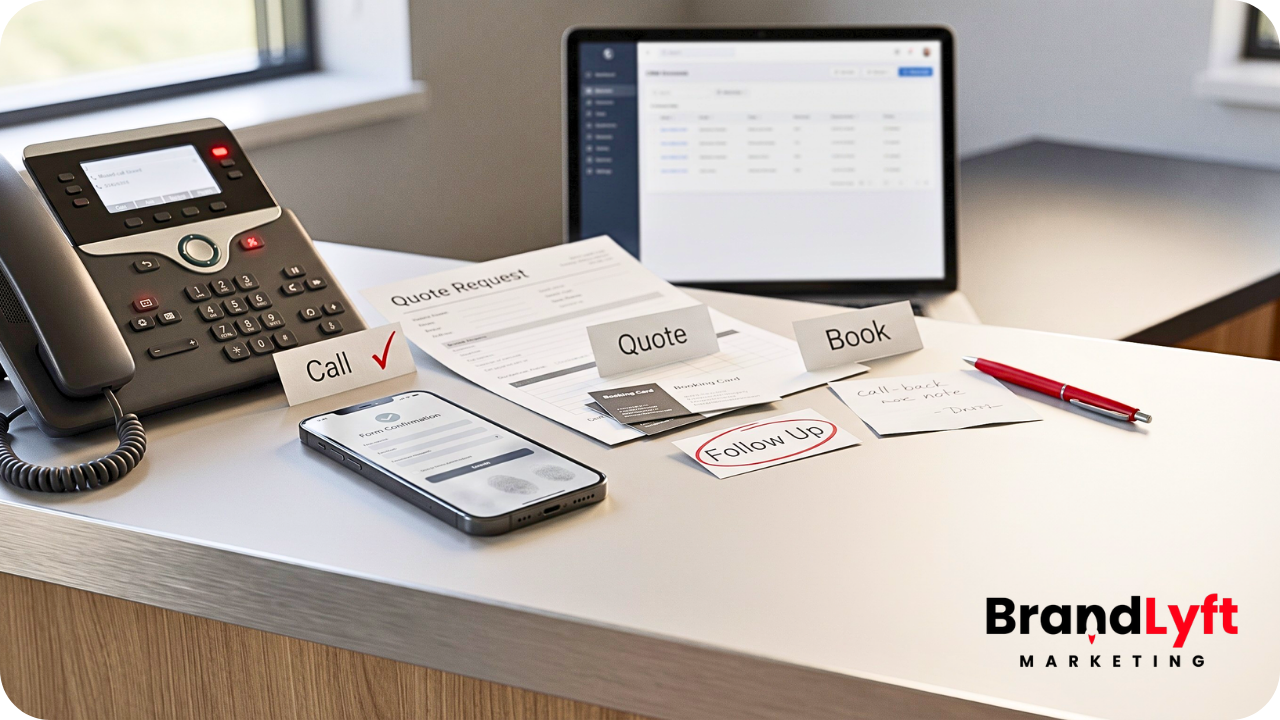
Missed Calls With No Recovery Path
For many service businesses, the highest-intent lead is still a phone call.
That is especially true for urgent work: plumbing issues, HVAC repairs, roof leaks, electrical problems, tree damage, appliance repair, pest issues, and other problems where the customer wants help now.
If the call gets missed, the business needs more than voicemail.
There should be a text-back, a call-back task, a clear owner, and a follow-up path. A missed-call text-back without a person watching the reply is not enough.
It only says, “We saw you called.”
It does not win the job by itself.
Website Forms That Do Not Trigger Real Action
A contact form should not just send an email.
It should tell the team what the customer needs, where the lead came from, who owns the first response, and what should happen next.
If the form sends a vague notification to a shared inbox, the business has to rely on memory. That works until the day gets busy.
A better setup sends the lead into the CRM, tags the source, alerts the right person, creates a task, and starts a follow-up path that matches the request.
That is the difference between a form submission and a lead system.
Booking Paths That Stop Too Early
Some local businesses let customers request appointments, consultations, estimates, inspections, or calls online.
That is useful only if the booking path stays connected.
The customer should know what happens next. The staff should get the right alert. The CRM should track the source. The appointment should connect to the right pipeline stage. If the customer cancels or no-shows, the follow-up should not depend on someone noticing it later.
BrandLyft’s Revenue System Build exists for this kind of gap. The point is not just getting the lead. The point is building the system that catches it, routes it, tracks it, and keeps it moving.
Tracking That Shows Leads But Not Booked Work
Lead count can be misleading.
A campaign may create form fills, but not booked jobs.
A channel may create calls, but not profitable work.
A landing page may look busy, but the sales team may not trust the leads.
If tracking stops at “lead submitted,” the business does not know which source deserves more money.
That is where Google Business Profile performance, Google Ads conversion tracking, CRM source tracking, and pipeline stages need to agree. Google’s Business Profile performance documentation explains that owners can see searches, calls, website clicks, directions, messages, and bookings when those metrics apply. Google Ads also documents website conversion measurement for actions users take after clicking an ad.
The tools can show activity.
The business still has to connect that activity to real sales outcomes.
Lead-Leak Check
Before More Cartersville Leads Come In, Check Where They Go
If calls, forms, booking requests, source tracking, and follow-up already feel unclear, more leads may only hide the real issue. Start by finding the leak.
Need the response path reviewed too? Review Speed to Lead or book the discovery call.
What a Cartersville Digital Marketing Agency Should Review Before More Budget
A Cartersville digital marketing agency should review the parts of the system that turn attention into booked work.
That does not mean every business needs a complicated setup.
It means the basics need to work.
The Website Has to Make the Next Step Obvious
A local service website should make it easy to call, request a quote, book, or ask a question.
That sounds simple, but many websites hide the next step under weak buttons, long pages, vague service copy, slow mobile layouts, or forms that ask for too much too soon.
For a Cartersville business, the website should answer the practical questions fast.
What do you do?
Where do you serve?
Can I trust you?
How do I get help?
What happens after I reach out?
BrandLyft’s Web Design work matters because a service business website is not just a brochure. It has to turn local intent into a clean next step.
The Paid Ads Need Tracking Before Scale
Paid ads can create fast demand, but they can also expose weak tracking.
If the business cannot see which campaigns created booked appointments, sales calls, estimates, or real jobs, the ad account becomes harder to trust.
Clicks are not enough.
Form fills are not enough.
Call volume is not enough.
The business needs to know which campaigns create the right kind of lead and which leads move forward.
That is why BrandLyft’s Paid Ads Management should sit close to the follow-up system. Paid traffic and lead handling should not operate like two separate worlds.
The CRM Has to Match the Way the Business Sells
Many local businesses have some kind of CRM, inbox, spreadsheet, job board, software account, or calendar.
The problem is not always missing software.
The problem is often that the software does not match the way the business actually handles leads.
A roofing lead may need an inspection path.
An HVAC lead may need an emergency response path.
A med spa lead may need a consultation path.
A pest control lead may need a recurring-service path.
A tree service lead may need urgent storm cleanup routing.
If every lead enters the same pipeline, the team has to sort the details manually. That slows everything down.
BrandLyft’s GoHighLevel Partner work fits businesses that already have GHL but need the setup to match real sales, routing, follow-up, and reporting.
The Local Trust Signals Need to Be Clean
Local buyers make fast trust decisions.
They check reviews, photos, service pages, location details, business hours, licensing signals when relevant, and whether the company looks real.
Google’s LocalBusiness structured data documentation explains how business details can help search systems understand local business information. Structured data alone does not create trust, but clean business details support a better local presence.
The bigger point is plain: a local business should not send paid traffic to a page that still feels unfinished, vague, or hard to trust.
Why Local Service Businesses Near Cartersville Lose Leads After They Get Them
Cartersville-area businesses do not always lose leads because competitors have better ads.
Sometimes competitors simply answer faster, explain the next step better, or follow up more clearly.
That matters for smaller operators because one missed estimate, one unanswered urgent call, or one lost quote can hurt the week.
Common leak points include:
- A call comes in while the team is on a job.
- A form notification goes to an inbox nobody checks fast enough.
- A lead source appears as “website” with no useful detail.
- A booked estimate never moves into the right pipeline stage.
- A missed call gets a text, but nobody owns the reply.
- A quote goes out, but no follow-up happens after two days.
- A customer asks a question through chat, but the team sees it too late.
None of those problems require a bigger ad budget first.
They require a cleaner lead path.
What to Fix Before Asking for More Leads
Before hiring a Cartersville digital marketing agency or increasing the monthly marketing budget, review the core path.
Start with the phone.
Call the main number during business hours. Call it after hours. Check what happens when no one answers. Check the text-back. Check who gets alerted. Check whether the lead appears in the CRM.
Then test the website forms.
Submit the form like a customer. Use a real service need. Watch how fast the notification arrives, where the lead goes, what source appears, and who owns the reply.
Then review the booking path.
If customers can request appointments or estimates, check the confirmation, staff alert, calendar logic, and follow-up.
Then review tracking.
Look at Google Business Profile, website analytics, ad conversions, call tracking, form submissions, CRM stages, and booked jobs. If those systems do not tell the same story, do not scale spend yet.
Then review the follow-up.
Look at what happens after the first reply. Many leads are not lost on the first touch. They are lost because no second, third, or quote follow-up happens when the customer hesitates.
That is where AI Conversational Bot, missed-call handling, nurture paths, and human task ownership can help — but only when the setup matches the business.
What the Free Lead-Leak Teardown Should Help You See
The Free Lead-Leak Teardown should help a local service business see where the lead path is breaking before more money goes into ads, SEO, or new campaigns.
The teardown should not be about blaming one tool.
It should answer practical questions:
Are calls being answered or recovered?
Are forms tracked clearly?
Are leads routed to the right person?
Are sources easy to trust?
Does the CRM show the real sales stage?
Does follow-up happen after the first response?
Does the website make the next step obvious?
Does the business know which channels create booked work?
Once those answers are clear, the next move becomes easier.
The business may need better local SEO.
It may need paid ads.
It may need a website cleanup.
It may need speed-to-lead automation.
It may need a CRM rebuild.
Or it may need all of those in the right order.
BrandLyft’s Proof page is useful when you want to see how the company talks about service-business growth, lead response, CRM, and marketing systems in the real world.
Before More Leads, Build the Path That Holds Them
A Cartersville digital marketing agency can help a local business get more attention.
But attention is not the same as booked work.
If the phone is missed, the form is vague, the CRM is hard to trust, the booking path is unclear, or the follow-up depends on memory, more leads may only create more dropped chances.
For local service businesses in and around Cartersville, the better first move is to check the system behind the lead.
Fix the leak.
Then decide what kind of marketing spend makes sense.