Category: Multi-Location

  • What Franchise Teams Should Expect From a GoHighLevel Agency After Launch

    What Franchise Teams Should Expect From a GoHighLevel Agency After Launch

    The first GoHighLevel build is not the last hard part. Once several locations depend on the account, every edit can affect routing, calendars, staff access, reporting, integrations, and the way local teams handle leads.

    That is where a GoHighLevel agency for franchises should prove its value. The agency should not disappear after the workflows go live or wait for corporate to translate every operating problem into a technical request. It needs a clear way to receive changes, test them, protect shared standards, support local teams, and document what happened.

    A provider may be good at building workflows and still be the wrong long-term partner for a franchise. Post-launch work asks a different question: can this team own change across a network without making the account harder to trust?

    Launch Changes the Job the Agency Has to Do

    Before launch, most work is project-shaped. The team maps the lead path, creates the account structure, connects calendars, builds workflows, assigns permissions, tests the first locations, and trains the first users.

    After launch, the work becomes continuous. A location adds a service. Corporate changes the response standard. A booking tool updates its rules. A new regional manager needs access to several accounts. A campaign creates a lead type the original routing never considered. Staff turnover exposes gaps in training. A dashboard stops matching what leadership asks during monthly reviews.

    None of those changes looks large by itself. Across a franchise network, they can touch several parts of the system at once.

    BrandLyft’s guide to deploying GoHighLevel across franchise locations covers the structure needed before and during rollout. The post-launch question is narrower: who owns the shared system once real locations start asking it to change?

    A useful agency answers that before the first support request arrives. The contract, support model, and working process need to make clear who can request a change, who approves it, what gets tested, how locations are notified, and who records the final decision.

    The First Question Is Who Owns a Change

    Most post-launch trouble does not begin with a broken workflow. It begins with an unclear request.

    A local manager asks for a new pipeline stage because the current one does not fit a local sales step. Corporate asks the agency to copy it across every location. The agency makes the edit. A month later, reporting no longer compares locations cleanly because one label now carries two meanings.

    The mistake was not the new stage. The mistake was treating a local request as a platform edit before deciding what problem the change needed to solve.

    A serious post-launch process needs to capture the business reason, the affected locations, the current behavior, the requested result, the person approving the change, and any connected workflow, calendar, report, or integration that may move with it. The agency does not need a heavy ticketing system for every small request. It does need enough context to stop one quick fix from becoming a network-wide side effect.

    Access rules matter here. HighLevel supports agency-level and sub-account permissions, including limits on which accounts and modules a user may access. Its documentation on user roles and permissions shows that access can be narrowed by account and function. The franchise still has to decide who holds that access and what they are allowed to change.

    The agency needs to turn that decision into a working rule. Corporate may own shared fields, pipeline definitions, templates, workflow logic, reporting standards, and integration mappings. Local teams may own availability, assigned staff, lead notes, appointment outcomes, and daily follow-up. The exact split will vary. Leaving it unwritten is the risk.

    A GoHighLevel Agency for Franchises Should Protect Shared Standards Without Freezing Local Teams

    Franchise control is not the same as locking every location into one rigid process.

    Corporate needs consistency where comparison and brand control matter. Location teams still need enough room to work real leads, schedule around local staffing, respond to service-area differences, and handle exceptions without waiting days for a minor adjustment.

    The agency’s job is to draw that line with the franchise, then protect it after launch.

    A shared pipeline stage must mean the same thing everywhere if leadership uses it for reporting. A local calendar may have different staff and hours without changing the meaning of a booked appointment. A common workflow may use location-specific senders, calendars, phone numbers, or alerts while keeping the same response standard. A local manager may need visibility into assigned contacts without receiving access to every account setting.

    This is where franchise GoHighLevel support has to move beyond account setup. The provider needs to understand which parts of the system act like brand standards and which parts must stay local.

    Ask how the agency handles exceptions. A weak answer is, “We customize each location.” That can create twenty versions nobody wants to maintain. Another weak answer is, “Every location uses the same build.” That can force teams to work around the CRM when local operations differ.

    The stronger answer explains how the agency keeps one shared operating model, where approved variations live, and how those variations stay visible to the people supporting the network.

    Network-Wide Changes Need a Release Process, Not a Quick Edit

    A change that looks safe in one account can behave differently when it reaches locations with different users, calendars, lead sources, integrations, time zones, or staffing patterns.

    That does not mean every edit needs weeks of planning. It means the agency needs to know the difference between a local correction and a shared release.

    For a network-wide change, the provider needs to identify the affected assets, test the new behavior in a controlled account or pilot location, check the main exception paths, record the approved version, and define what happens if the release creates a problem. Location teams also need an explanation they can use during daily work.

    HighLevel now provides tools that can support this work. Workflow Version History records saved workflow states and allows older versions to be restored as drafts. HighLevel’s Audit Logs provide a time-stamped record of key account actions. Those features help with traceability. They do not replace a release decision, test plan, or communication process.

    The practical standard is simple. The agency needs to explain what changed, why it changed, where it was tested, which locations received it, and what the team will do if the result is wrong.

    Post-Launch Ownership Check

    Find the parts of GHL nobody clearly owns

    Use the Franchise GHL Optimization Map to review routing, follow-up, integrations, reporting, and location handoff before another round of edits spreads the same uncertainty.

    Use the Franchise GHL Map
    See franchise GHL support

    Integration Support Means Owning the Failure Path

    Franchise systems rarely stop at GoHighLevel. A home service group may rely on ServiceTitan or JobNimbus. A wellness or beauty brand may use Mindbody or Boulevard. Other locations may depend on a call platform, payment tool, data warehouse, ad source, custom app, or internal reporting layer.

    The post-launch agency does not need to own every outside product. It does need to own the agreed handoff between systems.

    That includes knowing which platform holds the source record, what event should move into GHL, what GHL should do next, how a failure becomes visible, and who investigates when the data stops matching. A connection that works during launch can still break later after an API change, credential update, field edit, location addition, or process change.

    A weak support model waits for a location to notice that bookings have stopped moving. A stronger model gives the franchise a known path for reporting the issue, checks the technical record against the operating result, repairs affected records when possible, and confirms when the handoff is working again.

    BrandLyft’s article on GoHighLevel integrations for franchise brands explains how system ownership and data movement are decided. When comparing agencies, ask who keeps that map current after launch. If the answer lives only in one developer’s memory, the franchise does not own the integration knowledge.

    Training Is Part of Change Control

    Initial training helps the first group of users. It does not cover the people hired six months later, the manager who takes over another region, or the staff member whose daily steps change after a workflow release.

    A GoHighLevel agency for franchises should connect training to the life of the system.

    When a shared process changes, the agency and corporate team need to decide which instructions, recordings, checklists, or role guides also need to change. When a new location opens, the training needs to reflect the current build rather than an old launch recording. When one branch keeps working outside GHL, support needs to find out whether the problem comes from behavior, unclear ownership, missing access, or a process that does not fit the work.

    This does not make the agency responsible for every staff habit. The franchise still owns expectations and accountability. The agency needs to make the system understandable enough that corporate can coach the right problem.

    BrandLyft’s article on location-level GoHighLevel usage goes deeper into the adoption side. For post-launch agency selection, the useful question is how training stays current when the account changes.

    Reporting Definitions Must Survive Every Edit

    Leadership cannot compare locations when the meaning behind the numbers keeps moving.

    One agency edit can change reporting without touching the dashboard. A pipeline stage gets renamed. A workflow starts moving opportunities earlier. An integration sends a new booking status. A location begins marking automated texts as contact attempts. A field changes from required to optional.

    The dashboard may still load. The metric may no longer mean what leadership thinks it means.

    Franchise operations leader reviewing location reports as part of GoHighLevel agency for franchises post-launch reporting support.

    A post-launch partner needs to protect reporting definitions during change review. If a requested edit affects the point when a lead becomes contacted, booked, qualified, won, lost, or handed to another system, the agency needs to flag the reporting effect before release.

    That also means the agency needs to know which reports belong to corporate, which ones help regional managers, and which ones local teams use during daily follow-up. The same data can support different views. The definition underneath it needs to stay stable.

    BrandLyft’s guide to GoHighLevel reporting for multi-location brands explains why activity counts are not enough. The agency comparison question is more specific: who guards the meaning of those reports when the account changes?

    Support Quality Shows Up Before the Fix

    Fast replies are useful. They are not the whole support model.

    A provider may answer within an hour and still create weak fixes if the team starts editing before it understands the request. The better signal is the quality of the questions that come before the change.

    Does the agency ask which locations are affected? Does it check whether the issue happens for every lead source or only one? Does it separate a user-access problem from a workflow problem? Does it ask what the local team expected to happen and what actually happened? Does it look for connected calendars, fields, reports, and integrations before making the edit?

    Support also needs an escalation path. Local staff need to know where to send a real system problem. Corporate needs to know which requests need approval. The agency needs to know when an issue is urgent because live leads or bookings are affected and when it can wait for a planned release.

    The working relationship matters more than a polished support promise. Ask to see the process the agency uses when the account is already live and several teams depend on it.

    Proof Should Look Like Operating Evidence

    Franchise experience needs to show up in how the agency explains its work.

    A logo wall or a platform badge may support credibility. It does not prove the provider can handle change across several locations. The buyer needs evidence tied to the operating job.

    What to askWhat useful evidence looks like
    How are shared changes approved?A clear request, approval, testing, release, and communication path.
    How do you test across locations?A pilot account or location, named test cases, exception checks, and a rollback plan.
    How do you support integrations?A current system map, clear source-of-truth rules, failure alerts, and named owners.
    How does training stay current?Role-based material tied to the current build, plus updates after major changes.
    What does the franchise own?Account access, documentation, asset inventory, change history, and a usable exit handoff.

    The agency also needs to explain a past multi-location problem without turning it into a vague success story. What changed? Which teams were affected? How was the release tested? What happened when one location needed a different path? How did the provider protect reporting?

    BrandLyft’s GoHighLevel implementation partner hiring guide covers the wider difference between setup help and system-level work. For a franchise that is already live, operating evidence needs to focus on what happens after the initial handoff.

    The Exit Plan Is Part of Post-Launch Support

    A franchise cannot afford to become trapped because one provider is the only team that understands the account.

    Before signing a long-term support agreement, ask what the franchise will receive if the relationship ends. That may include account ownership, admin access, workflow and asset documentation, integration credentials or connection records, current issue logs, reporting definitions, training material, and a handoff period.

    The details depend on the project and the tools involved. The principle does not: the franchise needs to keep operating without rebuilding its own history from fragments.

    An agency that documents the system is easier to work with while the relationship is active, too. Support moves faster because the team does not have to rediscover the same decisions each time something changes.

    The Right Partner Makes Future Changes Safer

    The first build proves that an agency can put GoHighLevel together. Post-launch work proves that it can keep the system useful while the franchise changes around it.

    That is the standard franchise teams can use when comparing providers. Look past the number of workflows, snapshots, or automations the agency can produce. Ask who owns change, how shared releases are tested, how local exceptions are recorded, how integrations are supported, how training stays current, and how reporting keeps its meaning.

    A GoHighLevel agency for franchises should leave the network with more clarity after each change, not another layer of account history only the agency understands.

    Franchise GHL Review

    Clarify who owns the system after launch

    If your franchise already uses GoHighLevel but changes, support, training, integrations, or reporting ownership still feel unclear, BrandLyft can review the operating model with your team.

    Book a Franchise GHL Call

    Prefer to review the service first? See BrandLyft’s franchise GHL support.
  • The Conversation Should Survive the Channel Change

    The Conversation Should Survive the Channel Change

    A visitor opens a practice website after normal hours and asks whether a service is available at the nearest location. The AI chat answers the first question, then the visitor closes the page. Later, a text arrives with no reference to the original request. The location choice is missing, the calendar does not match, and the staff member who takes over asks the visitor to explain everything again.

    AI chat with SMS follow-up should prevent that restart. The conversation needs to carry the same contact, question, location, appointment status, and owner across every channel change.

    The hard part is not producing the first automated reply. It is keeping the conversation intact when the browser closes, the visitor chooses another location, a booking path opens, or a person needs to step in.

    The Chat Type Decides What Happens After the Browser Closes

    Live chat, text follow-up, and human transfer do not automatically form one experience.

    A browser chat may work only while the visitor stays on the site. An email or SMS chat can continue through another channel. An all-in-one widget may offer several contact choices. Each option creates a different path for identity, consent, timing, and staff ownership.

    HighLevel’s chat widget guide separates Web Chat, Email/SMS, social, Voice AI, WhatsApp, and other supported channels. The practice must decide which experience it is actually offering before writing prompts or routing rules.

    That decision should answer:

    • Does the conversation stay inside the browser?
    • Will the visitor provide a phone number before leaving?
    • Does the practice promise an immediate human reply or later follow-up?
    • Which channel becomes the continuing record?
    • What happens when the visitor does not provide contact details?

    BrandLyft’s AI Live Chat service fits the website side of this path. The rest of the system still needs rules for what happens when the conversation leaves the page.

    Define Intake Before the Bot Starts Asking Questions

    For this article, intake means basic pre-appointment information used to route an inquiry, offer the right booking path, or bring in a staff member. It does not mean diagnosis, symptom assessment, treatment advice, clinical urgency decisions, or a full patient history.

    A practice should decide the smallest useful set of details before the AI starts collecting information. That may include:

    • Name
    • Phone number
    • Email when the next step requires it
    • Preferred location
    • Reason for contacting the practice
    • Requested service or appointment type
    • Preferred day or time
    • Permission to continue by SMS

    Each field needs a reason. HighLevel can collect visitor details before a live chat begins, but the practice still decides what to ask and how the answers will be used.

    Capture Identity and SMS Permission as Separate Decisions

    A phone number identifies a possible contact channel. It does not automatically grant permission for every later text. AI chat with SMS follow-up needs to treat identity and consent as separate decisions.

    The practice should tell the visitor who will text, what message to expect, and how to opt out. HighLevel’s SMS compliance settings can add sender identification and opt-out language to initial messages, but the workflow must still respect a visitor who declines or later opts out.

    Do not make SMS permission a hidden condition for using the website chat. The visitor may prefer email, a phone call, self-booking, or no follow-up at all.

    Once the person agrees to text follow-up, the first message should identify the practice and connect back to the website conversation. A vague “How can we help?” text forces the contact to restart.

    AI Chat With SMS Follow-Up Needs One Contact Record

    A transcript alone does not create continuity.

    The system also needs to preserve the contact record, selected location, service request, current channel, appointment state, active owner, bot status, and expected next action.

    The visitor may already exist under another location, have an appointment, use another email address, or return through a form after the chat. A careless setup can create duplicate contacts or two staff members replying at once.

    Before switching from chat to SMS, check:

    • Does the phone number match an existing contact?
    • Is there an open conversation or appointment already?
    • Which location currently owns the inquiry?
    • Should a location change update the same opportunity or create another one?
    • Can staff see the earlier chat without searching another inbox?

    BrandLyft’s lead-routing article covers the wider ownership problem across locations. For AI intake, the important test is simpler: one person should not become several disconnected records because the channel changed.

    Route by Location, Service, Hours, and Availability

    A preferred location is only one routing input.

    The nearest office might not offer the requested service, have the correct provider, or show a suitable appointment. A shared intake team may also handle the first response before a local employee takes over.

    The system should distinguish:

    • Requested location
    • Eligible location
    • Available location
    • Assigned location
    • Booked location

    Those values may match, but the workflow should not assume they always will.

    Location routing also needs a fallback. When the selected office is closed or unavailable, the AI should explain the next honest option: another eligible location, an available appointment, staff follow-up during stated hours, or the end of the path when the practice cannot help.

    Choose the Next Branch: SMS, Booking, or Human Help

    Not every visitor needs to complete the same sequence.

    After the AI gathers enough context, the conversation may move into one of several branches:

    • Continue through SMS after the browser session
    • Offer the correct appointment calendar
    • Send the inquiry to the right location team
    • Bring in a person for judgment or clarification
    • Create an after-hours follow-up task
    • Close the path when the practice cannot serve the request

    Booking and human help can be alternatives. SMS may support either branch, or it may not be needed. AI chat with SMS follow-up becomes useful only when the system knows which outcome applies and what information must move with it.

    When the First Reply Is Only the Beginning

    Connect Website Chat to the Rest of the Inquiry Path

    See how BrandLyft connects website conversations with useful intake, location routing, booking, and staff takeover without making the contact start again.

    Review AI Live Chat

    Need the conversation to continue by text? See SMS conversation follow-up.

    Human Handoff Is Not the Same as Live Takeover

    A handoff can assign the conversation, create a task, notify a user, or pause the bot. None of those actions proves that a staff member has entered the conversation.

    HighLevel’s Human Handover action supports assignment, notifications, tasks, tagging, bot pause settings, and a closing message. The practice still needs a visible acceptance rule.

    Track the difference between:

    • Handoff triggered
    • Staff notified
    • Conversation assigned
    • Staff member accepted
    • Human reply sent
    • Handoff resolved

    Use “live takeover” only when someone can respond during the promised window. When the system merely creates a task for later, tell the contact what will happen and when.

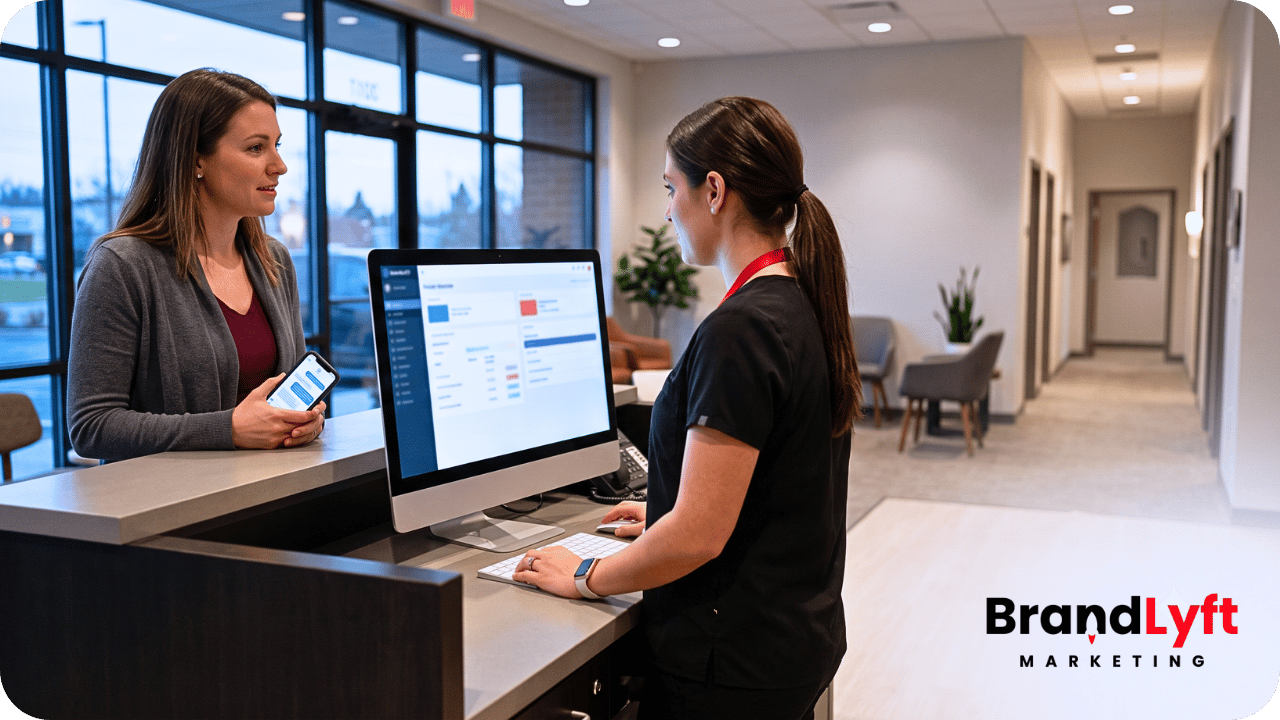
    AI chat with SMS follow-up transferring conversation context to a staff member at the correct practice location

    Pause the Bot When Staff Enters the Conversation

    A human takeover can fail when the bot keeps replying over the employee.

    Once a staff member accepts the handoff, automated answers should stop for the active conversation. Another contact message should not restart the bot while the employee is working the inquiry.

    Automation should return only after a deliberate status change, conversation close, or verified inactivity rule. A generic timeout can restart the bot too early.

    Staff should see whether the AI remains active, paused, or eligible to resume. Without that visibility, employees may hesitate to reply or assume the bot still owns the contact.

    Set an Honest Fallback When Nobody Is Available

    A multi-location practice should decide the availability promise before the widget goes live.

    “Talk to a person now” is inaccurate when the office only creates a next-day task. Use language that matches the real service:

    • Ask the team to follow up
    • Continue by text
    • Choose an appointment
    • Send this conversation to the practice
    • A team member will respond during these hours

    When nobody can take over, create a task, notify the correct location, preserve the transcript, keep the chosen channel open, and show the contact the next realistic step.

    BrandLyft’s Speed to Lead work applies when response timing, routing, and ownership need to function together. Faster messages do not help when the wrong location receives the task or nobody accepts it.

    Preserve Context Before the Staff Member Replies

    The employee taking over should not need to reconstruct the conversation.

    Give the staff member a compact handoff summary that includes:

    • Original question
    • Contact details already provided
    • Selected and eligible location
    • Requested service or appointment type
    • Preferred time
    • Current booking status
    • Chat and SMS history
    • Reason the AI requested help
    • Current owner
    • Expected next action

    The transcript remains useful, but staff should not have to read twenty messages to learn why the conversation reached them. A short summary should show what the AI asked, what the contact answered, and which promise the system made.

    Book Against the Correct Location and Appointment Type

    AI booking only works when calendar choices reflect real services, providers, hours, and locations.

    HighLevel supports multi-calendar booking in Conversation AI. The practice can map intent to different calendars and use fallback behavior when the request does not match cleanly.

    A fallback calendar should not silently offer the wrong service or office. When the AI cannot identify the correct calendar, it should ask a useful follow-up question or request human help.

    After booking, the same contact record should hold the location, appointment type, date, confirmation status, and any handoff notes. Rescheduling or cancellation should update that same path rather than create another conversation with no context.

    Test the Failures, Not Only the Happy Path

    A successful daytime booking proves very little.

    Test the full system with scenarios that expose identity, routing, consent, booking, and ownership problems:

    • New visitor during business hours
    • After-hours visitor
    • Visitor leaves before giving contact details
    • Contact declines or later revokes SMS permission
    • Invalid or undeliverable number
    • Wrong location or unavailable service
    • No suitable appointment time
    • Visitor asks for staff
    • Transfer target does not answer
    • Staff member accepts but never replies
    • Bot continues or resumes during human takeover
    • Existing contact stored under another location

    For every scenario, check the contact record, location, transcript, SMS status, appointment, owner, bot state, task, and final outcome.

    BrandLyft’s multi-location reporting article explains why total activity can hide local follow-up problems. The same issue applies here: a high number of AI replies does not prove that each location handled the inquiry correctly.

    When a Chat Widget Needs a Wider Build

    A standard widget may be enough when one location uses one calendar, one small team, and a simple set of approved questions.

    The build becomes harder with several locations, shared intake staff, external booking tools, duplicate-contact rules, webhook actions, or reporting across the full path.

    At that point, the work extends beyond chat configuration. BrandLyft’s Revenue System Build connects lead capture, routing, calendars, follow-up, ownership, and reporting. Practices already using HighLevel may need a deeper GoHighLevel Partner review when several workflows and location rules already overlap.

    AI chat with SMS follow-up should be tested as one intake path, not as separate chat, SMS, calendar, and staff tools.

    One Inquiry Should Not Become Four Separate Conversations

    The real test is not whether AI can answer one question on a website.

    The practice should follow the same inquiry after the visitor leaves the browser, changes location, continues by text, books, or asks for a person.

    AI chat with SMS follow-up works when contact identity, permission, location, appointment state, staff ownership, and conversation context survive every change. The contact should not need to begin again because the system changed channels.

    When Chat, SMS, Booking, and Staff Lose the Same Context

    Map the Intake Path Across Every Location

    Book a discovery call to discuss how the current website chat, texting, calendars, location routing, and human handoff fit together.

    Book the Intake Review

    Need the wider system connected first? Review Revenue System Build.

  • GoHighLevel Multi-Location Setup Checklist: What to Fix Before You Add More Locations

    GoHighLevel Multi-Location Setup Checklist: What to Fix Before You Add More Locations

    GoHighLevel Multi-Location Setup Checklist: What to Fix Before You Add More Locations

    A GoHighLevel multi-location setup should not expand until the current locations can capture leads, route them, follow up, report, and use the system consistently.

    That sounds obvious, but this is where many franchise and multi-location teams get into trouble.

    The first few locations go live. Workflows exist. Pipelines exist. Calendars exist. Local teams have access. Corporate can see some activity. On the surface, the account looks ready for the next wave.

    Then more locations get added, and the weak spots spread.

    Lead capture gets inconsistent. Routing rules do not match real service areas. Missed calls sit too long. Pipeline stages mean different things by location. Reporting looks active but not useful. Local teams use GHL differently. Integrations create duplicate records. Corporate and local teams both assume the other side owns the handoff.

    That is why a GoHighLevel multi-location setup needs a cleanup checklist before the next location gets added.

    GoHighLevel multi-location setup checklist showing lead capture routing missed calls reporting integrations and team usage across locations

    The goal is not to make the account more complicated.

    The goal is to stop weak setup decisions from getting copied across the franchise.

    If one location has messy routing, five more locations will not fix it. If the pipeline already feels unclear, adding more users will make it harder to trust. If corporate cannot see what each team does with every lead, more dashboards may only create more noise.

    Before you add more locations, fix the system you already have.

    Check the Setup Before You Copy It Wider

    The Franchise GHL Optimization Map helps franchise and multi-location teams review lead capture, booking, routing, follow-up, reporting, integrations, and location handoff before more locations inherit the same gaps.

    Run the Location Check
    Use the GHL Playbook

    Why a GoHighLevel Multi-Location Setup Needs a Checklist Before Expansion

    A GoHighLevel multi-location setup gets harder to fix after more branches, users, campaigns, and local workflows enter the account.

    Early setup gaps are easier to ignore when only a few locations use the system.

    A manager can manually reassign a lead. Corporate can ask one location for an update. Someone can fix a bad pipeline stage by hand. A missed call can get handled with a quick text from a local phone.

    That kind of manual cleanup does not scale.

    Once the franchise adds more locations, every unclear rule creates more drag. The team has more records to review, more staff to train, more dashboards to explain, more workflow branches to test, and more exceptions to track.

    This is why the checklist matters.

    It gives leadership a practical way to review the account before more locations get added. It also helps separate small cleanup from deeper rebuild work.

    BrandLyft’s earlier article on GoHighLevel multi-location setup explains why deployments stall. This checklist focuses on what to fix before the next expansion step.

    Checklist Item 1: Clean Up Lead Capture Before Adding More Locations

    Lead capture is the first place to check.

    Every location should receive leads from clean, trackable entry points. That may include website forms, local landing pages, paid ads, calls, missed calls, chat widgets, booking pages, referral forms, lead magnets, or third-party sources.

    The problem starts when those sources enter GHL differently.

    One form may capture location correctly. Another may miss the service area. A paid campaign may pass campaign data but not location data. A missed call may create a contact without enough context. A local landing page may skip the fields corporate needs for reporting.

    That creates bad follow-up later.

    Before more locations go live, review every lead source and ask:

    • Does the lead enter the right GHL account or location structure?
    • Does the form collect enough information to route the lead?
    • Does source tracking stay attached to the contact?
    • Does the lead create the right opportunity?
    • Does the right location receive the alert?
    • Can corporate report on the lead source later?

    If the answer is unclear, fix lead capture first.

    A weak form setup or messy call source will not improve when more locations copy it. It will only create more contacts that no one can trust.

    Checklist Item 2: Fix Location Routing Before More Leads Hit the Account

    Routing is the second checkpoint.

    A lead entering GHL is not enough. The system has to know which location owns it, who should respond, and what happens if the first owner does not act.

    Franchise routing often gets messy because real territories are not simple.

    Some teams route by ZIP code. Others route by nearest branch, city, region, service area, owner group, appointment type, staff availability, or local capacity. Some leads sit between two locations. Some leads come from corporate campaigns with incomplete location data.

    If the routing rule is loose, the local team has to guess.

    That guesswork becomes more expensive as the franchise grows.

    Before expanding your GoHighLevel multi-location setup, test lead routing across real lead paths. Submit a lead from a corporate page, a local page, a paid ad, a missed call, a referral source, and a booking request. Then check where each lead lands.

    The right test is not “Did the workflow fire?”

    The right test is “Did the correct location get a lead it can actually work?”

    BrandLyft’s article on GoHighLevel lead routing for franchises goes deeper on this handoff. For this checklist, the point is simple: do not add locations until routing rules match how the franchise really operates.

    Checklist Item 3: Review Missed-Call Follow-Up by Location

    Missed calls can leak revenue quietly.

    A buyer may not fill out a form or wait for a nurture sequence. They may call the nearest location, expect a quick answer, and move on if nobody responds.

    For a multi-location brand, missed-call recovery needs more than one generic text.

    The system should show which location missed the call, who should call back, how fast the follow-up happened, and what happened after that. It should also help corporate spot patterns.

    One branch may miss calls during lunch. Another may miss them after 5 p.m. A third may miss weekend calls. A fourth may reply quickly but never update the pipeline.

    Those are different problems.

    Before adding more locations, check the missed-call path:

    • Does a missed call trigger a text quickly?
    • Does the right location get the callback task?
    • Does a manager see missed calls that sit too long?
    • Does the missed call create or update the right opportunity?
    • Does reporting show missed calls by location?
    • Does the workflow stop once the lead books or gets handled?

    Speed matters, but ownership matters more.

    BrandLyft’s article on speed-to-lead automation for franchises is the natural next read for teams that need a stronger first-response and missed-call recovery path.

    Checklist Item 4: Standardize Pipeline Stages Before the Next Rollout

    Pipeline stages should mean the same thing across every location.

    This sounds basic, but it breaks often.

    One location may move a lead to “Contacted” after an automated text. Another may wait until a live phone call happens. Another may skip the stage entirely. A manager may close opportunities differently from a sales rep. A front desk team may book appointments but never move the opportunity.

    When that happens, reporting starts losing trust.

    Before more locations join the system, define what each pipeline stage means. Then check whether local teams can follow that definition during real work.

    A useful pipeline review should ask:

    • Which stages are required for every location?
    • Which stages are optional by service line or offer?
    • What exact action moves a lead from one stage to the next?
    • Who moves the opportunity?
    • What stages trigger automation?
    • What stages should show up in owner-level reporting?

    HighLevel’s documentation on understanding pipelines explains how pipelines organize opportunities and stages. For franchise teams, the bigger job is making those stages mean the same thing across the brand.

    If stages are unclear now, more locations will not make them clearer.

    Checklist Item 5: Check Calendar and Booking Rules by Location

    Calendar setup can look finished before it works in real life.

    A location may have a calendar in GHL, but that does not mean the booking path matches the branch’s hours, staff, service types, appointment length, or availability.

    Booking problems show up fast when a franchise expands.

    A lead may route to one location but receive another location’s calendar. A buyer may book a service the branch does not offer. A same-day request may go to a team that cannot handle it. A local staff member may receive a booking without enough context.

    Before adding more locations, test booking paths by location.

    Check the form, workflow, calendar link, confirmation message, reminder, no-show path, and reporting view. The whole path should match the local operating model.

    HighLevel’s calendars and appointments resources cover the platform mechanics. Franchise teams still need to decide how each branch should book, confirm, reschedule, and follow up.

    A clean GoHighLevel multi-location setup should not send every buyer into one generic booking path.

    Checklist Item 6: Fix Reporting Visibility Before Leadership Loses Trust

    Reporting is one of the clearest signs that a setup is not ready to scale.

    Owners should not have to chase managers for basic answers.

    Which location responded fastest? Which one missed calls? Which one booked the most leads? Which pipeline stages stall? Which team follows up after no answer? Which locations actually use GHL?

    If the account cannot answer those questions, the reporting layer needs work before more locations get added.

    Bad reporting usually starts with bad inputs.

    If lead sources are inconsistent, location routing is unclear, pipeline stages mean different things, and local teams work outside the CRM, dashboards will not solve the trust problem. They will only make the inconsistency easier to see.

    Before expansion, review:

    • Lead response by location
    • Booked vs. unbooked leads
    • Missed calls and callback status
    • Pipeline movement by branch
    • Overdue tasks
    • Stale opportunities
    • Local team activity
    • CRM adoption by location

    HighLevel’s dashboard permissions documentation shows how access can be controlled by role or user. For multi-location teams, permissions should match the reporting model so corporate, regional managers, and local teams see the right level of data.

    BrandLyft’s article on GoHighLevel reporting for multi-location brands breaks down what owners need to see across every location.

    Checklist Item 7: Review User Roles, Permissions, and Assigned Data

    User access is not just an admin detail.

    In a franchise GHL setup, access design affects daily work.

    Local reps need to see the leads and tasks they own. Managers need enough visibility to coach and catch missed follow-up. Regional leaders may need a group of locations. Corporate needs cross-location reporting without getting buried in local noise.

    If permissions are too loose, teams see too much. If they are too tight, people miss the context needed to act.

    Before adding more locations, check user roles and assigned data.

    Review who can see contacts, conversations, opportunities, workflows, calendars, dashboards, and pipeline records. Then check whether that access matches how the franchise actually works.

    HighLevel’s support docs on user roles, permissions, and assigned data explain how sub-account access can restrict visibility and control tools such as workflows.

    That matters before expansion because every new location adds more users, more records, and more permission decisions.

    Do not wait until the account is full of confused users before cleaning access rules.

    Checklist Item 8: Check Team Usage Before Training More Locations

    Training more locations does not fix a system that current teams do not use correctly.

    Before the next rollout, look at how active locations actually work inside GHL.

    Do they call from the system? Do they reply inside conversations? Do they move opportunities? Do they complete tasks? Do they leave notes? Do they update appointment outcomes? Do they handle no-answer follow-up inside the CRM?

    If one location uses GHL daily and another treats it as a notification tool, expansion will widen the gap.

    This is where corporate teams often misread the problem.

    They assume the issue is training. Sometimes it is. Other times, the workflow does not match daily work. The pipeline has too many stages. The booking path is confusing. The reporting view does not help local managers. The team does not know which system owns the next action.

    BrandLyft’s article on GoHighLevel for franchises and location usage covers this adoption problem in more depth.

    For this checklist, the rule is simple: do not train more locations on a process your current locations do not follow.

    Checklist Item 9: Clean Up Integrations Before They Create More Duplicate Work

    Many franchise teams use GHL alongside other systems.

    A booking platform may hold appointments. A job system may hold service outcomes. A membership platform may hold customer status. An ad platform may hold campaign data. A custom database may hold location records.

    That is not automatically a problem.

    The problem starts when no one defines which system owns which part of the handoff.

    Before adding more locations, review how GHL connects with other tools. Look for duplicate contacts, missing location IDs, broken booking status updates, unclear job outcomes, stale membership data, and reporting gaps.

    HighLevel’s inbound webhook workflow trigger can receive data from outside applications into workflows. Its webhook and API options can support integration paths, but the franchise still needs business rules before the connection is useful.

    BrandLyft’s article on GoHighLevel integrations for franchise brands explains why integrations should protect the handoff, not just move data between tools.

    A weak integration copied to more locations becomes harder to unwind later.

    Checklist Item 10: Clarify the Corporate-to-Local Handoff

    A GoHighLevel multi-location setup needs a clear handoff between corporate and local teams.

    Corporate may own campaigns, templates, dashboards, brand standards, reporting, and system rules. Local teams usually own calls, replies, bookings, notes, show-up handling, and real customer conversations.

    Both sides need to know where their responsibility starts and ends.

    Without that clarity, leads get stuck between teams.

    Corporate assumes the location is working the lead. The location assumes the workflow handled it. A manager assumes the rep responded. The rep assumes the buyer booked. The dashboard shows activity, but no one owns the outcome.

    Before adding more locations, document the handoff in plain language.

    Who owns new leads? Who owns first response? Who owns missed calls? Who owns bookings? Who owns no-shows? Who owns stale opportunities? Who reviews local reporting? Who fixes workflow issues? Who decides when a location is ready to go live?

    BrandLyft’s article on GoHighLevel for franchises deployment is useful here because deployment needs shared structure and location-level ownership, not just another copied setup.

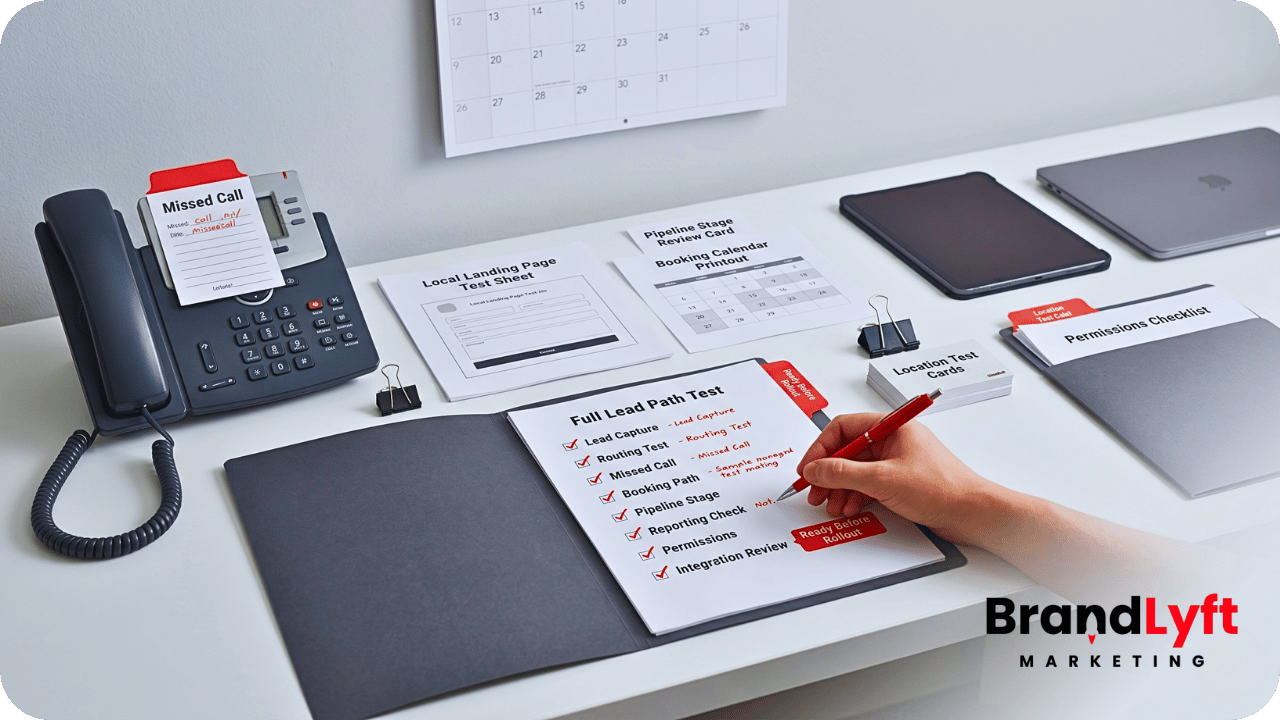
    Checklist Item 11: Test the Full Lead Path Before the Next Location Goes Live

    The final checklist item is a full lead-path test.

    Do not only check workflows one by one.

    Test the buyer journey from entry to outcome.

    Submit a test lead through each major source. Call the location after hours. Trigger a missed call. Book an appointment. Reply to the first automated message. Let a task become overdue. Move an opportunity through the pipeline. Check what corporate can see afterward.

    The goal is to find the breaks before the next location copies them.

    A full test should answer:

    • Did the lead enter with clean source data?
    • Did the right location receive it?
    • Did the right person get the next action?
    • Did the first response happen fast enough?
    • Did the booking path match the location?
    • Did the pipeline update correctly?
    • Did reporting show what happened?
    • Did the fallback path catch stalled activity?

    If the account fails this test, the next location should wait.

    That delay is not wasted time. It prevents the franchise from copying a broken handoff into another branch.

    What BrandLyft Looks For Before a Multi-Location GHL Expansion

    When BrandLyft reviews a GoHighLevel multi-location setup, the first question is not “Can we add another location?”

    The better question is “Should this setup be copied yet?”

    A review may cover lead capture, routing, missed-call recovery, pipeline stages, calendars, reporting, permissions, user roles, team usage, integrations, workflow naming, templates, source tracking, and fallback rules.

    The review may show that the account only needs cleanup.

    It may show that some workflows need tightening. It may show that reporting needs better inputs. It may show that each location needs a clearer owner. It may also show that the current setup was patched too many times and needs deeper rebuild work before expansion.

    That distinction matters.

    A franchise does not need to slow down for the sake of being careful. It needs to slow down when speed would copy the same operational mistakes into more locations.

    BrandLyft’s GoHighLevel for Franchises team helps franchise and multi-location brands review the system before the same gaps spread wider.

    Do Not Add Locations to a Setup You Do Not Trust Yet

    Use the GoHighLevel Implementation Playbook to review workflows, routing, calendars, permissions, pipelines, reporting, integrations, and launch readiness before the next location goes live.

    Use the Setup Playbook
    Review the Expansion Path

    FAQ About GoHighLevel Multi-Location Setup

    What should a GoHighLevel multi-location setup include?

    A GoHighLevel multi-location setup should include clean lead capture, location routing, missed-call recovery, standard pipeline stages, calendar rules, reporting visibility, user permissions, team usage rules, integrations, and a clear corporate-to-local handoff.

    When should a franchise clean up GHL before adding more locations?

    A franchise should clean up GHL before adding more locations when current branches use the system inconsistently, leads need manual reassignment, reporting feels hard to trust, missed calls sit too long, or local teams work outside the CRM.

    Should every location use the exact same GHL setup?

    Every location should follow the same core structure, but not every detail has to be identical. The franchise may need location-specific calendars, users, service areas, routing rules, and staffing logic while keeping shared reporting and pipeline definitions consistent.

    Can BrandLyft help review a live GHL account before expansion?

    Yes. BrandLyft can review a live GHL account before more locations get added. The review should look at the full handoff from lead capture to routing, follow-up, booking, pipeline movement, reporting, team usage, and integrations.

    The Real Checklist Question: Should This Setup Be Copied?

    A GoHighLevel multi-location setup does not fail only because more locations get added.

    It fails when the franchise copies a setup that was already unclear.

    Before the next rollout, look at the account honestly.

    Can every location capture leads cleanly? Can the right branch receive the lead? Can missed calls trigger real follow-up? Can pipeline stages mean the same thing everywhere? Can owners see what happens after a lead arrives? Can local teams use the system without creating side processes? Can integrations protect the handoff instead of adding duplicate work?

    If the answer is yes, expansion gets safer.

    If the answer is no, the next location may only make the problem harder to fix.

    Do the cleanup first.

    Then add locations to a system the franchise can actually trust.

  • GoHighLevel Multi-Location Setup: Why Most Multi-Location GHL Deployments Stall

    GoHighLevel Multi-Location Setup: Why Most Multi-Location GHL Deployments Stall

    GoHighLevel multi-location setup usually works fine at the first location.

    That is why the stall catches operators off guard.

    The first location gets enough pieces live. The forms work. The pipeline exists. The calendar takes bookings. A few workflows fire. The team can see leads coming in, and the owner can tell the setup is useful enough to keep going.

    Then the second or third location gets added.

    That is when the cracks start showing.

    Lead routing gets inconsistent. Local teams handle follow-up differently. Calendars do not match real availability. Pipeline stages mean one thing at one location and something else at another. Reporting looks active, but nobody fully trusts what it says. The business bought GoHighLevel to create one operating path, but the rollout starts turning into several local habits inside the same tool.

    That is the real reason most GoHighLevel multi-location setup projects stall.

    The account is not always broken. The platform is not always the issue. The problem is that the build was good enough for a small pilot, but not structured enough to scale across the rest of the footprint.

    GoHighLevel multi-location setup rollout across locations

    Rollout Stall Check

    Before You Add the Next Location, Find the Breakpoints

    The GoHighLevel Implementation Playbook for Franchise Systems helps you review routing, calendars, permissions, workflows, reporting, and local follow-up before the same gaps get copied wider.

    Check the Stall Points

    Why GoHighLevel Multi-Location Setup Usually Stalls After the First Few Locations

    A single-location GHL setup can survive messy thinking.

    A GoHighLevel multi-location setup usually cannot.

    When only one team is using the account, informal workarounds can hide the weak spots. Someone remembers to check the inbox. Someone knows which lead belongs to which service area. Someone moves the opportunity manually. Someone checks the missed call. Someone fixes the calendar mistake before it becomes a pattern.

    That changes when the rollout spreads.

    Now the system has to support different teams, different managers, different lead sources, different calendars, different levels of user access, and different follow-up habits. The setup cannot depend on one person remembering how the account is supposed to work.

    That is why many businesses feel stuck after deploying GHL at one to three locations.

    The first version worked because the team could babysit it.

    The next version needs structure.

    BrandLyft’s franchise and multi-location GHL support fits this exact stage because the work is not just building pages or adding automations. It is turning GHL into something locations can actually use without corporate chasing every handoff.

    Problem 1: The Pilot Was Never Built to Scale

    Most stalled deployments started with a pilot that was never designed like a rollout.

    That is understandable.

    The business wanted to prove GHL could work. So the first location got a pipeline, a few forms, a calendar, some workflows, and enough reporting to show activity. That helped the team see value.

    But a pilot setup often carries hidden assumptions.

    It may assume one manager owns every lead. It may assume one booking path. It may assume one service area. It may assume one person knows how every workflow works. It may assume every location follows the same sales process.

    Those assumptions fall apart when more locations enter the system.

    A scalable GoHighLevel multi-location setup needs reusable standards before the next rollout. That means naming rules, pipeline definitions, source tracking, user permissions, workflow ownership, calendar rules, reporting fields, and escalation paths.

    Without those standards, every new location becomes a slightly different version of the pilot.

    That is how a rollout becomes a support problem.

    Problem 2: Lead Routing Gets Too Loose

    Lead routing is one of the first parts to break.

    At one location, routing may feel easy. All leads go to the same team. Everyone knows who answers calls. Everyone knows which pipeline to check.

    At multiple locations, that logic gets harder.

    A lead may come from a paid ad, local landing page, missed call, website form, chat widget, referral partner, Google Business Profile, or third-party lead source. The system has to know which location owns the lead, which user gets notified, which pipeline receives the opportunity, and what happens if nobody responds fast enough.

    If routing is fuzzy, leads wait.

    Worse, every team may assume another team is handling it.

    A strong GoHighLevel multi-location setup should define routing by location, lead source, service area, service type, ownership, response window, and escalation rule.

    That is also where Speed to Lead becomes more than a response-time feature. Fast response only matters when the right location gets the right lead with a clear next step.

    Problem 3: Pipelines Drift by Location

    A pipeline can look standardized and still behave differently across locations.

    Every location may have the same visible stages. New lead. Contacted. Booked. Estimate sent. Won. Lost.

    But the meaning may not match.

    One location moves a lead to contacted after one call attempt. Another waits until a real conversation happens. One team marks booked when the calendar invite is created. Another waits until the customer confirms. One manager closes lost leads after a week. Another leaves them sitting open for months.

    That kind of drift damages reporting.

    The dashboard may show pipeline activity, but leadership cannot compare locations cleanly because each team is using the same labels differently.

    HighLevel’s pipeline documentation explains that pipelines visually track opportunities through sales or service stages. That only helps a multi-location team if the stage definitions are consistent. Review HighLevel’s pipeline guide before copying stage names across every location.

    If your current GoHighLevel multi-location setup already has pipeline drift, BrandLyft’s article on a stalled GoHighLevel account connects directly because stalled accounts often leak leads through weak stages, broken handoff, and low team trust.

    Problem 4: Permissions Are Treated Like Admin Work

    Permissions are not just backend cleanup.

    They are part of the rollout design.

    Corporate may need full visibility. Regional managers may need access to a cluster of locations. Local managers may need full access inside their location. Front desk or sales users may only need contacts, conversations, calendars, tasks, and opportunities tied to their daily work.

    If permissions are too loose, users see too much and the setup gets risky.

    If permissions are too tight, local teams cannot work without asking for help.

    HighLevel’s user access documentation covers agency and sub-account access, roles, assigned data, and ways to give users the right scope of access. HighLevel also has sub-account role and permission controls for tools such as workflows. Review HighLevel’s user access documentation and sub-account permissions guide before adding more location users.

    A scalable GoHighLevel multi-location setup should decide who can view, edit, move, export, clone, delete, and rebuild before the next location goes live.

    Problem 5: Calendars Do Not Match Real Local Operations

    Calendar setup looks simple until each location has different staff, services, appointment types, availability, rooms, buffers, and local rules.

    A copied calendar can create quiet damage.

    One location may need round-robin booking. Another may need service-based calendars. Another may need staff-level calendars. Another may need extra buffers. Another may need linked calendars to avoid double booking.

    When the calendar does not match local work, the team starts working around it.

    They take appointments outside the system. They move bookings manually. They tell customers to call instead. They stop trusting calendar-based automation.

    HighLevel’s calendar documentation covers booking tools, calendar types, services, linked calendars, appointment notifications, integrations, and troubleshooting. That matters because calendars are part of the handoff path, not just a scheduling tool. Review HighLevel’s calendar documentation before copying the same booking setup across every location.

    A strong GoHighLevel multi-location setup should test calendars by location before real lead flow depends on them.

    Problem 6: Workflows Are Copied Without Ownership

    Workflows often make a rollout look more finished than it really is.

    The messages fire. The tasks appear. Tags get added. Opportunities move. Notifications go out.

    But if nobody owns what happens after the workflow fires, the system still stalls.

    That is common in a GoHighLevel multi-location setup.

    Corporate may create a shared workflow for every location. The workflow sends a confirmation, creates a task, and starts follow-up. But the task may go to the wrong user. The alert may go to a manager who is not watching that location. The follow-up may use the right template but the wrong handoff. The workflow may look correct from the builder and fail in daily use.

    HighLevel’s workflow documentation explains that workflows start with triggers and then run actions after a contact enters the workflow. That structure is useful, but the business still has to decide who owns the action after it fires. Review HighLevel’s workflow basics before cloning automations across locations.

    If your workflows already feel patched together, BrandLyft’s article on GoHighLevel setup mistakes is a useful next read.

    Problem 7: Reporting Shows Activity, Not Truth

    Reporting is usually why leaders want a multi-location CRM rollout in the first place.

    They want to know which locations respond fastest, which campaigns are producing leads, which teams are working opportunities, which locations are falling behind, and where revenue is getting stuck.

    But reporting only works when the inputs are clean.

    If lead sources are named differently, pipeline stages are used differently, users skip notes, calendars are inconsistent, and opportunities are moved late, the dashboard becomes a polished guess.

    HighLevel’s dashboard documentation covers custom dashboards and dashboard permissions, including access by user or role. That matters because leadership visibility depends on both clean data and the right access model. Review HighLevel’s custom dashboard guide and dashboard permissions guide before using dashboards to compare locations.

    A better GoHighLevel multi-location setup should show which locations are using the system well, not just which locations have the most CRM activity.

    BrandLyft’s Revenue System Build service fits this part of the work because the goal is not a nicer dashboard. The goal is lead capture, routing, follow-up, attribution, pipeline visibility, and reporting the team can trust.

    Problem 8: Local Teams Never Fully Adopt the System

    Adoption does not fail because local teams are lazy.

    It usually fails because the setup does not match daily work.

    If users do not know where leads appear, who owns the first response, when to move a stage, where to check replies, or what to do when a lead stalls, they will work around the CRM.

    They will text from personal phones. They will keep notes in a spreadsheet. They will ask a manager instead of checking the pipeline. They will trust memory more than the system.

    That is the point where the GoHighLevel multi-location setup exists but is not truly adopted.

    Training should not be a feature tour.

    Training should show each role what to do during normal work. Corporate users need reporting standards. Regional managers need location checks. Local managers need daily review habits. Front-line staff need to know how to respond, move, assign, and update.

    If every user gets the same walkthrough, adoption will stay shallow.

    What to Fix Before Scaling a GoHighLevel Multi-Location Setup

    Before adding more locations, fix the operating path.

    Start with lead source tracking. Then routing. Then pipeline definitions. Then calendars. Then workflow ownership. Then permissions. Then reporting. Then training.

    That order matters.

    If the routing is unclear, workflows will amplify confusion. If the pipeline definitions are weak, reporting will stay unreliable. If permissions are too loose or too tight, users will either break things or avoid the system. If training is not tied to role-based work, local adoption will stay uneven.

    A stalled GoHighLevel multi-location setup usually does not need one heroic rebuild.

    It needs the right sequence.

    BrandLyft’s GoHighLevel Partner service fits when the account already exists but needs someone to trace the system from lead capture to close, find the stall points, and rebuild the parts that keep breaking across locations.

    How to Tell If Your Multi-Location GHL Rollout Is Ready to Scale

    A rollout is ready to scale when each location can use the system without guessing.

    That means every location knows where new leads land, who owns first response, which pipeline stages matter, how calendars work, what workflows fire, what managers check daily, and what corporate reviews weekly.

    The system should pass a normal lead test.

    Submit a form. Trigger a missed-call path. Book an appointment. Move an opportunity. Let a lead go stale. Check the dashboard. Ask the local team what they would do next.

    If the answer changes by location, the rollout is not ready.

    If a local team still needs side notes, manual reminders, or a manager watching every handoff, the rollout is not ready.

    If reporting looks good but nobody trusts the data, the rollout is not ready.

    A strong GoHighLevel multi-location setup should make the system easier to copy, easier to train, easier to report on, and easier for locations to use.

    Scale Readiness Check

    Do Not Copy the Same Stall Point Across Every Location

    If the next locations will inherit unclear routing, uneven calendars, weak permissions, or dashboard data nobody trusts, pause the rollout and map the fix first.

    What to Do Next

    If your GoHighLevel multi-location setup is stalled after the first few locations, do not keep adding workflows on top of confusion.

    Start by finding where the rollout is actually stuck.

    Check the lead path. Check routing. Check pipeline definitions. Check calendars. Check permissions. Check workflow ownership. Check dashboards. Check whether local teams are using GHL the same way or quietly working around it.

    For multi-location teams, a custom build layer can help when routing, reporting, permissions, and handoff rules get too complex for a basic cloned setup.

    If the setup is mostly clean, you may only need light cleanup and better training.

    If the setup changes from location to location, the rollout needs a stronger operating model before the rest of the footprint inherits the same gaps.

    That is where the GoHighLevel Implementation Playbook for Franchise Systems fits.

    Use it to check whether your current setup is ready to scale, or whether it needs a cleaner rebuild before the next location goes live.

    A better GoHighLevel multi-location setup should not create more follow-up drag. It should make every location easier to support, easier to compare, and easier to trust.

    FAQ

    What is a GoHighLevel multi-location setup?

    A GoHighLevel multi-location setup is a GHL deployment built for more than one branch, franchise location, service area, or regional team. It usually needs clear routing, permissions, calendars, pipelines, workflows, reporting, and local follow-up ownership.

    Why do most GoHighLevel multi-location setup projects stall?

    Most GoHighLevel multi-location setup projects stall because the first location was built as a pilot, not a scalable rollout. Routing, permissions, calendars, pipeline definitions, workflow ownership, reporting, and training often get copied before they are truly ready.

    How do I know if my GoHighLevel multi-location setup is ready to scale?

    Your GoHighLevel multi-location setup is ready to scale when each location follows the same lead path, uses the same pipeline definitions, trusts the workflows, follows the calendar rules, and updates reporting in a consistent way.

    What should I fix first in a stalled GoHighLevel multi-location setup?

    Start with routing and ownership. If leads are not getting to the right location and person, every other fix becomes harder. After that, clean pipeline definitions, calendars, permissions, workflows, reporting, and role-based training.

    Should I hire a GoHighLevel expert for a multi-location rollout?

    You should consider hiring a GoHighLevel expert when the rollout involves several locations, different user roles, shared workflows, local calendars, reporting visibility, integrations, and speed-to-lead requirements that your team cannot clean up confidently in-house.