Category: Facebook Ads

  • Tiktok vs. Facebook Ads for Small Businesses

    Tiktok vs. Facebook Ads for Small Businesses

    TikTok and Facebook are two of the most popular social media platforms today, and they have both proven to be effective in reaching and engaging with audiences. At BrandLyft Marketing, we manage hundreds of thousands of dollars of ad spend each year on each platform. We often get asked by digital marketing directors and business owners, if advertising on both platforms can compliment their existing digital strategy. Each has their own unique features and capabilities that make them suitable for different types of businesses and marketing campaigns. In this article, we will compare TikTok and Facebook ads for small businesses to help you determine which platform is best for your marketing efforts.

    Let’s start by taking a look at the demographics of these platforms. The popularity of TikTok, a relatively new social media network, has surged among younger users, notably members of Generation Z. Indeed, TikTok was the most downloaded app worldwide in 2020, per data from Sensor Tower. The age range of Facebook users, however, is substantially larger, ranging from teenagers to seniors. Furthermore, a wider range of individuals, businesses, and organizations make use of it.

    TikTok Demographics

    The majority of TikTok users are teenagers and young adults, with a large portion being Gen Z (born 1997-2012). According to a survey conducted by Cowen and Company in 2020, 47% of TikTok users are between the ages of 16 and 24, and 71% are under the age of 34. There is also a significant presence of older users on the platform, with 29% being between the ages of 35 and 44 and 10% being over the age of 45. In terms of gender, TikTok users are fairly evenly split, with 52% being female and 48% being male. The platform also has a diverse user base, with users from various racial and ethnic backgrounds.

    Facebook Demographics

    Facebook and Instagram both have a wide range of demographics.

    On Facebook, the largest age group is 25-34 years old, followed by 18-24 years old. The gender distribution is roughly equal, with slightly more male users. Facebook users tend to be more educated and have higher income levels compared to the general population.

    On Instagram, the largest age group is 18-24 years old, followed by 25-34 years old. The gender distribution is slightly skewed towards female users. Instagram users tend to be more educated and have higher income levels compared to the general population.

    Overall, both Facebook & Instagram attract a diverse group of users from various age, gender, education, and income levels. Facebook’s advertising platform offers this advantage over TikTok, combining both user bases into one advertising campaign. You’ll have the ability to run ads on either platform or both at the same time. This type of flexibility is unique vs TikTok’s single platform.

    Advertising Details

    When it comes to advertising, TikTok and Facebook offer different opportunities for businesses. TikTok allows businesses to create short, creative videos that are designed to go viral. These videos can range from funny, informative, or educational, and they are meant to be shared and re-shared by users. TikTok ads can be targeted to specific audiences based on their location, interests, and behaviors.

    On the other hand, Facebook provides a variety of ad forms, such as video, picture, and carousel advertisements. Age, gender, location, interests, and behaviors are just a few of the variables that can be used to personalize these ads to particular audiences. Retargeting, one of the targeting options available on Facebook, allows businesses to display ads to users who have already visited their website or interacted with their brand online.

    TikTok’s creative potential is one of its main benefits. Users are urged by the platform to create and distribute brief, catchy videos that are intended to go viral. This makes it the perfect medium for businesses seeking to stand out from the crowd with engaging, memorable content. TikTok also offers a variety of artistic elements and tools, like filters, music, and effects, that can assist businesses in producing unique and appealing content to all audiences alike.

    Facebook, on the other hand, is more suited for businesses that want to reach a wider audience with more traditional ads. The platform offers a range of ad formats and targeting options that allow businesses to reach specific audiences with specific messages. Facebook also has a large and active user base, which means that businesses can reach a large number of people with their ads.

    Another important factor to consider when comparing TikTok and Facebook ads is the cost. TikTok has a reputation for being a relatively affordable platform for businesses, especially when compared to other social media platforms such as Instagram and Facebook. According to data from AdEspresso, the average cost-per-click (CPC) for TikTok ads is around $0.10, while the average CPC for Facebook ads is around $1.72. This means that businesses can reach a large number of people on TikTok for a fraction of the cost of Facebook.

    However, it’s important to note that the cost of TikTok and Facebook ads can vary widely depending on the specific campaign and targeting options. For example, if you are targeting a highly specific and niche audience, the cost of your TikTok or Facebook ad may be higher. It’s also important to consider the lifetime value (LTV) of your customers when evaluating the cost of these platforms. If your business is able to generate a high LTV from your customers, then the higher cost of Facebook ads may be worth it in the long run.

    Pros & Cons of advertising on TikTok

    Pros:

    • Reach a large audience: Facebook has over 2.7 billion monthly active users, making it an ideal platform for advertisers to reach a wide audience.
    • Targeted advertising: Facebook allows advertisers to target specific demographics, interests, and behaviors, which can increase the effectiveness of their ads.
    • Low cost: Facebook advertising is relatively inexpensive compared to other forms of advertising, making it accessible to businesses of all sizes.
    • Easy to track and measure: Facebook provides detailed analytics and metrics on the performance of ads, allowing advertisers to easily track their return on investment and make adjustments as needed.
    • Integrated with other marketing efforts: Facebook allows advertisers to connect their ads to other marketing efforts, such as email campaigns or website retargeting, which can further increase their reach and impact.

    Cons:

    • Competition for attention: With so many ads and content on Facebook, it can be difficult for an advertiser’s message to stand out and be noticed.
    • Changes in algorithms: Facebook frequently updates its algorithms, which can impact the visibility and effectiveness of ads.
    • Ad fatigue: If an ad is shown too frequently, it may become annoying or irrelevant to the target audience, leading to decreased effectiveness.
    • Privacy concerns: Some users may be hesitant to engage with ads or provide personal information due to concerns about privacy and data collection.
    • Limited control over placements: Facebook determines where ads are shown, which may not always be in the most desirable locations for an advertiser.

    Pros & Cons of advertising on TikTok

    Pros:

    • Wide reach: TikTok has over 2 billion downloads worldwide and a highly engaged user base, making it an excellent platform for reaching a large and diverse audience.
    • Targeting options: TikTok allows advertisers to target users based on their interests, locations, and language preferences, enabling businesses to reach their ideal customers more effectively.
    • Engaging content: TikTok is known for its creative and entertaining content, making it a great platform for businesses to showcase their products or services in an engaging and visually appealing way.
    • Cost-effective: TikTok advertising is generally more affordable compared to other social media platforms, making it an attractive option for small businesses or startups with limited advertising budgets.

    Cons:

    • Limited ad formats: TikTok currently only offers in-feed ads, which can limit the ways businesses can showcase their products or services.
    • Short ad duration: TikTok ads are limited to 15 seconds, which may not be enough time for businesses to fully communicate their message or value proposition.
    • Unpredictable algorithm: TikTok’s algorithm is still relatively new and can be unpredictable, making it challenging for businesses to consistently reach their target audience.
    • Brand safety concerns: TikTok has faced criticism and controversy over its handling of user data and potential ties to the Chinese government, which may make some businesses hesitant to advertise on the platform.

    In general, Facebook is a stronger option for small businesses that are looking to target a more diverse, broad audience and want to use more traditional marketing tactics like sponsored posts and display advertising. TikTok is a good option for small businesses looking to target younger audiences or looking to create viral content.

    Here are some things to consider when deciding between TikTok and Facebook Ads for your small business and overall digital strategy:

    • Target audience: TikTok is popular with younger users, so if your target audience is under the age of 35, TikTok may be a good option. Facebook, on the other hand, has a more diverse user base and is used by people of all ages.
    • Type of content: TikTok is all about short, catchy videos, so if you have the resources to create engaging video content, it could be a good platform for your business. Facebook is more flexible and allows for a wider range of content types, including text, images, and video.
    • Advertising options: TikTok offers a limited set of advertising options, such as sponsored hashtag challenges and branded effects. Facebook has a wider range of options, including sponsored posts, display ads, and carousel ads.
    • Cost: Both TikTok and Facebook Ads can be effective for small businesses on a budget. However, Facebook Ads tends to be more expensive, as it has a larger, more diverse user base and a wider range of advertising options.

    Ultimately, the best platform for your business will depend on your specific goals, target audience, and budget. It may be helpful to try both platforms and see which one works best for your business. Book a free discovery call today to review your marketing goals and see if we’re a good fit for handling your marketing projects!


  • Clutch Commends BrandLyft as One of the Top Social Media Marketing Companies in Georgia 2021

    Clutch Commends BrandLyft as One of the Top Social Media Marketing Companies in Georgia 2021

    BrandLyft is a boutique marketing agency based in Cartersville, Georgia and was established in 2014. We help businesses navigate the world of digital marketing. We’re more than an agency, we’re your marketing partner.


    We are an all-star team of designers, marketing managers, digital strategists, business consultants, and adorable office dogs. We cater to businesses of all sizes, industries, and revenue models offering services including advertising, social media marketing, SEO, PPC, branding, web design & development and more.


    Today, we are proud to announce that BrandLyft has been highlighted on Clutch among Georgia’s top social media marketing companies. Clutch is an established B2B reviews platform that helps firms across the globe connect with the solution providers that they need in order to improve effectiveness and increase productivity.


    “We love our clients and sometimes awards are the icing on the cake, knowing we are being recognized for going the extra mile.” – CEO, BrandLyft

    It is sometimes not bad to brag about our accomplishments, we worked hard to get them and we know we deserve them. So, if you visit our Clutch profile, you can only see that we have an average of perfect 5-star rating out of 16 reviews from satisfied clients we have served and some are still ongoing.


    “Their accessibility, professionalism, and flexibility were great.” – CEO, OWN Realty


    We truly care about our clients and great pride in high client retention. Book a discovery call so we can find out a little bit about your business and marketing goals, so we can put together a custom proposal for your needs.


  • Guide to Creating the Best Facebook Funnel Ads for Your Business

    Guide to Creating the Best Facebook Funnel Ads for Your Business

    Facebook ads will be the most evergreen marketing strategy to help your business generate new leads while growing your business and increasing ROI.

    There isn’t any doubt that Facebook ads are god-like when it comes to generating sales and leads. Yet, the chances of someone purchasing your service or product the first time they notice or engage with your brand are less likely than you would think.

    If you want to get people to convert to your offer, you need to have several touchpoints. Plus, it would help if you had a funnel to move these leads from one point to another.

    However, most DIY marketers tend to overlook that Facebook funnels are unique because they seem complex. Then with a lot of moving parts, it can be easy to mess up and be confusing.

    If you want to be set up for success, keep reading to learn how to create a great Facebook ad funnel that will increase your ROI and boost conversions.

    Related:

    An Explanation of Facebook Ads Funnels

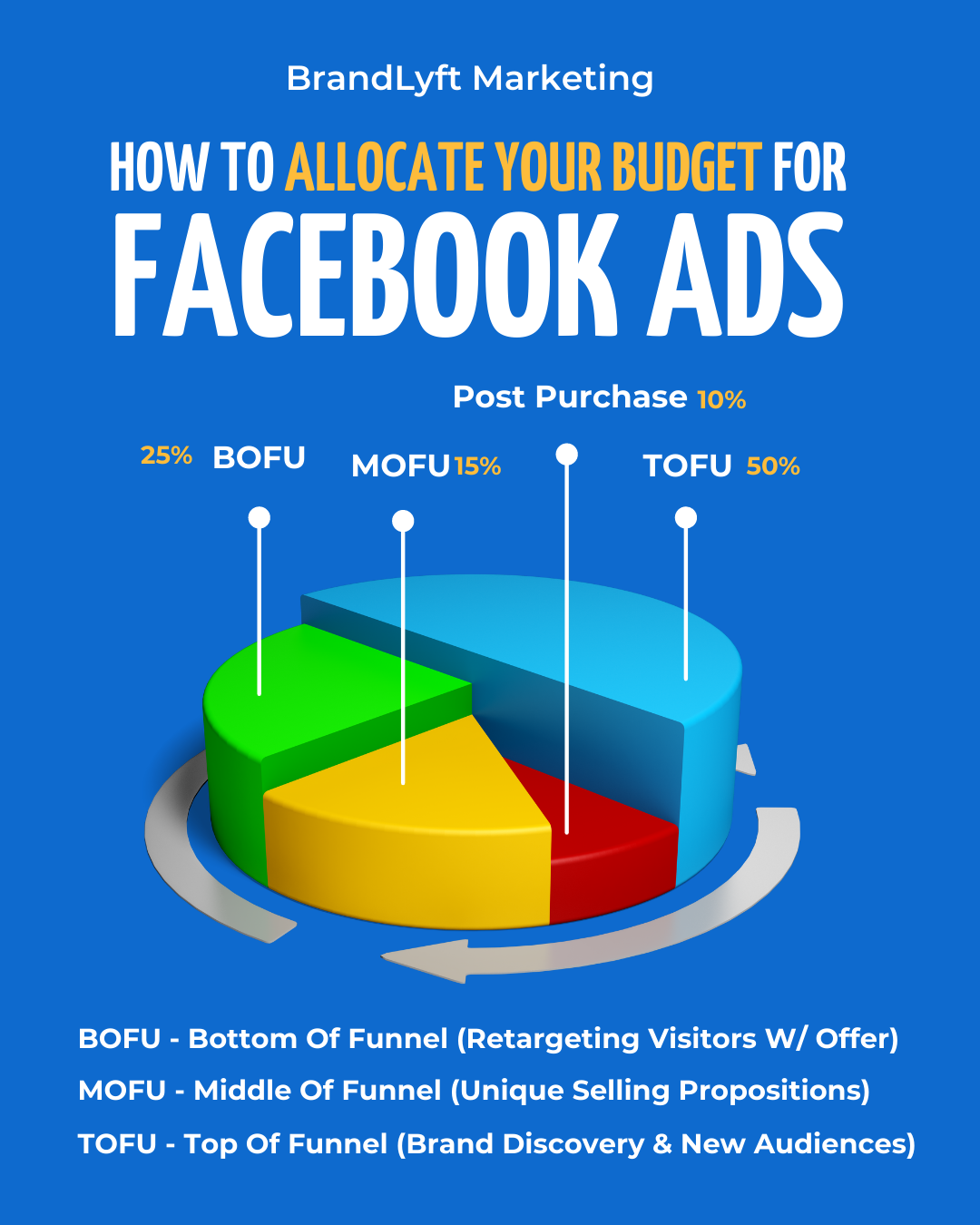
    The Facebook Ads funnel is an ad campaign sequence that takes users from a stranger to a paying client. Facebook Ads funnels are technically multiple campaigns that contain multiple ads based on different value propositions delivered at the right time to the right audience.

    There are three main stages in the Facebook Ads funnel:

    • Top of the Funnel – Awareness
    • Middle of the Funnel – Consideration
    • Bottom of the Funnel – Decision/Conversion

    With Facebook, you can build an entire funnel on just one platform. This can be accomplished by showing users different ads at different stages of the buyer’s journey, each relevant to them. You may increase conversion rates, grow sales and even reduce advertising costs by building funnels using Facebook Ads.

    Your advertising dollars would be wasted on cold audiences that aren’t likely to convert without a Facebook funnel.

    Most inexperienced marketers use Facebook ads and then run it for a little bit and give up when they see that the costs are pretty high or there are not enough conversions.

    The whole problem is that they are going straight for sale and begin pitching products to people who have never heard of the brand. The goals are not in sync with the audience, and many users are not ready to purchase a service or product after a single ad.

    How to Create the Best Facebook Ads Funnel

    It is the process of determining the best Facebook Ads sequence to execute across the buyer’s journey to build the perfect Facebook ads funnel. Increasing audiences’ interest, warming them up, and eventually converting them into customers.

    As part of funnel building, you must choose the right Facebook campaign objective, target the correct audience, and use the proper ad format and message at every step.

    Facebook Funnel Ads

    Stage 1: Turn Strangers into Prospective Customers

    During the Awareness stage or at the top of the funnel, your Facebook ad objective is to attract new audiences. You must educate strangers about the “life-changing” benefits of your products/services if you want to warm up cold audiences and convert them into prospects.

    Consider raising awareness and making people realize they need your product/service instead of starting your funnel with a Conversion objective. To do this, highlight your audience’s interests, needs, and problems and how your services can solve them. Put a lot of emphasis on your unique advantages in your ads. Information and education should be the focus of this stage.

    A consultation, quote, demo, or free trial is a bit early to ask for a conversion. Although the free stuff is all free, most people are hesitant since giving contact information to a stranger is still a big deal.

    Even in the Awareness stage, a free downloadable such as a report, an e-book, or a checklist can prove helpful if it matches your business model. Your offer should be as non-threatening as possible. You haven’t gotten many sales yet, so don’t worry. Investing in this stage will set the stage for later phases and boost your conversion rates at the right time.

    Objectives of the Top of the Funnel Campaign

    Facebook optimizes for goals (or actions) determined by your campaign objective. For the Awareness stage, you should choose the following campaign objectives:

    • Messages
    • Video views
    • Traffic
    • Reach
    • Brand Awareness

    You might consider your initial goal as a gateway to gaining customers and weeding out low-quality traffic. Micro-conversions such as reach, traffic, and video views should be emphasized in the Awareness stage. Think about what you want your audience to accomplish right now and select your objective accordingly. No matter how small or insignificant they might seem, the right audience and the right objective will lay the groundwork that will pay off many times over in the later stages.

    Advertising Copy, Call to Action and Offers to Target Cold Audiences

    It would be best if you were patient when advertising to cold audiences. It would help if you were gentle with your prospects. You can use Facebook ads for advertising your brand, attract new customers, and warm up potential customers. Attract their attention. Offer fun, valuable and engaging content without requiring users to do too much work. Cold audiences are better off taking actions that do not require commitment. Another reason to get great results from that video viewership you mentioned earlier. Cold audiences may find it challenging to give their contact information even for a free giveaway. Therefore, tread carefully.

    Make sure that you communicate the importance of your product/service in your Facebook ads. Rather than directly pitching like a door-to-door salesperson, focus your copy on unique features and benefits. Here are a few proven Facebook Ads CTAs for the top of the funnel:

    • Send Message
    • Listen Now
    • See Menu
    • Watch More
    • Learn More

    The CTAs in all of the examples so far include the “Learn now” button, so you likely noticed a pattern. This is because it’s a call-to-action text that cold audiences are least intimidated by. You can also use call-to-action buttons like “shop now,” “download,” and “sign up.” Do some A/B testing to find the button that resonates best with your cold audience.

    It would be wise to avoid discussing your Facebook ad’s price during the Awareness stage. Your products aren’t going to work if you pitch them directly to a cold audience. You are dealing with strangers at this point, so trying to sell them anything will only drive them away. Offers with a higher level of commitment should wait until the following two stages.

    Stage 2: Convert Prospects into Leads

    The middle of the funnel is where you collect prospects’ contact information so you can nurture them further. Make use of audiences already interested in your product/service from the previous stage. Consideration refers to your pursuit of prospects who might be interested in buying your goods. Prospects should be exposed to your core offer (products/services) when visiting your website or landing page. Make sure your website has an optimized user experience with a professionally designed website.

    A good time to be more direct is during the Consideration stage, when you can provide users with something valuable in exchange for their emails, such as a downloadable pdf, webinar, special offer, or free sample or trial.

    Additionally, it’s advisable to have a customized landing page optimized for capturing leads at this stage. Data collection about leads is essential. By remarketing to leads, you can nudge them towards a purchase and gradually increase the likelihood of a conversion.

    Prospects are still far from making a buying decision, so be careful not to scare them off by being too pushy. The Consideration stage is also an opportunity to build trust.

    Prospects who try your products or download your lead magnets are getting close and personal with your brand. But even more so, they get a glimpse of what it’s like to be your customer. So, ensure it’s a smooth experience.

    Middle of the Funnel Campaign Objectives

    In the Middle of the Funnel or the Consideration stage, you want to turn prospects into leads by collecting their contact info. That’s why you want to choose campaign objectives that focus on lead generation, including:

    • Conversions
    • Messages
    • Lead Generation
    • Engagement
    • Traffic

    Traffic objectives can be very effective in driving more visitors to a high-performing landing page or a product page. Business models that involve direct communication with customers are good for messaging objectives. You can also test the Conversion objective if you are getting good results with your MOFU campaigns to see how it compares to conversion rates and acquisition costs.

    Advertising Copy, Call to Action and Offers to Target Warm Audiences

    It would be best if you nudged prospects to turn their interest into desire in the Consideration step. Getting signups is also a high-value action. If you want people to provide their contact information, then a good lead magnet is needed. Keep in mind that the amount in Facebook ads should be proportional to what people perceive the value. It should be fair for a freebie to be given out in exchange for an email address or phone number. By building trust gradually, a deal can be closed more easily.

    If you are an e-commerce merchant offering easy-to-understand products, you can also include a menu bar CTA that says “shop now” on your product pages. The product pages are also capable of capturing leads via a pop-up form.

    Do not show your cold audiences the same offer you’re showing warm audiences. The Awareness ads focused exclusively on the benefits and features of the product. You can use more aggressive language for your call-to-action since the target audience knows you and is interested in your products/services.

    The following are examples of suitable CTA buttons for the Consideration stage:

    • Install Now (for apps)
    • Shop Now
    • Book Now
    • Learn More
    • Subscribe
    • Get Quote
    • Download
    • Get Offer
    • Sign Up

    Step 3: Bringing Leads to Life – Turning them into Customers

    You want leads to becoming paying customers at the bottom of your Facebook advertising funnel. Buying directly has finally become a reality! With freebies and lead magnets, you’ve introduced your brand, gained users’ interest, and built trust. It is now hotter than it has ever been. Your value proposition must be communicated so your leads will be excited and want your products. Additionally, get them while they are hot, so users are more likely to act fast.

    The main idea of the conversion phase is to convert prospects and leads on your core offer, that is, to get them to buy your product or sign up for your service.

    Stage 4: Increasing your CLV post-purchase

    Customers who are already loyal to you are your best customers. Post-purchase Facebook ads nurture existing customers rather than ignore them. As the customer lifetime value (CLV) increases, you will generate additional referrals through word-of-mouth marketing and also increase the CLV of existing buyers. Facebook ads should be used to encourage two immediate actions post-purchase:

    • Recurring purchases
    • Referrals from friends and family

    Profits come from existing customers since they are relatively easy and inexpensive to re-acquire. In comparison to acquisition costs (CAC), the CLV increases when a customer makes repeated purchases. An improved CLV/CAC ratio indicates a more profitable customer.

    In addition, loyal customers can promote your brand on their social networks and take away some of the heavy lifting from you. Consumers trust word-of-mouth promotion and reviews. During this phase, there is no need to worry about anything.

    As long as you do business with your existing customers, you do not have to bend backward to get their attention. Please give them a bit of appreciation and a discount to encourage them to return.

    Increasing Conversions by Moving Users Through the Funnel

    Facebook funnels are created by modifying audiences based on user’s actions, including and excluding users based on that action. For example, you can choose to include or exclude users that have already converted from your conversion stage Custom Audience while creating it. To maximize your Facebook funnel, it is imperative to exclude users.

    You will show ads from all previous funnel stages even to users who reach the Bottom of the Funnel without the Exclude function. That would be a waste of your advertising dollars and a complete mess. Make sure you exclude the remarketing audience of the current funnel stage from already-converted users; they will move to the next one.

    Conclusion

    This is a powerful marketing strategy that utilizes Facebook Ads Funnels. Through it, you can reach new customers at the right time with the right ad, boosting conversions and helping grow your company.

    The number of touchpoints required for each funnel step may vary depending on your business model and target market. Additionally, you may need multiple funnels to promote different products, discounts, locations, etc. When you track your funnels, you can quickly become confused and overwhelmed. Before configuring your Facebook campaigns, map out the entire funnel journey.

  • What is a landing page

    What is a landing page

    We all know how important a website is for establishing your brand’s presence online, but what if you want your business to grow and bring in more referrals, leads, and sales? In the end, you’ll need a landing page, but most business owners aren’t familiar with how to develop one from scratch. What is the best place to begin? What do you write about? Is there a process for completing a design?

    You do not need to worry, as we have provided you with an in-depth, step-by-step guide to assist you in doing all this and more. The purpose of this article is to explain what a landing page is, why you need one, and how to create one that accomplishes your conversion goals.

     What is the purpose of a landing page?

    Typically, a landing page is a web page used to advertise or market a particular product or service. Consumers click through to this site after clicking on the URL to find out more about the products or services they are being offered.

    What’s the difference between a landing page and a web page?

    However, it’s essential to keep in mind that a landing page is still a different web page from a specific web page.

    Multiple links will be included on a web page, as will numerous goals to encourage visitors to read more articles, learn more about the author, or connect with the brand on social media.

    Unlike generic web pages, a landing page focuses on just one goal: to get the user to respond to its call to action. Visitors will click away without being distracted by main website navigation, resulting in fewer potential distractions and a more positive engagement experience.

    What types of landing pages exist

    Landing pages can be designed differently, but two main types are most commonly debated: short-form and long-form.

    #1. Short-form landing pages contain less information and therefore work well for increasing leads, particularly if you want your visitors to download your offer. There is less content on these pages, and therefore there is less chance of distraction. Furthermore, the visitor will be more likely to become captivated if the information is accessible, concise, and appealing.

    #2. Long-form landing pages, on the other hand, are commonly used to do a hard sell. You can benefit enormously from the persuasion and storytelling that a long-form page offers if your product or service carries a high price tag (such as premium online courses, exclusive training, or a high-value bundle).

    Short-form pages are designed to facilitate the visitor’s transition from the call-to-action directly to the first step of the shopping cart. Long-form pages use long copies to help the visitor make a quick and easy decision. There is a narrative structure in your proposal, so you have the opportunity to address everything from potential readers’ hesitations to how your product deals with their pain points, how it meets their needs, and more.

    You may also want to consider a static landing page versus a video landing page for your website designer.

    #3. With video landing pages, viewers can have hit-or-miss results, but it comes down to one important distinction: whether or not they can control the video. A study of B2B buyers found that 33% of them will leave a site for no other reason than to see automatic audio and video.

    Researchers found, however, that videos on landing pages that convey a certain mood or feeling (so a video depicting concert footage on a concert page, for example) can be compelling. Further, landing pages with videos and playback controls are 144% more likely to convert visitors who watched the videos than those who didn’t.

    #4. A static landing page, on the other hand, does not feature any video. The landing page idea follows that fewer distractions are better when creating a conversion: content and imagery are very important. When a page is static, its focus is on the user, as experienced through fixed content, rather than constantly updating visuals.

    Why are landing pages necessary?

    #1. Offers tailored to segmented audiences

    A separate landing page for every promotion you run is necessary if you’re targeting different segments of your customers. Depending on what kind of customer you are, you might have different offers for new customers, customers who have signed up for a free trial, or customers who are part of your high-tier plan.

    It is easier to adjust a campaign’s call-to-action, copy, and design to meet its intended audience when it has its specific page for each promotion.

    #2. A variety of products

    You might want to create multiple landing pages when selling multiple items or even if you’ve got a single item with multiple attributes. You can then create different landing pages for each context and target audience, effectively increasing conversions.

    #3. Multiple sources of traffic

    A marketer or advertising agency can create separate landing pages for every traffic source that they use, whether it’s email marketing, various social networking platforms, or other channels. What is the reason? In general, you will want to promote different messaging, imagery, and calls-to-action for each channel based on the audience they represent.

    Building conversion-optimized landing pages

    Landing pages are designed to convert prospects into customers. An effective landing page converts well.

    For a landing page to be successful, you must have the correct elements in place, regardless of how much traffic you get or how good your offer is.

    Are you interested in learning more? We’d love to hear from you.

  • 5 Steps to Attracting New Customers with Great Social Media

    Social media is such a popular platform that many people are actually addicted to it! If you are the owner of a business and you don’t have social media accounts, or you neglect them, then you are really missing out! Social media can help you build your brand by allowing you to spread brand awareness, create customer loyalty and even sell your products!


    If you have working social media accounts, but they aren’t all that active or you would like to attract new followers, and convert them to customers, here are the five steps that you need to take now: 

    Step 1: Use a Logo

    A great logo will help people remember you. Logos lend themselves well as profile pictures and backgrounds for social media. You won’t have to bother with changing them every other week and when people see your posts they will automatically recognize who they are from. Logos should be kept simple, easy to understand, and hopefully, easy to remember. To create a logo to use on your social media accounts, visit Logo Creator

    Step 2: Create Great Visuals

    Humans are visual creatures. People are much more likely to be drawn to a post that has images or graphs than a post that is text only. You want to make sure that you have professional looking sharp images that are high quality so they will grab the attention of the reader. Bright colors in images are also important to catching the eye. If you want to make sure you have a professional edge when editing photos and creating social media posts, try visiting Canva. They have templates for all of the social media platforms and lots of editing tools. 

    Step 3: Share Your Content

    Simply relying on your followers is not likely to spread your content far enough to give you the kind of boost that you are hoping for. A great place to share your original content is in groups and on other people’s pages. If you are careful to choose groups that your ideal demographic would generally like, you are likely to pick up some followers, and by the nature of where you found them, these followers are actually good qualified leads. 

    Step 4: Interact with Your Followers

    One of the best ways to build consumer loyalty and turn followers into customers is to build solid relationships. Online, the way to build those relationships, and to build trust, is to interact with your followers. This is as easy as it sounds. Try asking open ended questions, post polls and share your followers posts as well. When your customers comment on your posts, reply to them, and when they share your posts, make sure that you say thank you! Someone sharing your post is the online equivalent of a word of mouth referral. 

    Step 5: Share Useful Content

    Make sure what you post is not dominated by sales and ads. Post about the things that you and your customers share in common and both care about such as current events, social issues and community news. Share posts about how to use your products. Share helpful DIY projects (it doesn’t hurt if you sell the materials to complete them). Make sure that your content is carefully created to draw the customer to you and not to push them away. Keep in mind the general demographic you want to attract and make sure that your content is appropriate. 

    Conclusion

    If you are having a hard time keeping up with your social media, try an app like HootSuite. It will allow you to create a hub for all of your different social media accounts as well as schedule posts. Also keep in mind that new social media sites are popping up everyday, always be open to experimenting to find the ones that are most compatible with your brand.

  • Working With Mark Ford & American Dakota

    [et_pb_section fb_built=”1″ admin_label=”section” _builder_version=”3.22″ da_is_popup=”off” da_exit_intent=”off” da_has_close=”on” da_alt_close=”off” da_dark_close=”off” da_not_modal=”on” da_is_singular=”off” da_with_loader=”off” da_has_shadow=”on” da_disable_devices=”off|off|off”][et_pb_row admin_label=”row” _builder_version=”3.25″ background_size=”initial” background_position=”top_left” background_repeat=”repeat”][et_pb_column type=”4_4″ _builder_version=”3.25″ custom_padding=”|||” custom_padding__hover=”|||”][et_pb_text admin_label=”Text” _builder_version=”3.27.4″ background_size=”initial” background_position=”top_left” background_repeat=”repeat”]Mark Ford runs a business in the textile region of Northwest, Georgia, USA. American Dakota specializes in lodge, southwest, and designs inspired by the first Americas. Their designs can be seen on not only rugs but blankets and bedspreads. Mark came to Brandlyft for brand and business consulting. Our CEO Shawn Greenway knew just what to do for Mark’s business and brand.[/et_pb_text][et_pb_code _builder_version=”4.7.3″ _module_preset=”default” hover_enabled=”0″ sticky_enabled=”0″][/et_pb_code][/et_pb_column][/et_pb_row][/et_pb_section]

  • Working With JZ’s Taste of Georgia

    [et_pb_section fb_built=”1″ admin_label=”section” _builder_version=”3.22″ da_is_popup=”off” da_exit_intent=”off” da_has_close=”on” da_alt_close=”off” da_dark_close=”off” da_not_modal=”on” da_is_singular=”off” da_with_loader=”off” da_has_shadow=”on” da_disable_devices=”off|off|off”][et_pb_row admin_label=”row” _builder_version=”3.25″ background_size=”initial” background_position=”top_left” background_repeat=”repeat”][et_pb_column type=”4_4″ _builder_version=”3.25″ custom_padding=”|||” custom_padding__hover=”|||”][et_pb_text admin_label=”Text” _builder_version=”3.27.4″ background_size=”initial” background_position=”top_left” background_repeat=”repeat”]

    JZ’s is a wine bar located in the heart of Cartersville GA, They offer a great variety of Georgia wines carried in from around the state. JZ’s started working with Brandlyft because of our marketing and social media expertise. Engagement on her page began to grow once we implemented videos into her business model. With all of these combined, plus business consulting from our CEO Shawn Greenway, The JZ’s Taste of Georgia Brand has begun to take on a more distinct identity.


    [/et_pb_text][et_pb_code _builder_version=”4.7.3″ _module_preset=”default” hover_enabled=”0″ sticky_enabled=”0″][/et_pb_code][/et_pb_column][/et_pb_row][/et_pb_section]

  • Working With Bill Temple – Toles Temple & Wright, inc

    [et_pb_section fb_built=”1″ admin_label=”section” _builder_version=”3.22″ da_disable_devices=”off|off|off” da_is_popup=”off” da_exit_intent=”off” da_has_close=”on” da_alt_close=”off” da_dark_close=”off” da_not_modal=”on” da_is_singular=”off” da_with_loader=”off” da_has_shadow=”on”][et_pb_row admin_label=”row” _builder_version=”3.25″ background_size=”initial” background_position=”top_left” background_repeat=”repeat”][et_pb_column type=”4_4″ _builder_version=”3.25″ custom_padding=”|||” custom_padding__hover=”|||”][et_pb_text admin_label=”Text” _builder_version=”3.27.4″ background_size=”initial” background_position=”top_left” background_repeat=”repeat”]Bill is an experienced Realtor with a demonstrated history of working in the real estate industry. Toles Temple & Wright, inc. has been in business for the last  50 years. Brandlyft has been able to work with incredible people over the last few years and Bill Temple is one of those people. With social media and video becoming more prominent in the online world, Brandlyft was able to work with Bill to get his engagement and views up for his business.


     [/et_pb_text][et_pb_code _builder_version=”4.7.3″ _module_preset=”default”][/et_pb_code][/et_pb_column][/et_pb_row][/et_pb_section]